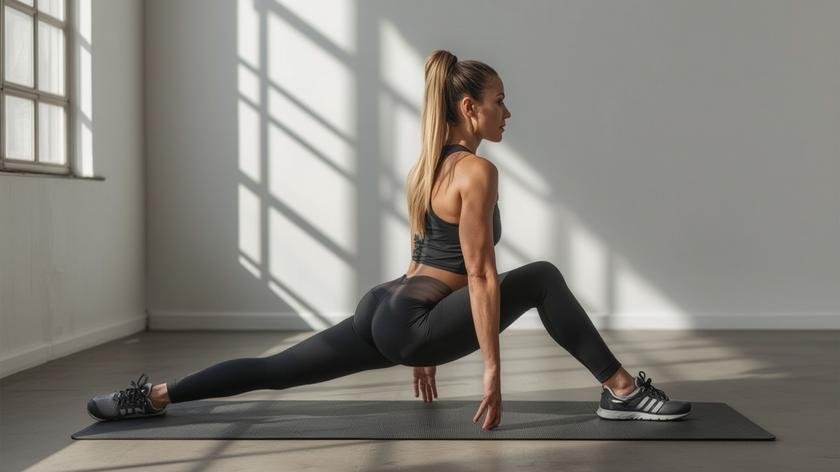
30 Minute Workout Routines for Busy Lives
30 minute workout routines have become a cornerstone for professionals who juggle meetings, family commitments, and personal development. When time is at a premium, the ability to squeeze a full‑body, calorie‑burning session into half an hour can make the difference between regular activity and sedentary habits. By focusing on movement quality, strategic interval structures, and progressive overload, these routines deliver measurable fitness gains without demanding a marathon‑length dedication.
Thank you for reading this post, don't forget to subscribe!For anyone seeking a balance between efficiency and effectiveness, 30 minute workout routines offer a scientifically backed framework that respects the modern calendar. They incorporate the principles of high‑intensity interval training, compound movement patterns, and active recovery, ensuring that even a brief session triggers cardiovascular, muscular, and metabolic adaptations. This approach aligns perfectly with the surge in quick exercise routines that empower busy individuals to stay on track while maintaining professional momentum.
## Table of Contents
Why 30 Minutes Is the Sweet Spot
Designing Effective 30‑Minute Sessions
Sample Workouts for Different Goals
Comparison of Popular 30‑Minute Formats
Frequently Asked Questions
Conclusion and Final Takeaways
## Why 30 Minutes Is the Sweet Spot
Research published in the *Journal of Sports Sciences* indicates that a 30‑minute high‑intensity protocol can elicit aerobic improvements comparable to longer steady‑state sessions. The physiological reasoning is simple: a well‑structured half‑hour program maximizes time spent above the anaerobic threshold while minimizing the low‑intensity “dead zone” that can dilute training stimulus.
From a behavioral perspective, the 30‑minute window aligns with habit formation research, which suggests that actions lasting less than 45 minutes are easier to embed into daily routines. This duration reduces perceived effort, lowers the activation energy required to start, and creates a clear, repeatable cue‑action‑reward loop. Consequently, adherence rates climb, and long‑term consistency becomes the norm rather than the exception.
## Designing Effective 30‑Minute Sessions
Creating a robust 30 minute workout routines framework involves three core components: warm‑up, main set, and cool‑down. Each segment should be calibrated to the trainee’s fitness level, available equipment, and specific objectives (strength, endurance, mobility, or a hybrid).
### 1. Warm‑Up (5 minutes)
– **Dynamic Mobility**: Leg swings, arm circles, and thoracic rotations prime the joints.
– **Neuromuscular Activation**: Light kettlebell swings or jump rope spikes elevate heart rate without exhausting glycogen stores.
### 2. Main Set (20 minutes)
The main set can follow one of three proven structures:
| Structure | Interval Pattern | Primary Target | Sample Exercise |
|———–|——————|—————-|—————–|
| **HIIT** | 40 s work / 20 s rest | Cardiovascular & metabolic | Burpees, box jumps, battle ropes |
| **EMOM** | Every minute on the minute | Strength & skill | 5 deadlifts, 8 push‑ups, 10 goblet squats |
| **Circuit** | 5 stations × 4 rounds, 45 s each | Full‑body conditioning | Kettlebell clean, TRX row, wall ball, plank, jump lunges |
Choose the structure that matches the day’s priority. For example, on a “strength‑focused” morning, an EMOM with moderate loads preserves technique while still delivering a cardio edge.
### 3. Cool‑Down (5 minutes)
– **Static Stretching**: Target hamstrings, hip flexors, chest, and shoulders.
– **Breathing Practice**: Box breathing (4‑4‑4‑4) aids parasympathetic activation and accelerates recovery.
By adhering to this template, each 30‑minute window becomes a micro‑session that respects both physiological loading and time constraints.
## Sample Workouts for Different Goals
Below are three ready‑to‑execute quick exercise routines that illustrate how the template can be customized. Feel free to swap exercises based on equipment availability and personal preference.
### A. Fat‑Loss Blitz (HIIT Focus)
| Time | Exercise | Remarks |
|——|———-|———|
| 0:00‑0:05 | Dynamic warm‑up | 30 s each: high knees, arm circles, inchworms |
| 0:05‑0:09 | Burpees | Max reps, 20 s rest |
| 0:09‑0:13 | Kettlebell Swings | 40 s work, 20 s rest |
| 0:13‑0:17 | Mountain Climbers | 40 s work, 20 s rest |
| 0:17‑0:21 | Jump Squats | 40 s work, 20 s rest |
| 0:21‑0:25 | Push‑Ups | 40 s work, 20 s rest |
| 0:25‑0:30 | Cool‑down stretch | Full‑body breath focus |
### B. Strength Builder (EMOM Focus)
| Minute | Load | Exercise |
|——–|——|———-|
| 1‑4 | 70 % 1RM | 5 Deadlifts |
| 5‑8 | Bodyweight | 8 Push‑Ups |
| 9‑12 | 50 % 1RM | 10 Goblet Squats |
| 13‑16 | 60 % 1RM | 6 Bent‑Over Rows |
| 17‑20 | Bodyweight | 10 Walking Lunges (each leg) |
### C. Mobility & Core (Circuit Focus)
| Station | Duration | Movement |
|———|———-|———-|
| 1 | 45 s | TRX Y‑Fly |
| 2 | 45 s | Medicine Ball Russian Twists |
| 3 | 45 s | Single‑Leg Romanian Deadlift (bodyweight) |
| 4 | 45 s | Plank with Shoulder Taps |
| 5 | 45 s | Side‑Lying Clamshells |
| Rest | 30 s | Transition to next round |
These templates illustrate how the core principles can be reshaped to meet distinct outcomes while staying within the 30‑minute limit.

## Comparison of Popular 30‑Minute Formats
The following table breaks down the most common delivery styles, helping readers decide which 30 minute workout routines align with their lifestyle, equipment, and performance goals.
| Format | Time Allocation | Equipment Needed | Primary Benefit | Best For |
|---|---|---|---|---|
| HIIT | 5‑5‑5‑5 (work/rest) | Minimal (bodyweight or light kettlebell) | Cardiovascular & metabolic spike | Fat loss, time crunch |
| EMOM | 1 min cycles | Barbell, dumbbells, kettlebell | Strength gains with cardio overlay | Strength athletes, progressive overload |
| Circuit | 45 s work / 15 s rest | Varies (mix of cardio & resistance tools) | Full‑body conditioning | General fitness, functional training |
| Tabata | 20 s work / 10 s rest × 8 | Bodyweight or light gear | Maximum intensity in minimal time | Advanced athletes, performance peaks |
For a deeper dive into each format’s research base, you can search the article title online and explore peer‑reviewed studies.
## Frequently Asked Questions
**How often should I perform a 30‑minute session?**
Three to five times per week balances recovery and progress.
**Can I combine different formats in one week?**
Yes—mix HIIT, EMOM, and circuit for varied stimulus.
**Do I need a gym membership?**
No; bodyweight or minimal equipment suffices.
**Is a warm‑up really necessary for short workouts?**
Absolutely; it reduces injury risk and improves performance.
**What’s the ideal intensity level?**
Aim for 80‑90 % of max heart rate during work phases.
## Conclusion and Final Takeaways
In the era of relentless schedules, 30 minute workout routines stand out as a scientifically validated solution that honors both the body’s adaptation needs and the calendar’s constraints. By leveraging the three‑phase structure—dynamic warm‑up, purpose‑driven main set, and intentional cool‑down—busy professionals can secure cardiovascular health, muscular strength, and functional mobility without sacrificing productivity.
Adopting one of the sample structures or tailoring a hybrid model ensures continual progression while keeping workouts fresh. The comparison table clarifies which format aligns best with personal goals, equipment access, and preferred intensity. Consistency, proper load management, and mindful recovery will transform these brief sessions into a cornerstone of lifelong well‑being.
Ready to embed a sustainable fitness habit into your hectic day? Review the templates above, select the format that resonates most, and start your first 30 minute workout routines today.