20 Minute Workout Routines for Busy Lifestyles
The modern pace of work and family demands often leaves little room for extended gym sessions, yet the health benefits of regular exercise remain non‑negotiable. By integrating 20 minute workout routines into a busy schedule, you can safeguard cardiovascular health, preserve muscle mass, and manage stress without sacrificing professional or personal time. These concise sessions focus on high‑intensity movements, efficient rest intervals, and functional patterns that translate directly to everyday activities, ensuring each minute counts toward measurable progress.
Thank you for reading this post, don't forget to subscribe!Beyond sheer convenience, short, structured sessions maintain metabolic momentum and reinforce habit formation. When a routine is deliberately crafted to hit multiple fitness domains—strength, endurance, flexibility—the cumulative effect rivals longer workouts. The following guide demystifies how to design, execute, and scale 20 minute workout routines for any lifestyle, from desk‑bound professionals to parents juggling school pickups.
## Table of Contents
– [why-time-efficient-training-matters](#why-time-efficient-training-matters)
– [building-a-balanced-20-minute-workout-routine](#building-a-balanced-20-minute-workout-routine)
– [sample-full-body-circuit-20-minutes](#sample-full-body-circuit-20-minutes)
– [targeted-sessions-cardio-strength-flexibility](#targeted-sessions-cardio-strength-flexibility)
– [equipment-free-options-for-any-space](#equipment-free-options-for-any-space)
– [progress-tracking-and-adaptation-strategies](#progress-tracking-and-adaptation-strategies)
– [common-mistakes-and-how-to-avoid-them](#common-mistakes-and-how-to-avoid-them)
– [comparison-of-popular-20-minute-programs](#comparison-of-popular-20-minute-programs)
– [frequently-asked-questions](#frequently-asked-questions)
– [final-takeaways](#final-takeaways)
## Why Time‑Efficient Training Matters
When the clock ticks, motivation often dwindles. Time‑efficient training capitalizes on the body’s physiological response to brief, intense stimulus—known as excess post‑exercise oxygen consumption (EPOC). EPOC sustains calorie burn for hours after a short session, making 20‑minute blocks surprisingly potent for weight management. Moreover, shorter workouts reduce cortisol spikes associated with prolonged stress, promoting better sleep quality and mental resilience.
From a behavioral perspective, a two‑hour commute, a 15‑minute lunch break, or a toddler’s nap become viable windows for movement. Embedding these sessions consistently scaffolds a habit loop: cue (calendar reminder), routine (workout), reward (post‑session endorphin rush). Over weeks, the loop automates, turning fitness from an afterthought into a built‑in component of daily life.
## Building a Balanced 20 Minute Workout Routine
A well‑rounded 20 minute workout routine should touch three primary fitness pillars: cardiovascular endurance, muscular strength, and flexibility/mobility. The most efficient template follows a “push‑pull‑core” circuit, interleaving compound movements with brief active recovery.
1. **Warm‑up (2 min)** – Dynamic stretches such as leg swings, arm circles, and torso twists.
2. **Circuit Block A (8 min)** – Push‑focused exercises (e.g., push‑ups, shoulder presses) performed for 40 seconds, 20 seconds rest.
3. **Circuit Block B (8 min)** – Pull‑focused exercises (e.g., rows, dead‑lifts) following the same interval scheme.
4. **Core & Mobility Finisher (2 min)** – Plank variations or yoga‑inspired flow.
5. **Cool‑down (optional, 1 min)** – Gentle breathing and static stretch.
By rotating muscle groups, the routine maximizes metabolic demand while preserving joint integrity. Adjust interval lengths based on fitness level; beginners may aim for 30‑second work/30‑second rest, while seasoned athletes can push to 45‑second work/15‑second rest.
Read more about structuring your routine to fine‑tune the balance between intensity and recovery.
## Sample Full‑Body Circuit (20 Minutes)
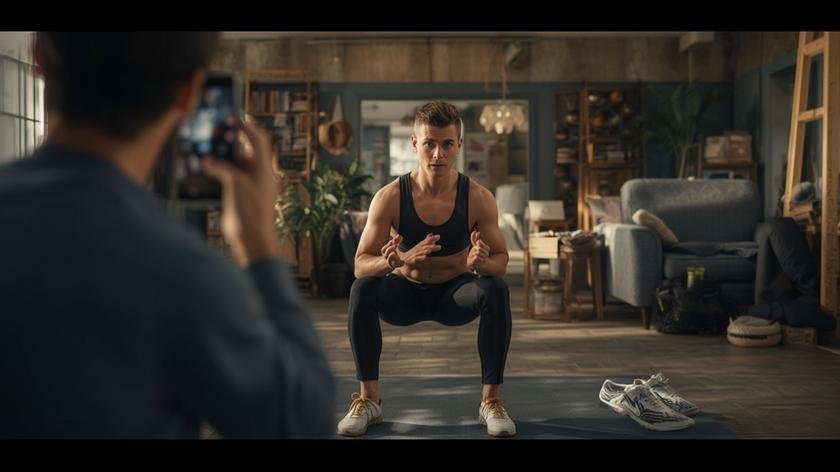
Below is a ready‑to‑use circuit that requires only a set of dumbbells (or household objects of comparable weight). Complete each exercise for 45 seconds, rest 15 seconds, then move to the next. After finishing all eight moves, rest 60 seconds and repeat once.
| Exercise | Primary Muscles | Equipment |
|———-|—————–|———–|
| Goblet Squat | Quads, Glutes, Core | Dumbbell |
| Incline Push‑Up | Chest, Shoulders, Triceps | Bench/Chair |
| Bent‑Over Row | Upper Back, Biceps | Dumbbell |
| Walking Lunge (alternating) | Quads, Hamstrings, Glutes | Bodyweight |
| Plank Shoulder Tap | Core, Shoulders | Bodyweight |
| Russian Twist | Obliques, Core | Dumbbell |
| Jump Squat | Quads, Glutes, Cardio | Bodyweight |
| Mountain Climbers | Full‑Body, Cardio | Bodyweight |
Perform the circuit twice for a total of 20 minutes of focused activity. The mix of strength and cardio ensures you reap the metabolic benefits of both modalities while staying within a tight time frame.
## Targeted Sessions: Cardio, Strength, Flexibility
Not every day demands a full‑body approach. Tailor a 20‑minute block to what your body needs that day.
* **Cardio Burst** – 5‑minute warm‑up, 12‑minute interval sprint (20 s sprint / 40 s jog), 3‑minute cool‑down. This format elevates VO₂ max quickly.
* **Strength Focus** – Choose 4–5 compound lifts, perform 4 sets of 8–10 reps with 60‑second rests. Total time stays within the limit.
* **Flexibility Flow** – Begin with light cardio (2 min), then transition to a series of yoga poses (Downward Dog, Pigeon, Child’s Pose) holding each 30–45 seconds. End with deep breathing.
These micro‑specializations let you address specific goals—fat loss, muscle gain, or mobility—without extending beyond the allotted window.
## Equipment‑Free Options for Any Space
A crowded office or a small apartment doesn’t have to be a barrier. Bodyweight movements, resistance bands, and household items (water jugs, backpacks) can replace traditional gym gear. For example:
* **Band‑Assisted Pull‑Up** → Anchor a looped band on a sturdy door and use it for assisted rows.
* **Backpack Squat** → Fill a backpack with books for added load.
* **Staircase HIIT** → Use steps for step‑ups, box jumps, or incline push‑ups.
These adaptations preserve the principle of progressive overload while keeping the session firmly within 20 minutes.
Explore more equipment‑free variations that maintain intensity and variety.
## Progress Tracking and Adaptation Strategies
Consistent measurement fuels motivation. Use a simple log to record:
* **Date & Time** – Helps identify optimal daily windows.
* **Workout Type** – Cardio, Strength, Flexibility, or Full‑Body.
* **Intervals & Load** – Seconds worked, weight used, or band tension.
* **Perceived Exertion** – Rate of 1‑10; aim for 7–8 on demanding days.
Every 4‑6 weeks, perform a performance test (e.g., max push‑ups in 1 minute, fastest 400‑m run) to gauge improvements. Adjust variables—add weight, increase work interval, or reduce rest—to maintain the principle of progressive overload.
## Common Mistakes and How to Avoid Them
1. **Skipping Warm‑up** – Leads to reduced range of motion and higher injury risk. Even 2 minutes of dynamic movement prepares muscles for load.
2. **Over‑extending Rest** – Turns a high‑intensity block into a low‑impact activity. Use a timer to keep rest strict.
3. **Neglecting Form** – Sacrificing technique for speed breeds chronic strain. Prioritize controlled movements before adding load.
4. **Repeating the Same Circuit Indefinitely** – The body adapts quickly. Rotate exercises every 2–3 weeks to stimulate new growth.
5. **Ignoring Recovery** – Sleep, hydration, and proper nutrition are essential for the gains earned during those 20 minutes.
Addressing these pitfalls ensures that each session remains productive, safe, and progressive.
## Comparison of Popular 20‑Minute Programs
| Program | Focus | Equipment Needed | Typical Structure | Ideal For |
|---|---|---|---|---|
| HIIT Express | Cardio & Metabolism | None (optional mat) | 30 s on / 30 s off x 10 rounds | Fat loss, time crunch |
| Strength Sprint | Full‑Body Strength | Dumbbells or kettlebell | 4 supersets, 45 s work / 15 s rest | Muscle maintenance, beginners |
| FlexFlow 20 | Mobility & Core | Yoga mat | Sequential poses, 1‑min hold each | Stress relief, flexibility |
| Hybrid Blitz (20 minute workout routines) | Combined Cardio/Strength | Band or light weights | Alternating push‑pull, 40 s work / 20 s rest | Balanced fitness, all levels |
## Frequently Asked Questions
**Can I see results from 20‑minute sessions?**
Yes, consistent effort yields measurable strength and endurance gains.
**How often should I repeat the same routine?**
Every 2–3 weeks, then swap in new exercises to prevent plateaus.
**Is a warm‑up really necessary for a short workout?**
Absolutely; it primes muscles and reduces injury risk.
**Do I need a heart‑rate monitor?**
Helpful but not essential; perceived exertion works well.
**Can beginners start with high‑intensity intervals?**
Begin with lower intensity and shorter work periods, then progress.
## Final Takeaways
Integrating 20 minute workout routines into a hectic schedule is both realistic and rewarding. By emphasizing strategic intensity, balanced exercise selection, and diligent tracking, you can achieve fitness goals without the time‑sink of traditional workouts. Remember to warm up, respect form, and rotate programs to keep the body adapting. With the right mindset, a brief daily commitment transforms into lasting health benefits, freeing up more time for the things you love.
If you’re ready to put these principles into action, explore additional resources and stay informed about the latest evidence‑based practices. For further reading, see the Google search results for “20 Minute Workout Routines for Busy Lifestyles”: Search.
—
Take the first step today, log a 20‑minute session, and watch your energy, mood, and performance improve—one focused block at a time.