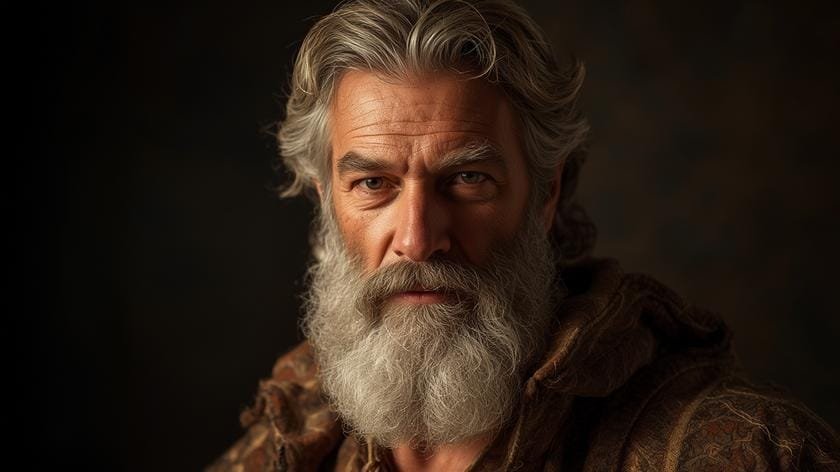
Famous Legends That Shaped Human History
The yearning to understand where we come from drives humanity to chronicle extraordinary individuals whose deeds, choices, and myths have rippled through time. These narratives, whether rooted in fact or embellished over centuries, become cultural cornerstones that inform values, inspire bravery, and shape societal norms. By examining the tapestry of **famous legends** that have endured, we uncover patterns of human aspiration and the collective psyche that perpetuates them.
Thank you for reading this post, don't forget to subscribe!In this exploration we also encounter larger archetypal beings and stories that transcend borders, illuminating how **Mythological Figures** serve as mirrors of universal concerns. The interplay between historical personae and mythic symbolism reveals a continuous dialogue between lived experience and imagined possibility, a dialogue that continues to influence modern culture.
## Table of Contents
– Ancient Legends That Defined Civilizations
– Medieval Heroes and Their Enduring Influence
– Modern Mythic Icons
– Comparative Analysis of Legendary Impact
– Comparison of Legendary Impact Across Eras
– Frequently Asked Questions
– Conclusion and Final Takeaways
## Ancient Legends That Defined Civilizations
From the riverbanks of Mesopotamia to the mountain peaks of the Andes, the earliest societies recorded stories of individuals who embodied the ideals of their culture. Hammurabi, for instance, is celebrated not merely as a lawgiver but as a quasi‑divine figure whose codified statutes gave structure to Babylonian life. In the Egyptian pantheon, **famous legends** such as the tale of Osiris’s resurrection provided a theological framework that reinforced concepts of order, justice, and the afterlife.
In East Asia, the legend of King Goujian of Yue illustrates perseverance. After being humbled by the State of Wu, he endured years of servitude before orchestrating a dramatic comeback that restored his kingdom’s sovereignty. The story’s endurance lies in its moral resonance: resilience in the face of adversity. Similarly, the ancient Andean figure, Manco Cápac, is portrayed as a civilizing hero who founded the Inca capital, weaving together historical memory and divine mandate.
These ancient narratives were frequently transmitted through oral tradition, later codified on stone, papyrus, or textile. Their preservation reveals the mechanisms by which societies embed moral instruction within memorable personalities, a principle that recurs throughout history.
## Medieval Heroes and Their Enduring Influence
The medieval period, often depicted as a tapestry of chivalry and crusade, produced a new generation of **famous legends** whose deeds were chronicled in epic poetry, illuminated manuscripts, and courtly song. King Arthur stands as a cornerstone of this era—a monarch whose purported Camelot embodied ideals of justice, bravery, and fellowship. Though historical verification remains elusive, Arthur’s narrative has shaped notions of governance and national identity across Britain and beyond.
In the Islamic world, the epic of Al‑Ghazi Saladin blends fact and folklore. Saladin’s reputation as a magnanimous leader who recaptured Jerusalem while offering clemency to adversaries has been celebrated in both Persian chronicles and Western literature, highlighting cross‑cultural admiration for honorable conduct during warfare.
The Norse sagas, meanwhile, present Viking chieftains such as Ragnar Lothbrok whose exploits across seas and battlefields provided a mythic scaffold for Scandinavian self‑perception. These warriors are simultaneously humanized and elevated, reinforcing societal values of exploration and resilience.
The preservation of these medieval stories owes much to the patronage of monasteries and royal courts, where scribes meticulously copied texts. Their influence extended well beyond their time, informing legal codes, literary tropes, and modern popular culture.
The industrial age and mass media ushered in a new breed of personalities whose fame was amplified by newspapers, cinema, and digital platforms. Figures such as Robin Hood—originally a folkloric outlaw—have been reinvented through countless adaptations, each iteration reflecting contemporary concerns about wealth disparity and social justice. While Robin Hood remains a fictional construct, the **famous legends** surrounding him demonstrate how mythic storytelling adapts to evolving societal contexts.
In the realm of sport, Muhammad Ali transcended athletics to become a cultural icon whose defiance and eloquence challenged prevailing prejudices. His self‑portrait as “The Greatest” merged personal myth with political activism, forging a legacy that endures in both sports history and civil‑rights discourse.
The 20th‑century space race produced legends like Yuri Gagarin, whose single orbital flight became a symbol of human possibility. His narrative was crafted into a global myth that emphasized exploration, daring, and the triumph of scientific endeavor over earthly limitations.
These modern legends benefit from instantaneous global dissemination, enabling them to influence audiences across borders within moments. Their stories provide contemporary societies with touchstones for aspiration and debate, echoing the functions of older **Mythological Figures** while leveraging new media.
## Comparative Analysis of Legendary Impact
By juxtaposing ancient, medieval, and modern narratives, we discern three core traits that empower a legend to endure:
1. **Moral Universality** – Legends embody values that transcend temporal and cultural boundaries. Whether it is Hammurabi’s justice or Ali’s fight for equality, the moral core resonates across epochs.
2. **Narrative Flexibility** – The ability of a story to be reinterpreted ensures relevance. Arthurian tales, for instance, have been reshaped to comment on contemporary leadership crises.
3. **Transmission Mechanisms** – From stone tablets to streaming services, the mediums of preservation determine reach. Each era’s technology amplifies the legend’s footprint.
These factors influence not only collective memory but also policy formation, artistic expression, and identity construction. Recognizing these dynamics enriches our understanding of how societies select, adapt, and perpetuate memorable individuals.
Explore deeper insights on cultural transmission and discover how legends shape collective imagination.
## Comparison of Legendary Impact Across Eras
| Era | Key Legend(s) | Primary Values Conveyed | Transmission Medium | Lasting Influence |
|---|---|---|---|---|
| Ancient | Hammurabi, Osiris, Manco Cápac | Law, Order, Divine Right | Stone inscriptions, papyrus, oral tradition | Foundational legal concepts, religious rites |
| Medieval | King Arthur, Saladin, Ragnar Lothbrok | Chivalry, Mercy, Exploration | Manuscripts, courtly poetry, stained glass | National myths, ethical frameworks in warfare |
| Modern | Robin Hood, Muhammad Ali, Yuri Gagarin | Social Justice, Personal Agency, Exploration | Print media, film, digital platforms | Popular culture archetypes, civil‑rights rhetoric |
Read the full analysis for a more granular breakdown of each legend’s sociopolitical impact.
**What defines a legend versus a historical figure?**
A legend blends fact with myth, emphasizing symbolic meaning over strict accuracy.
**Why do societies create legendary narratives?**
Legends teach values, legitimize authority, and unite communities.
**Can modern media dilute a legend’s authenticity?**
Yes, rapid dissemination can simplify complexities, but it also broadens reach.
**Do legends influence contemporary policy?**
Indirectly; they shape cultural attitudes that affect decision‑making.
**How do legends evolve over time?**
Through reinterpretation, new mediums, and shifting societal priorities.
## Conclusion and Final Takeaways
Across millennia, **famous legends** have acted as cultural scaffolding, supporting societies as they navigate ethical dilemmas, political upheavals, and technological revolutions. By examining the continuity from ancient lawgivers to modern icons, we recognize a persistent human impulse to encapsulate ideals within compelling personalities. This process not only preserves collective memory but also provides a flexible template for future generations to express their aspirations.
Understanding the mechanisms that sustain these narratives equips scholars, educators, and creators with tools to foster informed dialogue and responsible storytelling. As we continue to document our own era, we contribute to the evolving mosaic of legends that will inform humanity’s next chapter.
For further reading, consult the broader discourse on this topic via a quick web search: search results.