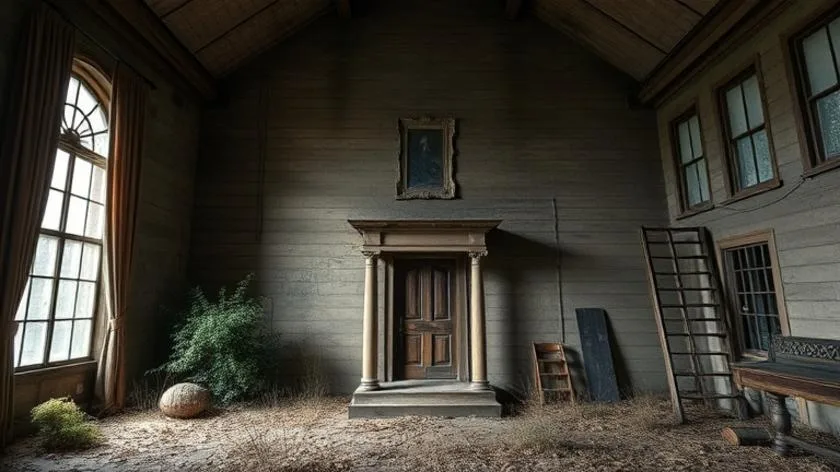
Old House Supernatural Stories Revealed
The allure of crumbling façades and creaking floorboards has captivated storytellers for centuries. When a family moves into a dilapidated property, the walls often seem to whisper, and the shadows take on a life of their own. These atmospheric details provide fertile ground for old house supernatural stories, where history and hauntings intertwine to create narratives that linger long after the lights are switched off.
Thank you for reading this post, don't forget to subscribe!Beyond the flickering candlelight and sudden cold drafts, there is a deeper cultural significance to these tales. They serve as cautionary lessons, reflections of communal anxieties, and sometimes, as genuine investigations into the unknown. Understanding this context helps readers appreciate how old house supernatural stories continue to evolve in modern folklore and popular media.
## Table of Contents
– Historical Context
– Common Phenomena in Haunted Dwellings
– Notable Cases Across Regions
– Investigation Techniques & Tools
– Comparison Table: Myths vs. Evidence
– Frequently Asked Questions
– Conclusion and Final Takeaways
## Historical Context {#historical-context}
The tradition of attributing supernatural activity to aged residences dates back to medieval Europe, where castles and manor houses were frequently chronicled in local legends. These stories often mixed religious symbolism with everyday fears—such as disease, war, or poverty—creating a tapestry of narrative that linked physical decay with moral decline.
In North America, the concept migrated with settlers who brought their ancestral superstitions westward. Over time, the narrative shifted: rather than feudal ghosts, the focus turned to lost pioneers, tragic accidents, and the lingering spirits of marginalized groups. This transition illustrates how cultural context reshapes the core motif of an old house supernatural stories.
## Common Phenomena in Haunted Dwellings {#common-phenomena}
| Phenomenon | Typical Description | Possible Natural Explanation |
|————|———————|——————————|
| Cold spots | Sudden drops in temperature, often near walls or doorways. | Drafts, poor insulation, or HVAC malfunctions. |
| Disembodied voices | Whispering, laughter, or clear speech heard without a source. | Audio pareidolia, building acoustics, or radio interference. |
| Object movement | Furniture sliding or items appearing in new locations. | Vibrations from nearby traffic, uneven flooring. |
| Light anomalies | Flickering lights, unexplained glows, or orbs. | Electrical faults, dust particles reflecting light. |
| Apparitions | Transparent figures or silhouettes seen peripherally. | Sleep paralysis, infrasound effects, or visual afterimages. |
These recurring elements create a recognizable pattern that storytellers exploit, while investigators seek rational explanations before invoking the supernatural.
## Notable Cases Across Regions {#notable-cases}
1. **The Willow Creek Farm (Midwest, USA)** – Residents reported a recurring scent of jasmine and soft piano music at midnight. Investigation revealed a hidden radio transmitter buried beneath the attic, possibly a prank left by a former tenant.
2. **Briarwick Hall (England)** – Known for its persistent “Lady in White” sightings. Historical records confirm a 17th‑century tragedy involving a maid who vanished during a fire, lending credence to the visual accounts.
3. **Mendoza Villa (Chile)** – Guests described a chilling presence in the basement accompanied by the sound of a child’s lullaby. Seismic activity in the area had created subtle floor vibrations that resonated in low frequencies, producing a disconcerting auditory effect.
These examples demonstrate how local history, environmental factors, and human perception combine to shape haunted mansions narratives.
## Investigation Techniques & Tools {#investigation-techniques}
Professional paranormal investigators employ a blend of scientific rigor and open‑minded documentation. Common methods include:
– **EMF Meters** – Measure fluctuations in electromagnetic fields that could indicate equipment interference or natural phenomena.
– **Thermal Imaging Cameras** – Capture temperature variance across surfaces, pinpointing cold spots for further analysis.
– **Audio Recorders with Low‑Frequency Filters** – Isolate sounds below human hearing range, which sometimes precede perceived apparitions.
– **Digital Video Surveillance** – Continuous recording provides a timeline for anomalous events, allowing frame‑by‑frame review.
While these tools are indispensable, critics argue that many “evidence” videos suffer from low lighting, camera artifacts, or confirmation bias. A balanced approach—using tools as supplements rather than definitive proof—remains the most credible pathway.
For readers interested in a deeper dive, explore the full methodology guide that outlines step‑by‑step procedures for conducting a respectful house investigation.
## Comparison Table: Myths vs. Evidence {#comparison-table}
| Mythic Claim | Documented Evidence | Likely Explanation |
|---|---|---|
| Walls bleed red liquid during full moon. | Photographs taken by multiple witnesses. | Oxidation of iron‑based paint under humidity. |
| Voices recite names of former owners. | Audio recordings with clear speech. | Radio frequencies from neighboring transmitters. |
| Shadows move independently of light sources. | Video evidence showing movement. | Reflections from glass or moving curtains. |
| Temperature drops trigger sudden illness. | Medical reports from occupants. | Drafts causing respiratory irritation. |
The table underscores how many legendary elements possess plausible, non‑paranormal explanations, reinforcing the need for careful scrutiny before labeling an event as supernatural.
## Frequently Asked Questions {#faqs}
**Q: Can an old house be haunted without any tragic history?**
A: Yes; perceived hauntings can arise from environmental factors alone.
**Q: Do paranormal investigators need a degree in physics?**
A: Formal training helps, but many succeed with disciplined self‑study.
**Q: How reliable are personal testimonies?**
A: They are valuable but prone to memory distortion and suggestion.
**Q: Are there legal implications for publishing a haunting story?**
A: Defamation laws may apply if false claims harm property value.
**Q: What role does folklore play in modern hauntings?**
A: Folklore provides templates that shape contemporary interpretations.
## Conclusion and Final Takeaways {#conclusion}
Old residences act as cultural mirrors, reflecting societal fears, historical wounds, and the endless human curiosity about what lies beyond our sensory reach. By examining old house supernatural stories through a lens that balances folklore with empirical investigation, readers gain a richer appreciation for both the narratives themselves and the environments that nurture them. Whether you are a skeptic, a storyteller, or an aspiring investigator, the interplay of architecture, atmosphere, and imagination invites continued exploration—always with a critical eye and respect for the mysteries that age‑worn walls may hold.
For those eager to verify the depth of this topic, a quick search can surface additional resources: Old House Supernatural Stories Revealed.
Continue to explore, question, and document responsibly; the next compelling tale may be waiting behind the next cracked doorway.