Gentle Full Body Flow Routines for Mindful Movement
In recent years, the desire for movement practices that honor both body and mind has grown dramatically. People are searching for ways to stay active without the high‑impact demands of traditional fitness regimes, and gentle full body flow routines have emerged as a compassionate answer. By weaving together slow, intentional sequences that travel through every major joint and muscle group, these routines offer a sustainable path to flexibility, balance, and inner calm.
Thank you for reading this post, don't forget to subscribe!Beyond the physical benefits, such practices cultivate mindfulness, allowing practitioners to tune into breath, sensation, and emotional states. When approached with consistency, gentle full body flow routines become a daily ritual that supports stress reduction, improved circulation, and a resilient nervous system. The following guide explores how to design and practice these movements for lasting well‑being.
Table of Contents
- Understanding Mindful Movement
- Principles of Gentle Flow
- Step‑by‑Step Routine Breakdown
- Adapting for All Levels
- Benefits Overview
- Safety Tips & Common Mistakes
- Routine Comparison Table
- Frequently Asked Questions
- Conclusion & Final Takeaways
Understanding Mindful Movement
Mindful movement is a practice that synchronizes breath, intention, and motion. It differs from vigorous cardio or strength training because its primary aim is presence rather than performance. When the body moves slowly, the nervous system receives clear signals that help shift from the sympathetic (fight‑or‑flight) mode to the parasympathetic (rest‑and‑digest) state. This transition underpins the therapeutic quality of the practice.
Many newcomers equate mindful movement with yoga, and that association is not accidental. In fact, the foundational yoga flow exercises provide a rich toolbox of poses that transition smoothly from one to the next, creating a continuous, meditative experience. However, the concept extends beyond traditional yoga; any sequence that respects the body’s limits while encouraging fluidity qualifies.
Principles of Gentle Flow
Designing an effective gentle full body flow routines hinges on three core principles:
- Alignment first: Each movement must honor joint mechanics, keeping bones stacked and muscles engaged without compression.
- Breath as guide: Inhale to open, exhale to deepen, allowing the breath to dictate tempo.
- Progressive integration: Begin with the ground, move through the spine, then incorporate the limbs, ensuring the entire kinetic chain participates.
These rules keep the practice safe, accessible, and profoundly grounding.
Step‑by‑Step Routine Breakdown
The following sequence illustrates a complete gentle full body flow routines session. Each step includes cueing for breath, alignment, and duration, making it easy to follow even without a teacher present.
1. Centering & Grounding (3 minutes)
Begin seated on a mat with legs crossed or extended, spine tall. Close eyes, inhale to lengthen the neck, exhale to release tension. Perform three rounds of deep belly breathing, feeling the drum of the diaphragm.
2. Cat‑Cow Flow (2 minutes)
Transition to hands‑and‑knees. Inhale, arch the back (cow), gaze forward; exhale, round the spine (cat), chin to chest. Repeat ten cycles, syncing each movement with the breath.
3. Low Lunge with Side Stretch (3 minutes)
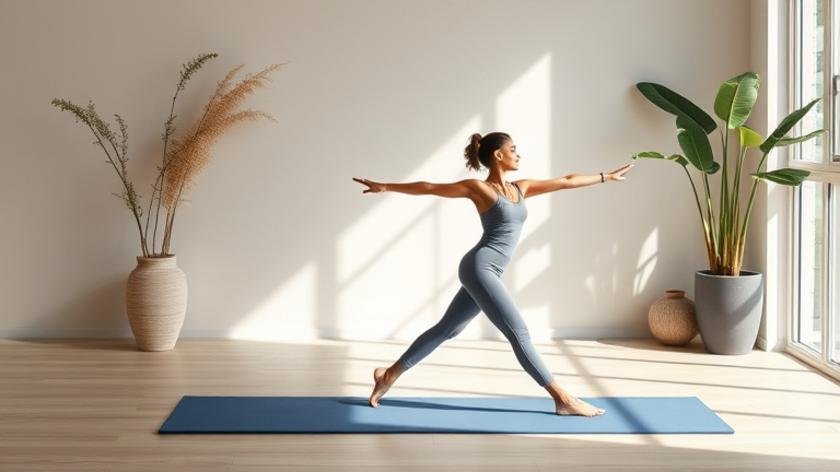
Step the right foot forward between the hands, lower the left knee. Inhale, raise the arms overhead; exhale, hinge at the waist, reaching the right hand toward the right foot for a gentle side‑bend. Hold three breaths, switch sides.
4. Thread the Needle (2 minutes)
From hands‑and‑knees, slide the left arm under the right shoulder, lowering the left shoulder to the mat. Rest the head, breathe deeply for five breaths. Repeat on the opposite side.
5. Seated Forward Fold (2 minutes)
Sit with legs extended, inhale lengthening the spine, exhale folding forward from the hips. Keep the spine long, grab the shins or feet, and breathe for six breaths.
6. Supine Twist (3 minutes)
Lie on the back, knees bent, feet flat. Drop both knees to the right while turning the head left, arms extended in a T‑shape. Breathe for eight counts, then switch sides.
7. Savasana (5 minutes)
Extend the legs, arms relaxed by the sides, palms up. Allow the body to absorb the practice, maintaining slow, natural breathing.
Throughout the sequence, maintain a gentle focus on the invitation of each movement rather than the achievement of a perfect pose. This mindset reinforces the therapeutic nature of the practice.
Adapting for All Levels
One of the strengths of gentle full body flow routines is their inherent flexibility. Beginners may keep knees wider in the low lunge, use props such as blocks or blankets, and limit the range of spinal twists. Advanced practitioners can intensify the experience by extending hold times, deepening stretches, or integrating subtle transitions between poses without returning to a neutral base.
For those with mobility restrictions, the entire sequence can be performed seated on a sturdy chair. The cat‑cow becomes a seated spinal roll, the low lunge transforms into a single‑leg seated stretch, and the supine twist can be mimicked with a seated torso rotation. Explore how chair adaptations work for a truly inclusive practice.
Benefits Overview
Regular engagement with gentle full body flow routines yields measurable outcomes across physical, mental, and emotional domains.
- Physical: Improved joint mobility, increased muscular endurance, enhanced circulation, and reduced chronic pain.
- Mental: Lowered cortisol levels, heightened concentration, and a stronger sense of present‑moment awareness.
- Emotional: Greater resilience to stress, amplified feelings of gratitude, and a calmer nervous system.
Research in mind‑body medicine confirms that low‑impact, breath‑linked movement can restore autonomic balance, a key factor in long‑term health.
Safety Tips & Common Mistakes
Practicing responsibly ensures the routine remains a source of healing rather than injury. Keep these guidelines in mind:
- Never push into pain; a mild stretch is acceptable, sharp discomfort is not.
- Maintain a neutral spine whenever possible; excessive rounding or overarching can strain the back.
- Use props liberally; a block under a hand or a pillow under the knees can make a huge difference.
- Stay hydrated and avoid practicing on a full stomach.
- Listen to your breath: if the rhythm feels forced, reduce the intensity.
Common errors include holding the breath, over‑extending the low lunge, and rushing through transitions. Awareness of these pitfalls keeps the practice gentle, as intended.
Routine Comparison Table
| Aspect | Gentle Full Body Flow | Traditional Power Yoga | High‑Intensity Interval Training (HIIT) |
|---|---|---|---|
| Intensity | Low‑to‑moderate | Moderate‑to‑high | Very high |
| Primary Goal | Mind‑body integration | Strength & flexibility | Cardiovascular conditioning |
| Equipment Need | Mat, optional props | Mat, blocks, straps | Timer, minimal equipment |
| Suitability for Beginners | Excellent | Good with guidance | Limited |
| Stress‑Reduction Effect | High | Moderate | Low to moderate |
Frequently Asked Questions
Can I practice these routines daily?
Yes, daily practice enhances flexibility and calm.
Do I need prior yoga experience?
No, the routines are designed for beginners.
How long should each session last?
20‑30 minutes is optimal for most people.
Can I use a bolster instead of a block?
Absolutely, any stable prop works.
Is it safe during pregnancy?
Consult a healthcare provider, then modify as needed.

Conclusion & Final Takeaways
Integrating gentle full body flow routines into your weekly schedule offers a balanced blend of movement, breath, and mindfulness. The approach respects the body’s limits while encouraging gradual expansion of range, strength, and inner awareness. Whether performed on a mat, a chair, or a carpeted floor, the principle remains the same: move with intention, breathe with ease, and stay present.
Start with the outlined sequence, adapt it to your unique needs, and notice the subtle yet profound shifts in how you feel both on and off the mat. For deeper exploration, consider researching the topic further through reputable sources. Search for additional insights and continue cultivating a practice that honors your whole self.