Ancient Witch Tales Revealed
Throughout history, societies have woven narratives that blend the mysterious with the mundane, offering a window into collective fears and aspirations. Among the most captivating of these narratives are ancient witch tales, stories that have survived wars, migrations, and cultural revolutions, preserving a shadowy glimpse of early magical belief systems. Scholars trace their roots to pre‑Christian Europe, where local deities and nature spirits often coexisted with shamanic figures, creating a fertile ground for legend‑building.
Thank you for reading this post, don't forget to subscribe!In contemporary research, these narratives serve as vital primary sources for understanding how early communities conceptualized power, gender, and the supernatural. By dissecting the layers of symbolism inherent in ancient witch tales, we gain insight not only into the mythic imagination but also into the social mechanisms that labeled certain individuals as outsiders, paving the way for later persecutions and the eventual emergence of Medieval Witchcraft. This article uncovers the origins, evolution, and enduring impact of these stories, providing a comprehensive roadmap for anyone interested in the deep currents that shape folklore.
Table of Contents
- Origins of Ancient Witch Tales
- Key Figures and Legends
- Rituals and Magical Practices
- Transmission Through Oral Tradition
- Influence on Later Folklore
- Modern Scholarship and Interpretation
- Comparison Table
- FAQ
- Conclusion and Final Takeaways
Origins of Ancient Witch Tales
The earliest fragments of what we now refer to as ancient witch tales emerge from Neolithic settlement layers in the Balkans and the Iberian Peninsula. Archaeological evidence—such as ritualistic pits, figurines with exaggerated features, and incised symbols—suggests a pre‑literate tradition of invoking female agency in matters of fertility, weather, and disease. These artifacts are often interpreted as visual companions to spoken narratives that warned of individuals capable of both healing and harming.
Anthropologists argue that these nascent stories were not static; they evolved alongside agricultural cycles and shifting power structures. As tribes merged or were conquered, the core motifs—often a solitary woman living on the edge of the forest—were adapted to embody the anxieties of the dominant culture. This fluidity is a hallmark that distinguishes ancient narratives from later, more codified doctrines of Medieval Witchcraft, which sought to systematize and, ultimately, criminalize the same archetype.
Key Figures and Legends
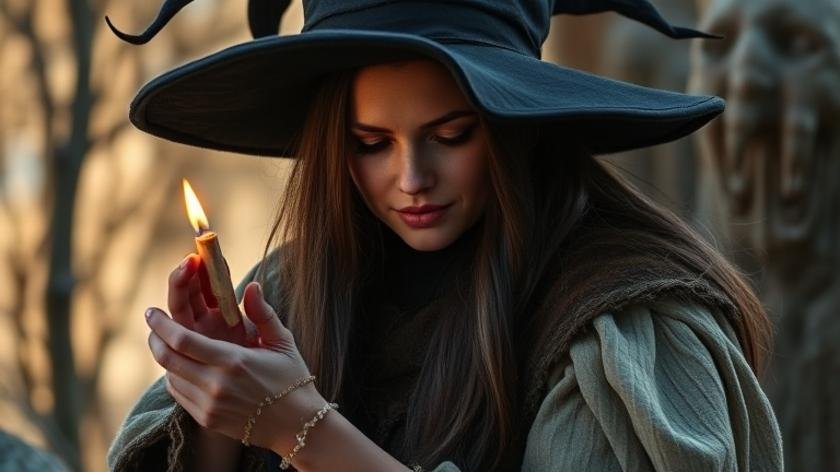
Among the recurring protagonists are the ‘herbalist maiden,’ the ‘moonlit seer,’ and the ‘cunning crone.’ Each character type reflects a distinct societal function: the herbalist supplied remedies, the seer mediated between the community and the unseen realm, and the crone embodied the fear of uncontrolled power. The legend of the “Lady of the Ash Grove,” for instance, tells of a woman who could summon fog to conceal the village from invading forces, a tale that appears in both Celtic and Slavic oral corpora.
These figures also illustrate the gendered dimensions of ancient magic. While men occasionally appear as shamans or druids, the majority of protagonists are women, reinforcing the notion that early societies associated mystic knowledge with the feminine. This gender bias became a crucial element in later legal texts that targeted women during witch hunts, thereby linking the ancient narrative ecosystem directly to historical persecution.
Rituals and Magical Practices
Rituals described in the stories often involve natural elements—herbs, stones, water, and celestial cycles. A common motif is the “triple‑moon rite,” a nocturnal ceremony performed at the waxing, full, and waning phases, believed to amplify the practitioner’s influence over crops and livestock. Participants would chant repeated phrases that echo the structure of the tales themselves, blurring the line between narrative and spell.
Another prevalent practice is the use of “binding knots,” where a practitioner ties a knot while reciting a story of a trickster deity. The knot is then kept as a talisman, believed to hold the narrative’s power and protect the owner from misfortune. These practices highlight the symbiotic relationship between storytelling and magical action, a dynamic that modern scholars continue to explore. For a deeper dive into these rites, explore the rituals in depth to see how the myths functioned as practical guides.
Transmission Through Oral Tradition
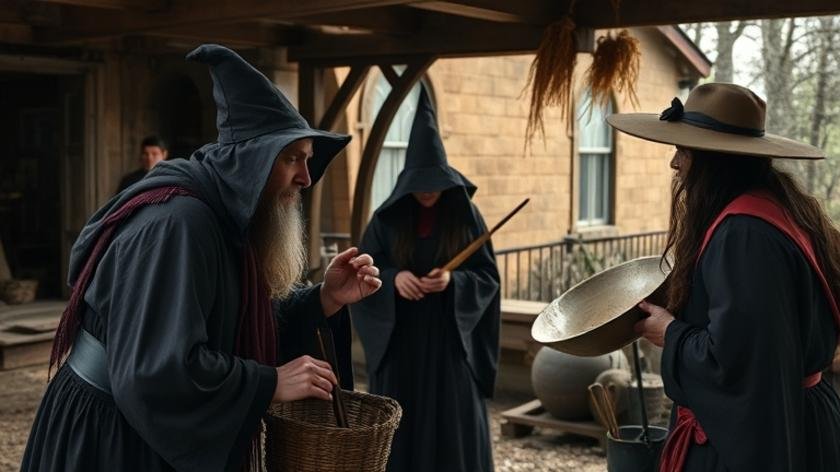
Before the advent of widespread literacy, these tales traveled along trade routes, pilgrim paths, and seasonal migrations. Bards and village storytellers served as living repositories, adapting each narrative to the local dialect and contemporary concerns. This oral elasticity ensured survival but also introduced regional variations, such as the substitution of local flora for universal herbs like sage or yarrow.
It is noteworthy that oral transmission allowed for subtle resistance. Communities embedded subversive messages—like critiques of feudal oppression—within the guise of a supernatural story. When a ruler attempted to suppress a particular narrative, the story would simply shift focus to a different protagonist while preserving the core moral, showcasing the resilience of ancient witch tales across centuries.
Influence on Later Folklore
The imprint of these early stories can be traced in medieval romances, Renaissance literature, and even contemporary fantasy. Elements such as the “witch’s familiar,” the “coven of three,” and the “sacred grove” originated in the ancient corpus, later reinterpreted to fit emerging religious paradigms. For example, the Christian myth of the “devil’s pact” mirrors earlier pacts between a practitioner and a nature spirit, merely swapping divine entities for demonic ones.
Furthermore, the narrative structure—introduction of a taboo, a transgressive act, and inevitable retribution—became a template for moral tales throughout European folklore. This lasting template demonstrates how ancient witch tales functioned as cultural DNA, perpetually reshaped yet recognizably rooted in their origin.
Modern Scholarship and Interpretation
Contemporary researchers employ interdisciplinary methods, combining archaeology, philology, and gender studies to reconstruct the context of these narratives. Digital humanities projects have mapped the geographic diffusion of key motifs, revealing clusters that correspond to ancient trade corridors. Meanwhile, feminist scholars reinterpret the central female figures as agents of ecological wisdom rather than merely victims of patriarchal suppression.
Despite the progress, debates persist regarding the extent to which these stories reflect genuine belief versus literary invention. Some argue that the prevalence of supernatural elements indicates a literal worldview, while others contend that the tales served metaphorical purposes, encoding communal values in an accessible format. For additional perspectives, read further analysis of the evolution of myth as it pertains to societal change.
Comparison Table
| Aspect | Oral Tradition | Written Record |
|---|---|---|
| Flexibility | High – stories adapted to local context. | Low – fixed text, limited variation. |
| Preservation | Vulnerable to loss with each generation. | Durable; archival storage possible. |
| Accessibility | Dependent on community storytellers. | Wider distribution via manuscripts and prints. |
| Interpretive Depth | Layered meanings through performance cues. | Static; relies on reader’s imagination. |
FAQ
- What time period do ancient witch tales date from? From the Neolithic era through the early Middle Ages.
- How are these tales different from medieval witchcraft narratives? They focus on communal rituals rather than codified accusations.
- Are any original texts surviving? Only fragmentary inscriptions; most survive orally.
- Do modern fantasy writers borrow from these tales? Yes, many motifs are directly inspired.
- Where can I research more about this topic? Academic journals and digital folklore archives.
Conclusion and Final Takeaways
The enduring allure of ancient witch tales lies in their ability to encapsulate humanity’s earliest attempts to make sense of the unseen world. By tracing their genesis, key characters, ritualistic content, and transmission methods, we uncover a complex tapestry that informs not only the historical phenomenon of Medieval Witchcraft but also contemporary storytelling practices.
For readers seeking a richer understanding of how mythic structures shape cultural identity, the journey through these ancient narratives offers both scholarly insight and timeless fascination. Continue exploring the layered world of folklore, and let the lessons of the past illuminate the pathways of modern mythmaking.
For further reading, you may wish to consult a broader search: Ancient Witch Tales Revealed.