Apollo 11 Mission Details
The historic voyage that first carried humans to another celestial body stands as a benchmark of engineering brilliance, international ambition, and human curiosity. When the United States launched the Saturn V from Kennedy Space Center on 16 July 1969, the world held its breath, aware that the outcome would reshape humanity’s place in the cosmos. The mission’s complexity—spanning rocket propulsion, orbital mechanics, life‑support systems, and precise navigation—required unprecedented coordination across thousands of specialists, each contributing a piece to the larger puzzle.
Thank you for reading this post, don't forget to subscribe!Decades later, the Apollo 11 mission details continue to inspire scholars, engineers, and space enthusiasts alike. By dissecting each phase—from launch through lunar surface EVA to safe return—readers gain insight into the rigorous planning, real‑time decision‑making, and technological innovations that made the first crewed Moonwalk possible. This comprehensive overview serves not only as a record of past achievement but also as a reference point for future endeavors beyond Earth’s orbit.
## Table of Contents
– Mission Overview
– Crew and Spacecraft
– Launch and Translunar Injection
– Lunar Descent and Surface Operations
– Return and Splashdown
– Comparative Mission Table
– FAQ
– Conclusion and Final Takeaways
## Mission Overview {#mission-overview}
The overall objectives of the Apollo 11 flight were to demonstrate that humans could travel to the Moon, land safely, conduct a brief extravehicular activity (EVA), and return to Earth with a successful splashdown. NASA’s broader goal—fulfilling President John F. Kennedy’s 1961 pledge to land a man on the Moon before the decade’s end—required a step‑by‑step demonstration of capability, and Apollo 11 was the culmination of that effort.
A three‑stage Saturn V rocket provided the raw thrust needed to escape Earth’s gravity well. Once in Earth orbit, the spacecraft performed a trans‑lunar injection (TLI) burn that placed it on a trajectory toward the Moon. The journey lasted roughly three days, during which the crew performed course corrections, system checks, and routine scientific observations. Upon reaching lunar orbit, the command module (CM) separated from the service module (SM), and the lunar module (LM) descended to the surface.
## Crew and Spacecraft {#crew-spacecraft}
Three astronauts comprised the mission’s core crew:
– **Neil A. Armstrong** – Commander, responsible for LM piloting and the historic first steps on the Moon.
– **Michael Collins** – Command Module Pilot, tasked with maintaining LM‑CM communications and orbital operations while the other two descended.
– **Edwin “Buzz” E. Aldrin Jr.** – Lunar Module Pilot, co‑pilot of the descent and second human to walk on the Moon.
The Apollo spacecraft consisted of two primary components:
1. **Command/Service Module (CSM)** – The cylindrical CM housed the crew during launch, translunar flight, and return. The SM contained propulsion, electrical power, and life‑support systems.
2. **Lunar Module (LM)** – A two‑stage vehicle designed solely for operation in vacuum. The descent stage provided thrust for landing, while the ascent stage contained the engine that would return the crew to lunar orbit.
Every subsystem—ranging from the guidance computer to the spacesuits—underwent exhaustive testing. Redundancy was built into critical systems, ensuring that a single failure would not jeopardize crew safety.
## Launch and Translunar Injection {#launch-translunar}
At 13:32 UTC on 16 July 1969, the Saturn V ignited its five F‑1 engines, generating 7.5 million pounds of thrust. The launch sequence unfolded in carefully timed milestones: liftoff, “S‑II” stage ignition, and eventual separation of the S‑IVB third stage, which housed the engine for the TLI burn.
The TLI maneuver occurred 2 hours 58 minutes after liftoff, accelerating the spacecraft to a velocity of approximately 10.8 km/s relative to Earth. This burn inserted Apollo 11 onto a free‑return trajectory that would bring it around the Moon and back toward Earth, a safety feature in case of major system failure. Real‑time telemetry allowed mission control to verify burn performance within tight margins, adjusting the flight path as needed.
## Lunar Descent and Surface Operations {#lunar-descent}
The critical phase of descent began when the LM separated from the CSM at 95 km altitude over the lunar farside. After a brief coast, the LM entered a 60 km elliptical orbit, then performed a de‑orbit burn to lower its pericynthion (closest point) to roughly 15 km. The guidance computer, programmed with pre‑flight data and real‑time radar inputs, guided the LM through a series of “braking” burns to reduce horizontal velocity.
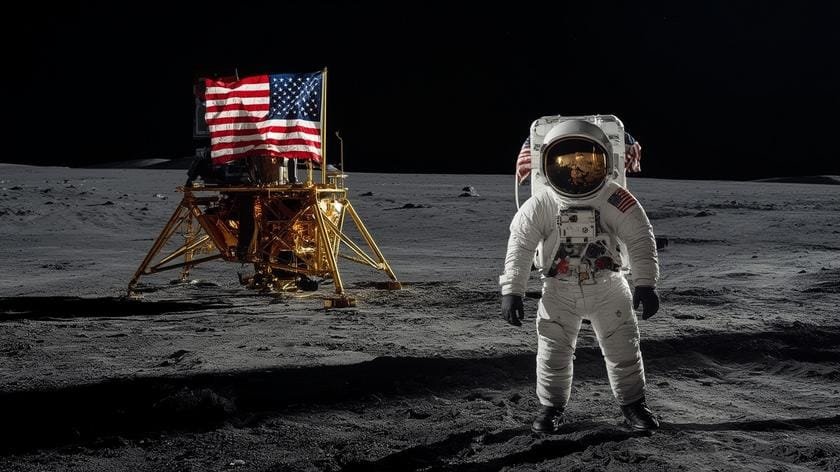
On 20 July 1969 at 20:17 UTC, the LM’s descent engine cut off just 2 seconds before the surface—signifying a “soft landing” at 0.8 km/s. Armstrong famously reported, “Houston, Tranquility Base here. The Eagle has landed.” The crew then conducted a 2 hour 15 minute EVA, during which Armstrong and Aldrin collected lunar rock samples, deployed scientific instruments, and planted the United States flag.
These activities were not only symbolic; they provided data critical for future exploration. The Apollo 11 mission details emphasize the importance of the “Moon Landing” in demonstrating that humans could operate on another world’s surface for extended periods, a prerequisite for sustained presence.
## Return and Splashdown {#return-splashdown}
After a 21‑hour surface stay, the LM’s ascent stage ignited, lifting off to rendezvous with the CSM. Docking was completed at 03:07 UTC on 21 July, and the crew transferred back to the CM, discarding the LM ascent stage. The SM’s service propulsion system performed a trans‑Earth injection (TEI) burn, sending the spacecraft on a return trajectory toward Earth.
Re‑entry began at approximately 108 km altitude, where the CM’s heat shield endured temperatures exceeding 2,700 °C. At 16:50 UTC, the parachute system deployed in three stages, slowing the capsule to a splashdown speed of about 7 m/s. The Pacific Ocean recovery forces—USS Hornet and accompanying helicopters— secured the crew and extracted them without incident. The mission concluded with a safe recovery, marking the culmination of a 195‑day program from conception to completion.
## Comparative Mission Table {#comparison-table}
Below is a concise comparison of the three Apollo missions that achieved lunar landing, highlighting key performance metrics that inform future exploration planning.
| Metric | Apollo 11 | Apollo 12 | Apollo 13 |
|---|---|---|---|
| Launch Date | 16 Jul 1969 | 14 Nov 1969 | 11 Apr 1970 |
| Lunar Landing Site | Sea of Tranquility | Ocean of Storms | – (Abort) |
| Total EVA Time | 2 h 15 m | 3 h 44 m | – (No EVA) |
| Samples Returned (kg) | 21.55 kg | 34.3 kg | – (No landing) |
| Mission Duration | 8 days 3 h | 10 days 4 h | 6 days 18 h |
| Key Lesson | Proof of concept | Operational refinement | System redundancy importance |
The table underscores how each successive mission built upon the lessons learned from its predecessor, expanding scientific return while reinforcing safety protocols.
## FAQ {#faq}
**What was the primary objective of Apollo 11?**
To land a human on the Moon and return safely.
**Who were the astronauts on the mission?**
Neil Armstrong, Michael Collins, Buzz Aldrin.
**How long did the crew stay on the lunar surface?**
Approximately 21 hours.
**What vehicle performed the lunar landing?**
The Lunar Module “Eagle.”
**Which rocket launched Apollo 11?**
The Saturn V launch vehicle.
## Conclusion and Final Takeaways {#conclusion}
The Apollo 11 mission details illuminate a story of meticulous planning, bold execution, and technological triumph. By dissecting each stage—from the thunderous lift‑off of the Saturn V to the quiet splashdown in the Pacific—readers can appreciate how coordinated effort transformed a national ambition into an enduring human legacy. The achievement set a benchmark for risk mitigation, system redundancy, and international cooperation, lessons that remain directly applicable to contemporary initiatives such as Artemis and future Mars expeditions.
Understanding the intricacies of this historic flight not only honors the individuals who made it possible but also equips the next generation of engineers, scientists, and explorers with a proven roadmap for venturing beyond Earth. For those eager to delve deeper, consult the comprehensive archives or explore related research through a quick search of the article’s title:
Search Apollo 11 Mission Details.
Feel free to revisit the sections above for a refresher, and consider sharing this analysis with colleagues who value thorough, evidence‑based perspectives on space exploration.