Discovering International Traditional Cooking Tools
Across continents and centuries, the evolution of cooking implements tells a vivid story of human ingenuity, cultural exchange, and the intimate relationship between food and society. From the simmering pots of ancient Mesopotamia to the bamboo steamers of East Asia, each artifact embodies a region’s climate, available resources, and culinary philosophies. Understanding these artifacts provides insight not only into historic diets but also into the social rituals that shaped communal life.
Thank you for reading this post, don't forget to subscribe!Today, culinary enthusiasts and professional chefs alike seek to reconnect with the past by incorporating international traditional cooking tools into modern kitchens. This resurgence highlights a growing appreciation for authenticity, sustainability, and the tactile pleasure of handcrafted utensils. By exploring the rich tapestry of such implements, we can deepen our respect for the cultures that forged them and inspire new generations of cooks to honor timeless techniques.
Table of Contents
- Historical Roots of Traditional Cooking Tools
- Regional Highlights
- Materials and Craftsmanship
- Modern Adaptations and Culinary Impact
- Tool Comparison Table
- Frequently Asked Questions
- Conclusion and Final Takeaways
Historical Roots of Traditional Cooking Tools
The earliest cooking devices emerged alongside the discovery of fire, transforming raw ingredients into safer, more digestible meals. Archaeological sites in the Levant reveal clay crucibles dating back to 10,000 BCE, while stone mortars and pestles appear in prehistoric European contexts. These implements were not merely functional; they often bore symbolic decorations, indicating a spiritual reverence for nourishment.
As trade routes expanded—Silk Road, trans‑Saharan caravans, and maritime spice lanes—technology traveled alongside goods. Metalworking introduced bronze and later iron, allowing for sturdier cauldrons, griddles, and spit rods. Each innovation was adapted to local cooking styles: the heavy Dutch oven suited slow‑braised European stews, while thin‑walled copper woks facilitated rapid stir‑frying in Chinese markets. For readers eager to explore the detailed history, the diffusion of these tools illustrates a shared human quest for flavor and efficiency.
Regional Highlights
Every continent boasts a distinctive set of implements that reflect indigenous ingredients and climate. Below, we examine a selection of iconic pieces, illuminating how geography and tradition intertwine.
Asia
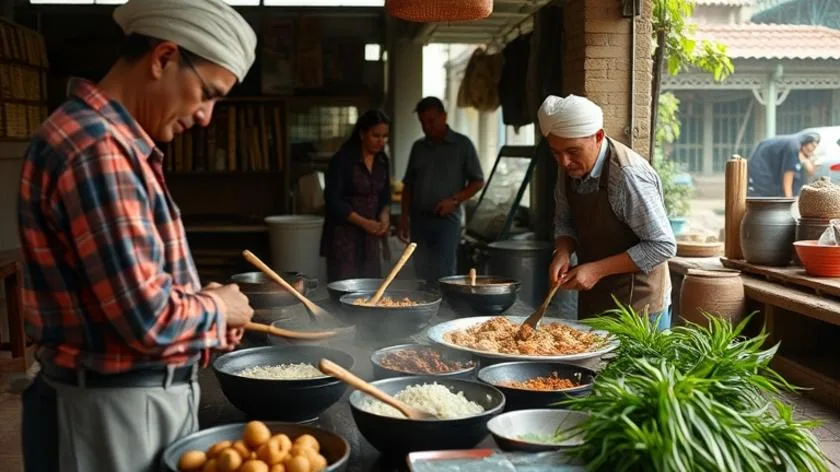
In East Asia, the wok’s curved base enables high‑heat searing with minimal oil, a technique central to Chinese stir‑fry. Complementing the wok, the bamboo steamer layers delicately over boiling water, preserving moisture while allowing flavors to mingle. In Southeast Asia, the mortar and pestle—often carved from granite—are essential for grinding fresh chilies, lemongrass, and galangal into aromatic pastes.
Europe
Western Europe’s culinary heritage is anchored by the cast‑iron Dutch oven, prized for its even heat distribution and ability to transition from stovetop to oven. The French copper sauté pan, with its responsive conductivity, supports precise reduction sauces. Meanwhile, the Italian pasta‑making trough—known as a pasta lagana—pairs with a wooden rolling pin to flatten dough to the perfect thickness.
Africa
In West Africa, the tuwon and large earthenware pots are used for slow‑cooking hearty stews like egusi, where the pot’s thick walls retain heat for hours. North African cuisine relies on the tagine, a conical‑lid clay vessel that circulates steam, infusing meat and vegetables with fragrant spices.
Americas
The Andean region’s stone griddle, the pachamanca, enables earth‑oven cooking, where hot stones surround wrapped food, cooking it in its own juices. In Mexico, the comal— a flat, cast‑iron griddle—serves as the workhorse for roasting tortillas, chiles, and spices. These implements embody Cultural kitchen utensils that have endured for centuries.
Materials and Craftsmanship
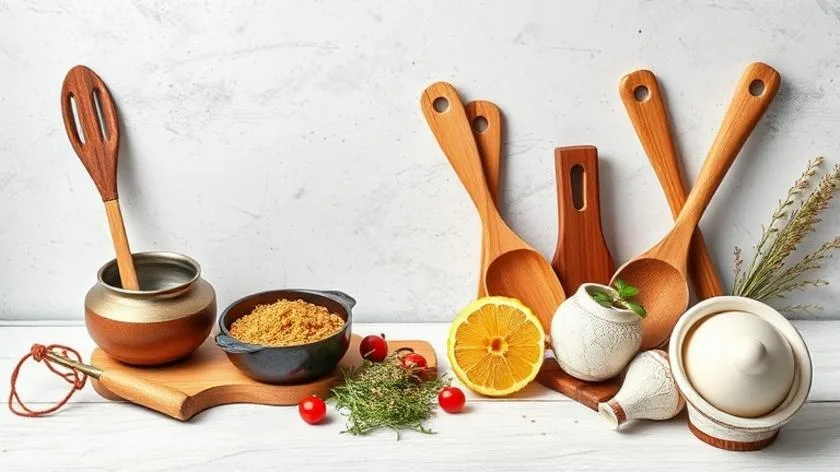
Traditional tools are often products of locally sourced materials, each chosen for its performance characteristics. Clay offers excellent heat retention but can be fragile; iron provides durability and consistent warmth; copper excels in rapid temperature changes; bamboo and wood contribute lightweight flexibility and sustainability. Artisans employ techniques such as hand‑shaping, sand‑casting, and natural glazing, ensuring each piece bears a unique signature.
Modern makers frequently revive these age‑old methods, partnering with heritage craftsmen to produce limited‑edition collections. This fusion of old and new not only preserves cultural knowledge but also meets contemporary culinary standards. Readers interested in see the material comparison will find that choosing the right tool depends on factors like cooking temperature, moisture control, and desired flavor development.
Modern Adaptations and Culinary Impact
While authenticity is prized, many chefs adapt international traditional cooking tools to suit contemporary kitchens. For instance, stainless‑steel renditions of the classic wok provide dishwasher‑safe convenience without sacrificing the high‑heat sear. Similarly, silicone‑coated bamboo steamers offer non‑stick performance while retaining the traditional steaming principle.
These adaptations broaden accessibility, allowing home cooks to experiment with global techniques without extensive investments. Moreover, the tactile experience of working with hand‑crafted tools encourages mindfulness, slowing the cooking process and fostering a deeper connection to ingredients. The resurgence of these tools has also sparked a renewed interest in sourcing regional produce, further reinforcing sustainable food systems.
Tool Comparison Table
| Tool | Region | Primary Material | Typical Use | Pros | Cons |
|---|---|---|---|---|---|
| Wok | East Asia | Carbon steel or cast iron | Stir‑fry, deep‑fry | Rapid heat, versatile | Requires seasoning |
| Tagine | North Africa | Clay (earthenware) | Slow‑cook stews | Moist‑heat retention | Fragile, long heat‑up |
| Dutch Oven | Western Europe | Cast iron (enameled) | Braise, bake, simmer | Even heat, durable | Heavy, pricey |
| Comal | Mexico | Cast iron or steel | Toast, roast, sear | Flat surface, quick | Can warp if overheated |
| Bamboo Steamer | East Asia | Bamboo layers | Steam vegetables, dumplings | Light, natural aroma | Limited size, occasional splintering |
Frequently Asked Questions
- What defines a traditional cooking tool? A utensil crafted using historic methods and materials native to a region.
- Can I use modern materials safely? Yes, provided they mimic the original tool’s heat properties.
- Where can I buy authentic pieces? Specialty heritage markets or reputable online artisans.
- Do these tools require special care? Most need seasoning or gentle hand‑washing to preserve longevity.
- Are they environmentally friendly? Many are sustainable, especially those made from renewable resources.
Conclusion and Final Takeaways
The resurgence of international traditional cooking tools reflects a broader cultural movement toward authenticity, sustainability, and tactile craftsmanship. By recognizing the historical context, regional diversity, and material ingenuity behind each implement, cooks can make informed choices that respect tradition while enhancing modern culinary practice.
Whether you’re a professional chef seeking to enrich a menu or a home enthusiast eager to explore new techniques, integrating these time‑honored tools offers both flavor depth and a tangible link to the cultures from which they emerged. For further exploration, consider conducting a focused web search on the topic: Discovering International Traditional Cooking Tools. This will provide additional resources, scholarly articles, and market options to deepen your knowledge.
Take the next step by thoughtfully selecting a piece that resonates with your cooking style, and experience the lasting impact of centuries‑old craftsmanship on today’s meals.