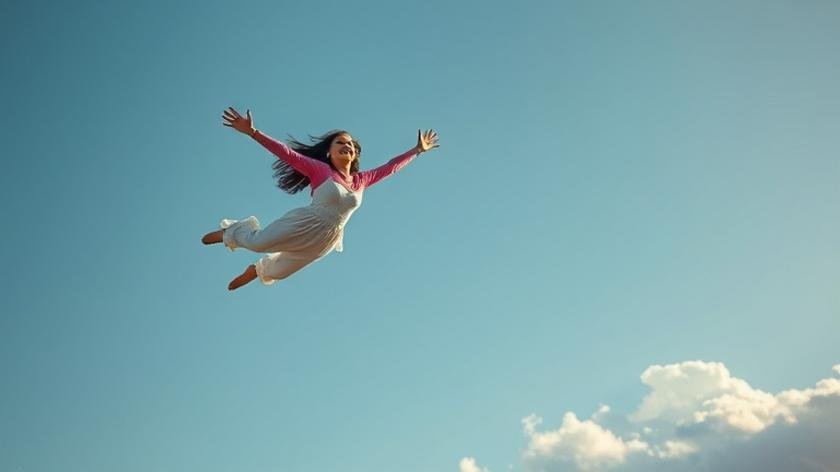
Dream Flying with Joy: Soaring to New Heights
The concept of soaring above everyday constraints taps into a deep‑seated human yearning for uplift. When people speak of dream flying with joy, they are not merely describing a whimsical fantasy; they are invoking a transformative experience that can reshape perception, boost confidence, and expand creative horizons. Modern research in neuroscience, psychology, and even biomechanics suggests that imagined flight activates the same neural pathways as actual movement, creating a potent feedback loop between mind and body. This synergy explains why the practice has migrated from mythic storytelling to structured personal‑development programs worldwide.
Thank you for reading this post, don't forget to subscribe!Beyond the scientific intrigue, the practice offers a tangible pathway to a broader sense of Freedom. Participants often report a release of mental tension, a heightened sense of agency, and an emotional uplift that lingers long after the session ends. By deliberately engaging with the sensation of gliding through imagined skies, individuals cultivate resilience, sharpen focus, and renew a zest for life that can permeate professional, creative, and relational domains. The following guide unpacks the theory, methodology, and measurable outcomes of this empowering pursuit.
## Table of Contents
– Understanding the Phenomenon
– Scientific Perspectives
– Practical Techniques for Experiencing Dream Flying
– Mental Preparation and Mindset
– Tools, Environments, and Safety
– Benefits and Potential Risks
– Comparison of Common Approaches
– Frequently Asked Questions
– Conclusion and Final Takeaways
### Understanding the Phenomenon
The human brain is wired to simulate experiences as a survival mechanism. From early childhood, we rehearse actions mentally before executing them physically—a process known as “motor imagery.” When this capability is directed toward the sensation of flight, the brain conjures a vivid sense of elevation, wind, and motion without any external stimulus. Practitioners describe it as a blend of heightened visual clarity, a palpable feeling of buoyancy, and an emotional surge akin to childhood wonder.
Historically, cultures worldwide have embedded flight symbolism in myths, religious visions, and ritual dances. In contemporary settings, the motif has resurfaced in therapeutic contexts, sports psychology, and creative coaching. The resurgence is not coincidental; it reflects a growing acknowledgment that deliberately imagined movement can fortify neural plasticity, improve motor coordination, and nurture emotional balance.
### Scientific Perspectives
Neuroimaging studies reveal that imagined flight activates the premotor cortex, the cerebellum, and even the vestibular system—areas traditionally associated with real physical motion. Functional MRI scans of participants engaged in guided visualizations show increased blood flow comparable to light aerobic exercise, supporting the notion that the brain treats vivid imagination as a form of “mental workout.”
Hormonal analysis adds another layer of insight. Researchers have documented spikes in dopamine and endorphins during sustained flight imagery sessions, mirroring the biochemical profile of activities that generate pleasure and reward. This physiological response explains why many report a lingering sense of euphoria after a dream flying with joy session.
### Practical Techniques for Experiencing Dream Flying
Implementing the practice requires a structured approach that blends physical posture, breath control, and guided visualization. Below is a step‑by‑step framework widely used by instructors:
1. **Grounding Pose** – Begin seated or kneeling with a straight spine, feet flat on the floor. This stabilizes the vestibular system and primes the nervous system for movement imagination.
2. **Breath Synchronization** – Inhale deeply through the nose for four counts, hold for two, then exhale through the mouth for six. This rhythmic pattern enhances oxygenation and induces a calm yet alert state.
3. **Sensory Anchors** – Imagine the texture of air against your skin, the subtle temperature shift, and the faint sound of wind. Engaging multiple senses deepens the vividness of the mental scene.
4. **Lift-Off Visualization** – Picture yourself gently rising from the ground, feeling weightlessness as you ascend. Maintain a sense of control by visualizing a soft, supportive cushion beneath your feet.
5. **Flight Path Exploration** – Direct your mind to glide over familiar landscapes, altering altitude and speed at will. Incorporate purposeful goals, such as soaring toward a sunrise or gliding through a cloud arch.
6. **Landing Integration** – Conclude by slowly descending, feeling your feet reconnect with the earth. Transition into a brief reflection on emotions and physical sensations experienced.
Practitioners who routinely employ these steps report gradual improvements in concentration, muscular relaxation, and a heightened appreciation for everyday moments. For deeper insights, consult this guide that expands on each component with video demonstrations.
### Mental Preparation and Mindset
The mental backdrop of any dream flying with joy session determines its efficacy. Central to preparation is cultivating a mindset of Freedom—an internal release from self‑imposed limitations. Techniques such as mindfulness meditation, affirmational scripting, and cognitive reframing help dismantle internal barriers.
One effective exercise involves writing a brief “flight charter” before the session. Outline your desired emotional state, the scenery you wish to explore, and any symbolic goals (e.g., “release anxiety” or “embrace curiosity”). This pre‑flight planning mirrors the way pilots file flight plans, framing the mental journey with purpose and direction.
### Tools, Environments, and Safety
While no specialized equipment is mandatory, certain tools can enhance the immersive quality of the practice:
– **Ambient Soundtracks** – Low‑frequency wind sounds or soft instrumental music create an auditory canvas that reinforces visualizations.
– **Aroma Diffusers** – Scents like pine, eucalyptus, or sea breeze can trigger associative memories of open spaces, deepening the realism of the imagined flight.
– **Lighting** – Dimming the room or using a soft, warm lamp reduces visual distractions and encourages focus.
Safety considerations revolve around mental health and physical posture. Individuals with a history of severe anxiety, dissociation, or vestibular disorders should consult a healthcare professional before engaging intensely with flight imagery. Maintaining a neutral spine and avoiding prolonged static positions prevents muscular strain.
### Benefits and Potential Risks
When practiced responsibly, dream flying with joy offers a suite of measurable benefits:
– **Cognitive Enhancement** – Improves spatial reasoning, working memory, and problem‑solving speed.
– **Emotional Regulation** – Elevates mood, reduces perceived stress, and fosters a sustained sense of optimism.
– **Physical Relaxation** – Lowers heart rate variability, alleviates muscle tension, and supports better sleep quality.
Potential risks are minimal but worth noting. Over‑immersion without grounding can lead to temporary disorientation, especially in individuals prone to derealization. To mitigate this, always conclude sessions with a grounding routine (e.g., feeling the floor, naming five physical sensations).
### Comparison of Common Approaches
The table below contrasts three prevalent methodologies for achieving the sensation of flight. Each approach varies by intensity, required equipment, and target outcomes.
| Approach | Core Technique | Equipment Needed | Primary Benefits | Ideal For |
|---|---|---|---|---|
| Guided Visualization | Structured audio narrative combined with breath work | Headphones, optional aromatherapy | High emotional uplift, quick entry | Beginners seeking immediate experience |
| Somatic Movement | Physical gestures mirroring take‑off and gliding | Open space, yoga mat | Enhanced body awareness, muscular relaxation | Practitioners wanting kinesthetic integration |
| VR‑Assisted Flight | Immersive virtual reality with haptic feedback | VR headset, motion tracker | Maximum visual realism, deep immersion | Tech‑savvy users with access to hardware |
### Frequently Asked Questions
**What is the optimal duration for a single session?**
15–20 minutes for beginners; 30–45 minutes for advanced practitioners.
**Can I practice dream flying with joy without prior meditation experience?**
Yes, the guided steps include foundational breathing techniques.
**Do I need special equipment?**
No, though headphones or calming scents can enhance the experience.
**Is this practice safe for children?**
Supervised sessions with age‑appropriate language are generally safe.
**How often should I practice to see benefits?**
3–4 times per week yields noticeable improvements in mood and focus.
### Conclusion and Final Takeaways
The intersection of imagination, physiology, and emotional health makes dream flying with joy a uniquely versatile practice. By deliberately engaging the brain’s motion‑simulation circuits, individuals unlock a sense of Freedom that resonates across personal and professional realms. Whether approached through simple guided visualization, active somatic movement, or cutting‑edge VR, the essential principles remain consistent: clear intention, rhythmic breath, and a supportive environment.
Integrating this practice into a regular wellness routine can catalyze mental clarity, emotional resilience, and a renewed zest for exploration. As with any skill, patience and consistency are key; start with brief, grounded sessions and gradually expand the scope of your imagined journeys. Over time, the exhilaration of soaring—once confined to dreams—becomes an accessible, empowering resource for everyday life.
For those ready to embark on this uplifting path, consider exploring additional resources and community groups that share experiences and techniques. The sky, after all, is only the beginning.