Folklore Legends From Around The World
The allure of storytelling is timeless, yet each culture weaves its own tapestry of wonder through folklore legends from different cultures. From the haunting echoes of ancient forests to the bustling markets where oral histories are traded like precious spices, these narratives shape identities and preserve collective memory.
Thank you for reading this post, don't forget to subscribe!When we journey across continents, we discover that folklore legends from different cultures are not isolated curiosities but a global dialogue of values, fears, and aspirations. Understanding these tales offers insight into how societies interpret the natural world and negotiate the mysteries of human existence.
Table of Contents
- Ancient European Legends
- Asian Tales and Mythology
- African Spirit Stories
- Americas Indigenous Myths
- Comparison of Legend Types
- FAQ
- Conclusion and Final Takeaways
Ancient European Legends
Europe’s mythic landscape is dotted with giants, dragons, and heroic knights. In the British Isles, the legend of King Arthur blends chivalric ideals with Celtic supernatural elements, while Scandinavia offers the sagas of Odin and Thor, where gods walk among mortals and battle cosmic forces. These stories survive in medieval manuscripts, art, and contemporary adaptations that keep the old worlds alive.
Modern scholars trace recurring themes such as the “hero’s quest” and the “trickster” archetype, demonstrating that even distant societies share fundamental narrative structures. For readers eager to explore further, delve deeper into the roots of heroic epics across the continent.
Asian Tales and Mythology
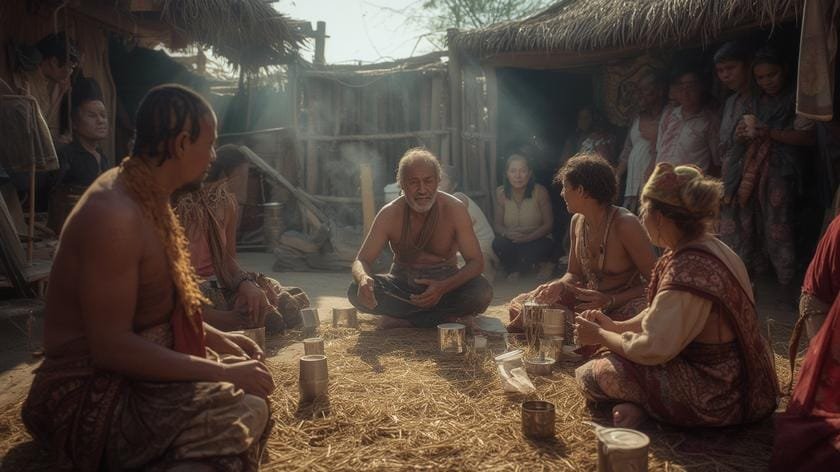
From the celestial dragons of Chinese lore to the intricate court tales of Japanese kami, Asian narratives reflect a deep reverence for harmony and balance. The Indian epic Mahabharata, for instance, intertwines divine intervention with human drama, illustrating moral dilemmas that still resonate today. In Southeast Asia, the spirit world is palpable; Indonesian folklore describes the “Leyak,” a shape‑shifting entity that roams the night.
These stories often serve as ethical guides, emphasizing virtues like loyalty, humility, and respect for nature. Their transmission through festivals, theater, and oral performance ensures that each generation receives a living connection to its ancestral past.
African Spirit Stories
The continent’s oral tradition thrives on vibrant characters such as Anansi the spider, a cunning trickster who traverses West African villages, and the Yoruba’s powerful orishas who mediate between the human and divine realms. In many societies, legends explain natural phenomena—rain, thunder, or disease—through the actions of ancestral spirits.
By examining folklore legends from different cultures within African contexts, we see how storytelling sustains communal bonds and imparts survival knowledge, especially in societies where written records are scarce.
Americas Indigenous Myths
Native narratives of the Americas span the dramatic creation myths of the Maya, who envision a world born from the maize, to the shape‑shifting skin‑walkers of Navajo tradition. The Andean peoples revere the condor as a messenger between earth and sky, while the Pacific Northwest’s raven stories illustrate a creator who brings light to darkness.
These legends preserve ecological wisdom, teaching sustainable harvest practices and respect for the land. For those interested in comparative study, explore how creation myths parallel those of other continents and reveal shared human curiosity about origins.
Comparison of Legend Types
| Region | Common Motif | Typical Hero/Entity | Modern Influence |
|---|---|---|---|
| Europe | Quest & Sword | Knight, Dragon | Fantasy novels, film franchises |
| Asia | Divine Intervention | Deity, Dragon | Martial arts cinema, RPGs |
| Africa | Trickster Wisdom | Spider, Ancestral Spirits | Folklore anthologies, cultural festivals |
| Americas | Creation & Transformation | Raven, Condor | Environmental documentaries, video games |
FAQ
- What defines a folklore legend? A traditional narrative passed orally, reflecting cultural values.
- Are legends the same as myths? Legends focus on human protagonists; myths involve gods.
- Why study legends across cultures? To uncover universal archetypes and cultural diversity.
- Do legends change over time? Yes, each retelling adapts to new contexts.
- Where can I find authentic sources? Academic journals, museum archives, and community storytellers.
Conclusion and Final Takeaways
The tapestry of folklore legends from different cultures weaves together humanity’s deepest fears, hopes, and moral compasses. By honoring these stories, we preserve not only entertainment but vital cultural knowledge that informs modern identity.
Continue your exploration through reputable collections, and consider how these age‑old narratives shape contemporary art, literature, and societal values. For additional research, consult the Google search or the Bing search for scholarly articles and multimedia resources.
Engage with the stories, respect their origins, and let them inspire a deeper connection to the world’s rich cultural heritage.