Historical Legends Based on Real Events
The fascination with stories that straddle the line between fact and fable has endured across cultures and centuries. When a tale can be traced to a documented clash, a recorded ruler, or an archaeological trace, it gains a credibility that pure folklore lacks. Scholars, writers, and enthusiasts alike turn to historical legends based on real events to explore how truth morphs into legend, how collective memory preserves fragments of reality, and how societies shape their identities around these narratives.
Thank you for reading this post, don't forget to subscribe!Yet the allure of these narratives is not merely academic. They offer insight into the values, fears, and aspirations of the people who transmitted them, illuminating the bridge between history and imagination. By dissecting the layers of truth, myth, and cultural reinterpretation, we can better understand why certain figures—whether kings, warriors, or outlaws—remain powerful symbols long after the dust of their era has settled. This exploration of historical legends based on real events invites readers to question the boundaries of recorded history and the enduring power of story.
## Table of Contents
– Origins of Historical Legends
– The Trojan War
– King Arthur and the Real Battles
– Robin Hood: Folk Hero or Fact?
– Mythology Versus History
– Comparison Table
– FAQ
– Conclusion and Final Takeaways
## Origins of Historical Legends
The earliest human societies preserved their achievements and tragedies through oral tradition before the invention of writing. Those narratives, passed from generation to generation, were subject to embellishment, condensation, and occasional omission. Over time, a kernel of fact—such as a battle won, a treaty signed, or a natural disaster endured—became intertwined with symbolic motifs that explained the world in terms understandable to the culture of the era.
Archaeologists often uncover material evidence that aligns with these stories. For instance, burial mounds in the British Isles correspond to accounts of legendary chieftains, while the ruins of city walls in Anatolia match descriptions of fortified towns besieged in epic poetry. Such intersections demonstrate how historical legends based on real events serve as a bridge between empirical data and collective memory.
## The Trojan War
One of the most iconic narratives is the Trojan War, immortalized by Homer’s *Iliad*. Long dismissed as pure myth, the war’s existence gained scholarly traction after the discovery of Hisarlik, the site traditionally identified as ancient Troy. Excavations revealed multiple settlement layers, including a Late Bronze Age city that showed signs of violent destruction.
While the epics blend godly interventions with human drama, the underlying conflict likely involved control of trade routes across the Aegean. Scholars argue that Mycenaean Greeks may have launched a raid on Troy to secure resources, an event later embellished into the romantic saga of Helen and gods. This case illustrates how a real geopolitical clash can be transformed into an historical legend based on real events that resonates through millennia.
## King Arthur and the Real Battles
King Arthur occupies a central place in the cultural imagination of Britain. The earliest references—such as the *Annales Cambriae* and the *Historia Brittonum*—mention a war leader named “Arthur” who fought against invading Saxons. However, the legendary elements—excalibur, Camelot, and the Round Table—appear centuries later in medieval romance.
Historical analysis points to multiple possible figures: a 5th‑century warlord leading Briton resistance, or a composite of several leaders whose deeds were merged. Recent archaeological surveys in southern England have uncovered battle sites from the period that align with strategic movements described in early sources. Though the full tableau of Arthurian myth cannot be corroborated, the underlying personage likely existed, casting him as another historical legend based on real events.
## Robin Hood: Folk Hero or Fact?
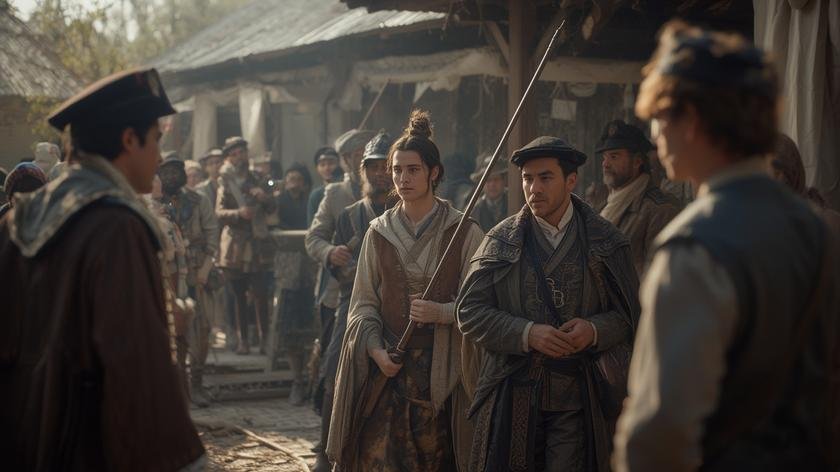
The legend of Robin Hood—a noble outlaw who robbed the rich to aid the poor—has endured in English folklore for over 800 years. Early ballads from the 14th century depict a figure with a distinctive bow, a band of merry companions, and a disdain for corrupt authority. Yet historians struggle to locate definitive proof of a single individual.
Some historians propose that the Robin Hood narrative aggregates multiple real rebels who resisted feudal oppression, especially during periods of social unrest such as the 12th‑century Anarchy. Evidence of peasant uprisings in Nottinghamshire and Yorkshire supports the notion that the legend reflects genuine social tensions, even if no single historical person embodied all attributes. The story thus exemplifies how collective yearning for justice can crystallize into an enduring historical legend based on real events.
## Mythology Versus History
When examining these narratives, the distinction between Mythological embellishment and factual core becomes crucial. Mythology often serves to explain natural phenomena, impart moral lessons, or legitimize ruling dynasties. History, on the other hand, seeks to reconstruct events through evidence and critical analysis.
| Aspect | Mythological Layer | Historical Core |
|———————–|————————————————–|————————————————-|
| **Purpose** | Moral teaching, cultural identity | Record of political, military, or social fact |
| **Transmission** | Oral poetry, ritual performance | Chronicles, inscriptions, material remains |
| **Typical Features** | Supernatural agents, symbolic numbers | Dates, locations, named participants |
| **Evidence Needed** | Comparative folklore, linguistic patterns | Archaeology, contemporaneous documents |
| **Interpretive Approach** | Symbolic reading, archetypal analysis | Critical historiography, source corroboration |
Understanding where the myth ends and history begins enables scholars to appreciate the cultural significance of each legend while still extracting verifiable information.
## Comparison Table
Below is a concise comparison of the four case studies discussed, focusing on the strength of historical evidence, the degree of mythic embellishment, and the modern scholarly consensus.
| Legend | Archaeological Support | Documentary Evidence | Mythic Elements | Scholarly Consensus |
|---|---|---|---|---|
| Trojan War | High (Hearlik excavations) | Moderate (Hittite records) | Divine intervention, heroics | Historical conflict, mythic overlay |
| King Arthur | Low (no definitive site) | Low (late medieval sources) | Excalibur, Camelot | Likely composite leader |
| Robin Hood | Low (regional battle evidence) | Low (ballads, later chronicles) | Merry Men, Yew tree archery | Symbol of resistance, unclear person |
| Trojan War (Greek perspective) | Medium (Mycenaean palaces) | High (Greek epic tradition) | Gods influencing outcomes | Blend of fact & literary art |
## FAQ
**What defines a historical legend?** A story with a verifiable event core that has been embellished over time.
**How can scholars separate fact from myth?** By cross‑referencing archaeological data with contemporary records.
**Are all legendary figures based on real people?** No; some are pure invention while others are composites.
**Why do societies preserve these legends?** They reinforce cultural values and collective memory.
**Can modern technology help verify legends?** Yes, tools like DNA analysis and remote sensing aid investigation.

## Conclusion and Final Takeaways
The exploration of historical legends based on real events reveals an enduring dialogue between truth and storytelling. While archaeology and textual criticism can illuminate the factual foundations of legends such as the Trojan War, King Arthur, and Robin Hood, they also expose the layers of cultural imagination that have reshaped those events into timeless narratives. Recognizing the interplay between documented evidence and symbolic expansion empowers readers to appreciate both the historical significance and the mythic resonance of these stories.
By maintaining a critical yet respectful approach, scholars and enthusiasts alike can continue to uncover the realities hidden beneath legendary façades, enriching our understanding of the past and its influence on present identity. For those eager to delve deeper, further research and interdisciplinary collaboration remain essential tools in the ongoing quest to decode the past.
discover more insights about how culture shapes history, and feel free to explore additional resources such as this Google search for broader perspectives.