Historical Legends That Shaped Our World
From the earliest sunrise over the Mesopotamian plains to the flickering lanterns of 18th‑century taverns, societies have woven stories that explain their origins, justify their values, and inspire future generations. These narratives, passed down through oral tradition and later through parchment and print, form a tapestry of shared memory that continues to shape cultural identities across the globe.
Thank you for reading this post, don't forget to subscribe!In this exploration we will unpack the most influential historical legends that have endured the test of time, revealing how they intersect with the broader currents of Mythology and how they still resonate in contemporary discourse. By examining the origins, evolution, and lasting impact of each tale, we gain insight into the forces that have guided human thought for millennia.
Table of Contents
- Ancient Civilizations
- Heroic Epics
- Religious Foundations
- Medieval Myths
- Modern Interpretations
- Comparative Evaluation
- FAQ
- Conclusion and Final Takeaways
Ancient Civilizations
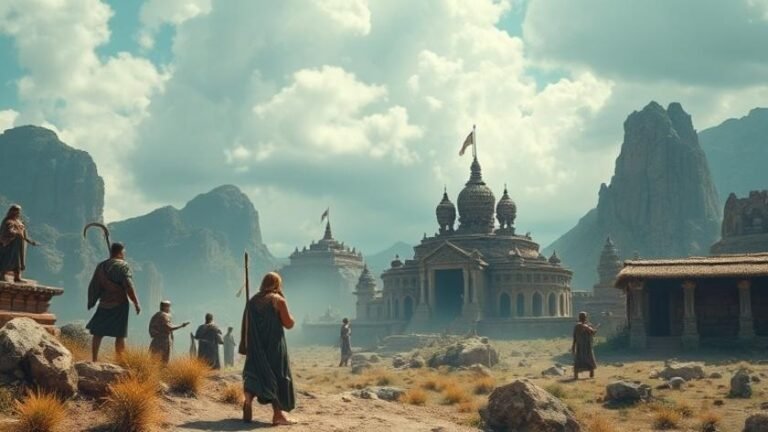
The earliest recorded historical legends emerge from the river valleys of Egypt, Sumer, and the Indus, where rulers claimed divine right through stories of birth and destiny. The Sumerian king list, for instance, blends mythic infancy narratives—such as the tale of Gilgamesh’s semi‑divine parentage—with actual dynastic records, creating a hybrid that legitimizes authority while captivating listeners.
Egyptian pharaohs employed the legend of Osiris and Isis to reinforce the notion of a ruler’s eternal life and cyclical renewal. In temple reliefs, the pharaoh is depicted as the living embodiment of Horus, a claim that not only solidified political power but also aligned the state with the cosmic order (ma’at). This alignment enabled the society to view military conquest, administrative reforms, and monumental construction as extensions of a sacred narrative rather than mere secular pursuits.
The Indus Valley, though less literarily documented, offers archaeological clues: seals bearing animal motifs and possible early deities suggest that trade routes were bolstered by shared mythic symbols. When merchants invoked a common protective legend, they built trust across cultures, facilitating the exchange of goods, ideas, and technologies that propelled urbanization.
explore the deeper context of these early stories reveals a pattern: every civilization sought to root its institutions in a timeless tale, providing a sense of continuity that survived wars, migrations, and environmental shifts.
Heroic Epics
Heroic epics stand at the nexus of entertainment and moral instruction, translating collective aspirations into vivid narratives. The Epic of Gilgamesh not only chronicles the adventures of a tyrannical king seeking immortality but also presents an early meditation on human mortality—a theme that reverberates through later Western literature.
Similarly, the Greek tradition of Homeric epics—The Iliad and The Odyssey—codified ideals of honor, hospitality, and cunning. While the characters are exaggerated, the underlying societal contracts they embody (xenia, kleos, arete) have informed Western ethical frameworks for centuries. The influence persists in modern storytelling, evident in contemporary cinema’s fascination with veteran warriors and reluctant heroes.
In the Indian subcontinent, the Mahābhārata and Rāmāyaṇa function as both mythic chronicles and didactic treatises. The battle of Kurukshetra, for instance, is interpreted not merely as a war but as an allegory for the internal conflict between dharma (righteousness) and desire. This layered reading encourages audiences to apply the narrative to personal ethical dilemmas, cementing its relevance across generations.
These epics illustrate a crucial point: the power of a legend lies in its adaptability. By embedding universal questions within culturally specific settings, they become vessels for both preservation and evolution of societal values.
Religious Foundations
Religious traditions often crystallize around foundational legends that explain the creation, purpose, and destiny of humanity. In Abrahamic faiths, the flood narrative—present in Genesis, the Qur’an, and earlier Mesopotamian texts—serves as a cautionary tale about divine retribution and moral renewal. Its repeated retelling across customs, art, and liturgy underscores the role of historical legends in shaping collective conscience.
Buddhist legends, such as the life of Siddhārtha Gautama, blend historical details with symbolic embellishments (e.g., the miraculous birth under a blooming lotus). These embellishments function less to assert factual accuracy and more to convey the transformative potential inherent in every individual—a core tenet of Buddhist practice.
In the Indigenous traditions of the Americas, legends like the Hopi emergence story articulate the relationship between people, land, and cosmos. By situating societal laws within a creation narrative, such legends reinforce stewardship responsibilities that remain vital amid contemporary environmental challenges.
Across these varied faiths, the intertwining of legend and doctrine creates a feedback loop: the legend legitimizes the belief system, and the belief system preserves and propagates the legend. This symbiosis explains the enduring presence of many of these narratives, regardless of historical scrutiny.
see related analysis that delves into how these stories have been reinterpreted in modern theological scholarship.
Medieval Myths
The medieval period witnessed an explosion of legend, fueled by the convergence of Christian doctrine, Viking sagas, and Arthurian romance. The legend of King Arthur, for instance, amalgamates possible historical fragments—a late 5th‑century warlord—with later chivalric ideals cultivated by Geoffrey of Chivalry and Thomas Malory. The Round Table becomes a metaphor for egalitarian governance, while the quest for the Holy Grail reflects a spiritual yearning that resonates in modern narratives of personal quest.
Norse sagas, such as the Mythology surrounding Odin and Thor, were codified in the *Poetic Edda* and *Prose Edda*. These texts preserve a worldview where the cosmos is a mutable battlefield, and heroic sacrifice ensures the continuation of order. The later Christianization of Scandinavia did not eradicate these legends; instead, they were woven into new literary forms, preserving cultural identity amid religious transition.
In the East, the Chinese legend of the Three Kingdoms era—popularized by the novel *Romance of the Three Kingdoms*—combines history with dramatic embellishment. Its emphasis on loyalty, strategy, and moral ambiguity has informed East Asian political philosophy and contemporary popular media, ranging from video games to television dramas.
These medieval legends illustrate a crucial phenomenon: the fusion of oral tradition, literary codification, and emerging political structures creates a dynamic repository that adapts to new ideological climates while retaining core narrative forces.
Modern Interpretations
The 20th and 21st centuries have witnessed a resurgence of interest in ancient legends, driven by academic revisionism, popular culture, and digital media. Historians now employ interdisciplinary methods—archaeology, linguistics, genetic analysis—to separate mythic overlay from empirical evidence, while simultaneously recognizing that the legend’s societal function can be as significant as any factual basis.
Cinema and television have reimagined legends for global audiences: the reinterpretation of the Trojan War in *Troy* (2004), the stylized retelling of Mulan’s story across animated and live‑action formats, and the adaptation of the Norse pantheon in the Marvel Cinematic Universe. Each iteration selectively amplifies aspects that align with contemporary values—female empowerment, anti‑hero complexity, or environmental stewardship—demonstrating the malleability of legends to serve current cultural narratives.
Digital platforms have also democratized legend-making. Fan fiction, role‑playing games, and collaborative world‑building projects on forums and wikis enable participants to extend or subvert traditional narratives, creating a participatory mythos that blurs the line between creator and audience. This participatory culture ensures that historical legends continue to evolve, reflecting the pluralistic identities of modern societies.
Comparative Evaluation
| Criterion | Ancient Civilizations | Heroic Epics | Religious Foundations | Medieval Myths | Modern Interpretations |
|---|---|---|---|---|---|
| Primary Purpose | Legitimize rulership | Model virtue & conflict | Explain cosmology & ethics | Blend history & chivalry | Entertain & reinterpret |
| Transmission Mode | Stone, clay, oral rites | Oral → written epic | Sacred texts & ritual | Manuscripts & oral folklore | Film, digital media, fan works |
| Enduring Influence | Political legitimacy | Western literary canon | Ethical frameworks | Popular fantasy tropes | Global pop culture |
| Adaptability | Moderate | High | Variable | High | Very high |
FAQ
- What defines a historical legend? A narrative that blends fact and myth to convey cultural values.
- Why do legends persist? They fulfill social, moral, and identity functions across generations.
- Can legends be factual? Elements may be historically grounded, but embellishment is common.
- How do modern media reshape legends? By updating themes, characters, and formats for contemporary audiences.
- Do all cultures have similar legends? Core archetypes recur, though specifics reflect local contexts.

Conclusion and Final Takeaways
The endurance of historical legends attests to humanity’s innate desire to locate meaning within the chaos of existence. Whether inscribed on stone tablets, sung around campfires, or streamed on digital platforms, these stories act as cultural scaffolding, informing governance, morality, and artistic expression. By dissecting their origins, evolution, and contemporary re‑imagining, we recognize a continuous dialogue between past and present—a dialogue that not only preserves heritage but also offers a flexible framework for future societal narratives.
Understanding the mechanisms that sustain these legends equips scholars, educators, and creators with tools to responsibly steward cultural memory while encouraging innovative reinterpretation. As the world becomes more interconnected, the shared repository of legend will likely expand, inviting diverse voices to contribute new chapters to the ever‑growing saga of human imagination.
Search for more resources and continue exploring how the past informs the stories we tell today.