How to Save Money on Gardening
Gardening can be an incredibly rewarding hobby, yet the costs of soil amendments, seeds, tools, and water can quickly add up, turning a tranquil pastime into a financial strain. Understanding how to save money on gardening begins with a mindset shift: view each expense as an opportunity for creativity rather than a fixed line item.
Thank you for reading this post, don't forget to subscribe!By embracing strategic planning, resourceful sourcing, and low‑impact techniques, even novice growers can cultivate lush, productive spaces without breaking the bank. The following guide walks you through practical steps that illustrate how to save money on gardening while still achieving vibrant results.
Table of Contents
- Planning Your Garden Wisely
- Soil and Compost Savings
- Seed and Plant Procurement Strategies
- Water Conservation Techniques
- DIY Tools and Upcycling
- Seasonal Maintenance on a Budget
- Using Community Resources
- Comparison Table
- FAQ
- Conclusion and Final Takeaways
Planning Your Garden Wisely
Before you break ground, invest time in a detailed garden plan. Sketch out the layout, noting sun exposure, wind patterns, and soil type. By selecting crops that match the micro‑climate of each bed, you reduce the need for supplemental lighting, heating, or protective covers—expenses that often catch beginners off guard.
Map out a planting calendar that staggers sowing dates. This approach maximizes harvest windows and allows you to reuse containers, trays, and seed-starting mixes across multiple crops. An organized calendar also prevents over‑planting, which can lead to wasted seedlings and depleted soil nutrients.
For those looking to keep costs down, prioritize perennials and self‑seeding varieties. Once established, these plants return year after year with minimal purchasing power, embodying the principle of how to save money on gardening. A well‑thought‑out plan also clarifies which tools you truly need, avoiding impulse purchases that clutter the shed.
Check out our comprehensive garden planning worksheet for a printable template that streamlines this process.
Soil and Compost Savings
The foundation of any thriving garden is healthy soil. Commercial potting mixes can be pricey, but you can create nutrient‑rich blends for a fraction of the cost. Collect kitchen scraps, coffee grounds, and yard waste to start a backyard compost heap. Within a few months, you’ll have a dark, crumbly amendment that improves structure, water retention, and fertility.
To accelerate decomposition, layer green (nitrogen‑rich) and brown (carbon‑rich) materials in a 1:2 ratio and turn the pile regularly. If space is limited, consider vermicomposting—using red‑wiggler worms in a bin to produce high‑quality worm castings that act as a natural, slow‑release fertilizer.
In addition to compost, explore “soil-less” media such as coco coir, which can be sourced from discarded horticultural products. When mixed with perlite or sand, coco coir offers excellent aeration and drainage, reducing the need for expensive specialty soils.
Implementing these low‑cost soil strategies exemplifies how to save money on gardening while enhancing plant health.
Seed and Plant Procurement Strategies
Seeds are the single most cost‑effective way to start a garden. Buying packets in bulk, swapping with fellow gardeners, or ordering heirloom varieties from reputable seed banks often yields savings of up to 70 % compared with purchasing nursery plants.
When you do need seedlings, purchase them early in the season when nurseries offer discounts. An alternative is to start seeds indoors using recycled containers—such as yogurt cups or egg cartons—thereby avoiding the expense of commercial seed‑starting trays.
For larger plants, consider dividing perennials or salvaging runner beans from neighbor’s gardens after the season ends. Transplanting divisions costs nothing beyond a simple pruning tool and often results in vigorous, well‑adapted plants.
The practice of gardening on a budget thrives on these simple exchanges, making community involvement a valuable resource.
Water Conservation Techniques
Water bills can dominate garden expenses, especially during hot spells. Mulching with straw, wood chips, or leaf litter creates a protective barrier that reduces evaporation and suppresses weeds, cutting the need for frequent watering and herbicide use.
Install a simple drip‑irrigation system using inexpensive soaker hoses threaded through reclaimed plumbing. Drip lines deliver water directly to the root zone, minimizing waste. Pair this with a rain barrel—often a reused food‑grade drum—to capture free runoff from the roof.
Timing matters: water early in the morning or late in the evening when wind and temperature are low. Use a soil moisture sensor or simply insert a finger two inches into the soil; if it feels moist, you can skip watering that day.
These measures directly answer the question of how to save money on gardening by slashing utility costs without compromising plant vigor.
DIY Tools and Upcycling
Professional gardening tools are built to last but often carry a hefty price tag. Many essential tools can be fashioned from everyday household items. For instance, a sturdy garden fork can be created from an old pitchfork, while a hand‑tiller can be assembled using a repurposed drill and a homemade hoe attachment.
Upcycle wooden pallets into raised beds, vertical planters, or compost bins. After sanding and treating the wood, these structures provide sturdy, cost‑effective foundations for vegetable production. Similarly, bicycle wheels make excellent trellis frames for cucumbers and beans when fitted with wire mesh.
Maintain tools regularly—sharpen blades, oil moving parts, and keep handles dry—to extend their lifespan. A well‑maintained tool performs better and postpones replacement, aligning perfectly with the ethos of how to save money on gardening.
Explore our step‑by‑step DIY trellis guide for detailed instructions on turning scrap metal into a functional plant support.
Seasonal Maintenance on a Budget
Seasonal tasks—pruning, mulching, soil testing—don’t have to be costly. Conduct a basic soil test using a home kit (usually under $10) to pinpoint nutrient deficiencies. The results guide precise, minimal fertilizer applications rather than blanket fertilization.
In fall, compost fallen leaves instead of disposing of them; they become a valuable source of organic matter for spring planting. Winter protection can be achieved with simple row covers made from old blankets or pillowcases, shielding tender plants from frost without purchasing expensive horticultural fleece.
Adopting gardening on a budget during each season helps you stay within financial limits while maintaining a healthy garden year‑round.
Using Community Resources
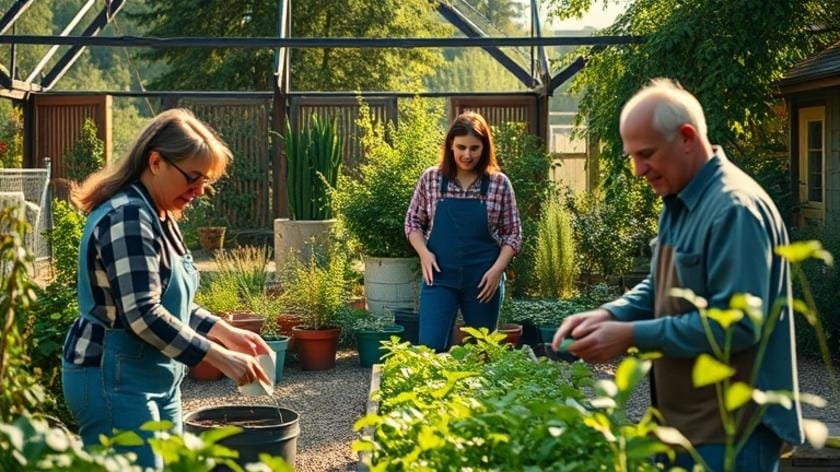
Local libraries, cooperative extensions, and community gardens are treasure troves of free or low‑cost advice, seeds, and tools. Many municipalities host “seed swaps” where gardeners exchange surplus seed packets, effectively reducing procurement costs.
Volunteer at a community garden to gain hands‑on experience, learn efficient techniques, and sometimes earn a share of the harvest. Workshops offered by extension services often include free soil testing days, pest‑identification seminars, and even free compost distribution.
These communal networks embody the spirit of how to save money on gardening by leveraging shared knowledge and resources.
Comparison Table
| Item | Buy New (Average Cost) | DIY / Reuse (Average Cost) | Potential Savings |
|---|---|---|---|
| Raised Bed (4 × 8 ft) | $120 | $45 (recycled pallets) | ≈ 62 % |
| Compost Bin (30 gal) | $85 | $10 (plastic tote) | ≈ 88 % |
| Drip Irrigation Kit (20 ft) | $40 | $12 (soaker hose + fittings) | ≈ 70 % |
| Garden Fork | $30 | $5 (repurposed pitchfork) | ≈ 83 % |
| Seed Packet (5 varieties) | $10 | $2 (seed swap) | ≈ 80 % |
FAQ
- Can I start a vegetable garden with less than $50? Yes, using seeds, compost, and reclaimed containers.
- What’s the cheapest way to water a garden? Mulch and a simple drip system paired with rain barrels.
- Do DIY tools perform as well as store‑bought ones? Properly built, they’re often just as effective.
- Is composting worth the effort? Absolutely; it reduces waste and fertilizer costs.
- How often should I prune perennials? Typically once after flowering, then as needed.
- Where can I find free gardening workshops? Check local extension offices or community garden calendars.
Conclusion and Final Takeaways
Saving money on gardening does not mean compromising on quality or enjoyment. By planning meticulously, harnessing organic matter, sourcing seeds wisely, conserving water, crafting your own tools, and engaging with community networks, you transform every expense into an investment in sustainability. The strategies outlined above answer the central question of how to save money on gardening and empower you to cultivate a thriving, economical oasis.
Ready to put these ideas into practice? Explore additional resources and keep refining your approach as you grow. For more inspiration, see the latest articles on our site or search the web for How to Save Money on Gardening. Happy gardening!