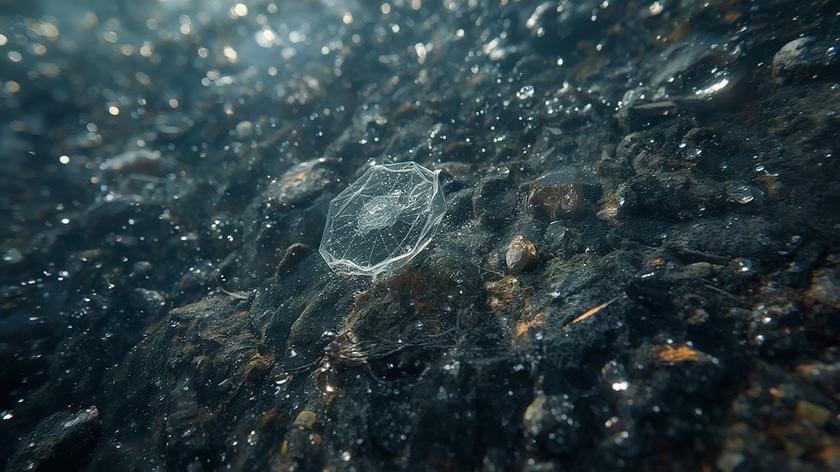
New Discoveries About Life in Extreme Environments
Researchers have long been fascinated by organisms that thrive where most life would quickly perish. Recent new discoveries about life in extreme environments have revealed microbial strategies that push the boundaries of biochemistry, offering fresh insight into resilience and adaptation. From scorching hydrothermal vents to frozen Antarctic lakes, scientists are uncovering hidden ecosystems that rewrite textbook definitions of habitability.
Thank you for reading this post, don't forget to subscribe!The surge of findings is reshaping multiple disciplines, from planetary science to biotechnology. By decoding how these extremophiles survive, we gain clues about potential life beyond Earth and novel enzymes for industrial use. The following overview synthesizes the latest research, highlighting the most compelling advances and their broader implications.
## Table of Contents
– Understanding Extreme Environments
– Hydrothermal Vent Findings
– Acidic and Alkaline Pools
– Astrobiology Implications
– Technological Advances Enabling Research
– Comparison of Extremophile Strategies
– FAQ
– Conclusion and Final Takeaways
## Understanding Extreme Environments
The term “extreme” encompasses a wide range of physical and chemical stresses: temperature beyond 100 °C, pressure exceeding 200 MPa, pH values below 1 or above 12, and salinity that would desiccate most cells. Yet a surprising diversity of life persists across these gradients. Researchers categorize these organisms as extremophiles, a group studied under the umbrella of Extreme Microbiology. Their survival hinges on unique membrane lipids, specialized proteins, and repair systems that operate under conditions lethal to ordinary cells.
Recent surveys using metagenomic sequencing have revealed that many extreme habitats host complex microbial consortia rather than isolated specialists. These communities exchange metabolites, buffer pH, and collectively modulate their microenvironment. Understanding these interactions is essential for interpreting the ecological relevance of any single organism discovered.
Hydrothermal vents on the ocean floor emit mineral-rich fluids at temperatures approaching 400 °C. For decades, the iconic “black smokers” were thought to support only chemoautotrophic bacteria that oxidize hydrogen sulfide. However, new discoveries about life in extreme environments have identified thermophilic archaea possessing novel hydrogenases capable of direct electron uptake from mineral surfaces. These enzymes enable carbon fixation at temperatures previously considered prohibitive for enzymatic activity.
In addition, recent in situ experiments using remotely operated vehicles collected vent fluids that, upon analysis, showed a high prevalence of viral particles. These viruses appear to mediate horizontal gene transfer, accelerating adaptation. The dynamic genetic exchange observed suggests that vent ecosystems are evolutionary hotspots, constantly reshuffling metabolic pathways to exploit fleeting energy sources.
Acidic hot springs, such as those in Yellowstone, exhibit pH values as low as 0.5, while alkaline soda lakes can exceed pH 11. Organisms inhabiting these sites must stabilize proteins against denaturation and maintain intracellular pH homeostasis. Recent isolates from an acidic spring in Romania have demonstrated a unique buffering system that relies on polyamine synthesis, a strategy not previously documented in Extreme Microbiology literature.
Conversely, researchers studying the Great Salt Lake’s alkaline margins uncovered halophilic cyanobacteria that produce a novel class of carotenoids. These pigments protect cellular membranes from oxidative stress while also reflecting excessive solar radiation. Such adaptations reveal convergent evolution: both acid- and alkali-dwelling microbes engineer protective compounds tailored to their specific stressors.
The search for extraterrestrial life often references Earth’s extremophiles as analogs for potential alien organisms. The recent observation of a psychrophilic bacterium thriving beneath Antarctic ice sheets at −20 °C expands the known temperature limits for life. Its antifreeze proteins, structurally similar to those found in polar fish, hint at a universal solution to ice formation.
Moreover, the detection of methane‑oxidizing microbes in deep subsurface basalt suggests that even rock‑bound ecosystems can sustain metabolic activity without sunlight. This finding bolsters hypotheses that Martian subsurface habitats, shielded from radiation, could host similar chemolithoautotrophic life forms. The cumulative new discoveries about life in extreme environments therefore sharpen target zones for future rover missions.
## Technological Advances Enabling Research
Progress in the field owes much to methodological breakthroughs. High‑pressure microscopy now permits visualization of microbes at in situ pressures, eliminating artifacts introduced by depressurization. Parallel to this, single‑cell genomics, combined with long‑read sequencing, resolves genomes from uncultured extremophiles, revealing metabolic pathways previously invisible to bulk metagenomics.
The integration of AI‑driven predictive modeling also accelerates hypothesis generation. By feeding curated datasets into machine‑learning pipelines, scientists can forecast the likelihood of undiscovered metabolic capabilities in given habitats. Such tools reduce the trial‑and‑error traditionally associated with culturing extremophiles.
Explore more about these cutting‑edge techniques and see how they converge to expand our understanding of new discoveries about life in extreme environments.
## Comparison of Extremophile Strategies
| Stress Factor | Representative Taxa | Key Adaptation | Potential Application |
|---|---|---|---|
| High Temperature (>100 °C) | Thermophilic Archaea (e.g., *Pyrolobus fumarii*) | Membrane monolayers of tetra‑ether lipids | Thermostable enzymes for industrial catalysis |
| High Pressure (≥200 MPa) | Barophilic Bacteria (e.g., *Shewanella* spp.) | Pressure‑resistant protein folding chaperones | Bioremediation in deep‑sea oil spills |
| Extreme Acidity (pH < 1) | Acidophilic Archaea (e.g., *Acidilobus* spp.) | Polyamine‑based intracellular buffering | Bio‑leaching of metals |
| Extreme Alkalinity (pH > 11) | Alkaliphilic Cyanobacteria (e.g., *Spirulina* spp.) | Specialized Na⁺/H⁺ antiporters | Production of alkaline‑stable pigments |
**What defines an extremophile?**
Organisms that live and reproduce under conditions lethal to most life.
**How are extremophiles studied without destroying their habitat?**
In situ instruments maintain native pressure, temperature, and chemistry during observation.
**Can extremophiles inform medical research?**
Yes; their stable proteins inspire drug design and vaccine preservation.
**Do extreme environments host viruses?**
Viruses are abundant and drive gene exchange among extremophiles.
**Is there evidence of life in Europa’s subsurface ocean?**
Analogous Earth extremophiles suggest it’s plausible, but no direct detection yet.

## Conclusion and Final Takeaways
The past few years have delivered a cascade of new discoveries about life in extreme environments that deepen our grasp of biological resilience. By mapping the molecular tricks of thermophiles, acidophiles, halophiles, and psychrophiles, scientists are not only expanding the tree of life but also furnishing tools for industry, environmental stewardship, and the quest for life beyond Earth. Continued investment in high‑resolution sampling, AI‑enhanced analytics, and interdisciplinary collaboration will ensure that each frontier yields further insight.
For readers eager to stay informed, consider following the latest research updates through reputable scientific journals and conference proceedings. Search results provide a quick gateway to current studies and discussions.