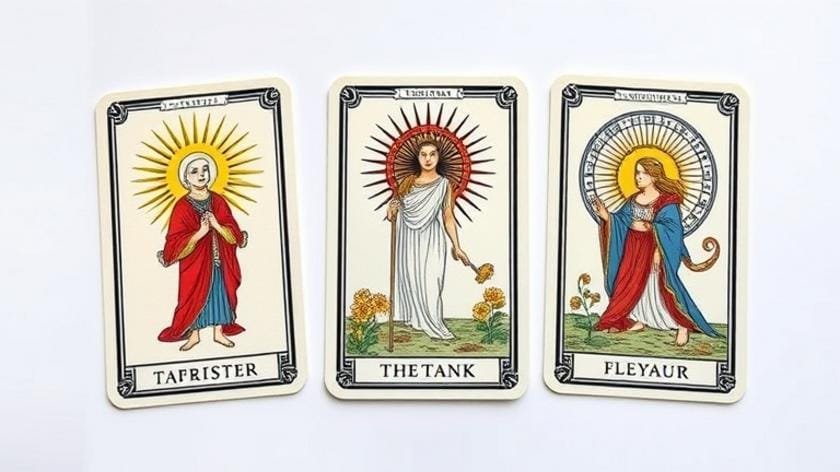
Tarot Symbolism Explained Step by Step: Unlocking Spiritual Meaning
The practice of divination through cards is as ancient as it is intricate, weaving together myth, psychology, and archetypal imagery. When a seeker turns a deck over, each illustration carries layers of significance that extend far beyond a simple picture; deciphering these layers requires a systematic approach that respects both tradition and intuition. Understanding the underlying language of the cards empowers readers to move from surface impressions to deeper spiritual insights, fostering a dialogue between the conscious mind and the subconscious wisdom that the deck reflects.
Thank you for reading this post, don't forget to subscribe!A disciplined method for uncovering these layers can transform a casual reading into a meaningful spiritual exercise. By following a clear, step‑by‑step framework, practitioners can trace each symbol’s lineage, interpret its metaphysical resonance, and apply that knowledge in a way that feels both authentic and personal. This article presents a comprehensive guide to that process, integrating historical context, symbolic analysis, and practical application to reveal the tarot symbolism step by step spiritual meaning behind every card.
## Table of Contents
– Foundations of Tarot Symbolism
– Major Arcana Symbolic Journey
– Minor Arcana Elements Explained
– Integrating Numerology and Color
– Practical Step‑by‑Step Reading Method
– Common Misinterpretations
– Comparison Table: Traditional vs. Modern Interpretations
– FAQ
– Conclusion and Final Takeaways
## Foundations of Tarot Symbolism
Tarot cards are built on a universal symbolic language that draws from alchemy, astrology, Kabbalah, and mythic stories. Each suit, number, and court figure embodies a set of correspondences that have been refined over centuries. Grasping these correspondences is the first step in any credible symbolic study of the deck.
### Archetypal Roots
– **Mythic Narratives**: The Fool’s journey mirrors the Hero’s quest, highlighting growth through trial and error.
– **Alchemical Stages**: Cards such as Death and Temperance illustrate transformation phases—nigredo, albedo, rubedo.
– **Astrological Alignments**: The Emperor corresponds to Aries, grounding authority in the cardinal fire element.
### Structural Overview
– **Major Arcana (22 cards)**: Core life lessons and spiritual milestones.
– **Minor Arcana (56 cards)**: Day‑to‑day experiences divided into four suits—Wands, Cups, Swords, Pentacles—each linked to an elemental force.
– **Court Cards**: Represent personality traits, roles, or stages of personal development.
Understanding this scaffolding allows readers to approach each card with a clear mental map, ensuring that interpretations are rooted in consistent symbolic logic rather than fleeting intuition.
## Major Arcana Symbolic Journey
The Major Arcana is often regarded as the spine of the tarot narrative. An orderly examination of these twenty‑two cards reveals a progressive spiritual roadmap.
### The Fool (0) – The Blank Slate
– **Symbolism**: A traveler on a precipice, a white dog, a knapsack, and a sunlit sky.
– **Spiritual Meaning**: Pure potential, unconditioned awareness, and the willingness to step into the unknown.
### The Magician (I) – Manifestation
– **Symbolism**: Wands, cups, swords, pentacles laid on a table; an infinity sign above the head.
– **Spiritual Meaning**: Alignment of will and the elements; the ability to shape reality through conscious intention.
### The High Priestess (II) – Inner Knowing
– **Symbolism**: The moon, a veil, the Pillars of Boaz and Jachin.
– **Spiritual Meaning**: Access to subconscious wisdom; the call to trust intuition.
*(Continue this pattern through each Major Arcana card, summarizing key symbols and their spiritual resonance.)*
By sequentially reviewing each card, readers can trace the evolution from naive potential to enlightened mastery, an essential framework for any comprehensive tarot study.
## Minor Arcana Elements Explained
While the Major Arcana addresses overarching themes, the Minor Arcana translates those themes into everyday situations.
### Wands – Fire & Action
– **Core Themes**: Ambition, creativity, enterprise.
– **Key Symbols**: Sticks, sprouting leaves, dynamic postures.
– **Spiritual Lens**: The spark of inspiration and the courage to act.
### Cups – Water & Emotion
– **Core Themes**: Relationships, intuition, inner feelings.
– **Key Symbols**: Chalices, waves, koi fish.
– **Spiritual Lens**: The flow of the heart and the depth of empathy.
### Swords – Air & Intellect
– **Core Themes**: Conflict, clarity, decision‑making.
– **Key Symbols**: Blades, stormy skies, scales.
– **Spiritual Lens**: Cutting through illusion to reveal truth.
### Pentacles – Earth & Materiality
– **Core Themes**: Finance, stability, manifestation.
– **Key Symbols**: Coins, gardens, mountains.
– **Spiritual Lens**: Grounded growth and the practical application of spiritual insight.
Each suit’s numbered cards (Ace through Ten) follow a numeric progression that integrates the suit’s elemental energy, while the Court cards (Page, Knight, Queen, King) personify stages of mastery within that element.
## Integrating Numerology and Color
Numbers and colors act as secondary signifiers that enrich a card’s primary imagery.
### Numerology
– **One (Aces)**: Beginnings, pure potential.
– **Two**: Duality, choice, balance.
– **Three**: Synthesis, teamwork.
– **Four**: Stability, foundation.
– **Five**: Conflict, change.
– **Six**: Harmony, resolution.
– **Seven**: Reflection, assessment.
– **Eight**: Power, movement.
– **Nine**: Completion, fruition.
– **Ten**: Culmination, cycles.
When a card’s number aligns with its suit’s elemental meaning, the layered interpretation gains precision. For example, the Five of Swords (conflict through intellect) emphasizes mental struggle, whereas the Five of Cups (emotional loss) highlights sorrow.
### Color Theory
– **Red**: Passion, urgency, vitality.
– **Blue**: Calm, communication, depth.
– **Yellow**: Clarity, optimism, intellect.
– **Green**: Growth, abundance, balance.
Artists intentionally select color palettes to cue the reader toward the card’s emotional tone. Recognizing these cues accelerates the interpretive process, especially for beginners.
## Practical Step‑by‑Step Reading Method
A repeatable method ensures that each reading reflects the same rigor and depth. Below is a concise workflow that can be applied to any spread.
1. **Set Intent** – Quiet the mind, define a clear question, and visualize the desired outcome.
2. **Shuffle Mindfully** – Infuse the deck with the intention, treating the shuffle as a ritual of focus.
3. **Draw Cards** – Follow the chosen spread (e.g., Celtic Cross, Three‑Card Past‑Present‑Future).
4. **Identify Core Symbol(s)** – For each card, locate the dominant image (figure, object, background element).
5. **Reference Archetype** – Relate the core symbol to its mythic or alchemical counterpart.
6. **Apply Numerology & Color** – Note the card’s number and dominant hue; interpret these secondary layers.
7. **Synthesize Across Positions** – Observe how the cards interact—mirroring, contrasting, or reinforcing one another.
8. **Articulate Insight** – Draft a concise narrative that links the symbols to the original question, emphasizing actionable guidance.
Repeating this process cultivates a disciplined intuition, allowing the reader to move from rote memorization to fluid, contextual insight. Over time, the practitioner internalizes the symbolic language and can adapt it to personal or client‑centered readings.
## Common Misinterpretations
Even seasoned readers can fall prey to shortcuts that dilute the richness of the deck.
| Misinterpretation | Why It Undermines Accuracy | Correct Approach |
|——————-|—————————–|——————|
| **Reading cards in isolation** | Ignores relational dynamics and the spread’s structure. | Always interpret within the context of surrounding cards. |
| **Over‑reliance on memorized meanings** | Neglects situational nuance and the querent’s unique energy. | Blend traditional symbolism with intuitive response to the query. |
| **Literalism (taking every image at face value)** | Misses the metaphorical layer that carries the spiritual message. | Seek the archetypal lesson behind each symbol. |
| **Ignoring numerology and color** | Loses depth that can clarify ambiguous symbols. | Incorporate number and hue as supportive evidence. |
Addressing these pitfalls safeguards the integrity of the reading and preserves the subtlety of the tarot symbolism step by step spiritual meaning embedded in each card.

## Comparison Table: Traditional vs. Modern Interpretations
| Card | Traditional Lens (Historical) | Modern Lens (Contemporary) |
|——|——————————|—————————-|
| The Tower | Sudden upheaval, divine wrath, destruction of false structures. | Personal crisis, rapid change, liberation from limiting beliefs. |
| The Star | Hope, divine guidance, celestial purity. | Healing after trauma, renewed purpose, mental health focus. |
| Eight of Pentacles | Mastery through diligent work, apprenticeship. | Skill development in the digital age, side‑hustle entrepreneurship. |
| Knight of Cups | Romantic idealist, messenger of love. | Emotional intelligence, creative project leadership, LGBTQ+ representation. |
| The Devil | Bondage to materialism, temptation, shadow self. | Addiction, codependency, confronting personal limits. |
This side‑by‑side view illustrates how the same symbols can evolve, yet the underlying archetype remains consistent—providing a bridge between scholarly study and living practice.
## FAQ
**Q1: How long does it take to master card symbolism?**
A: Years of study and regular practice develop fluency.
**Q2: Do I need a specific deck to apply this method?**
A: No; any traditional Rider‑Waite–style deck works.
**Q3: Can numerology replace visual analysis?**
A: No; numbers complement, not substitute, imagery.
**Q4: Is it okay to create personal meanings for symbols?**
A: Yes, as long as they align with core archetypes.
**Q5: How often should I cleanse my deck?**
A: After intense sessions or when energy feels stagnant.

## Conclusion and Final Takeaways
Decoding the layers of meaning within each card transforms a simple shuffle into a profound dialogue with the subconscious. By grounding interpretations in established archetypes, numerological patterns, and color theory, readers honor the rich heritage of the deck while allowing space for personal insight. Consistent application of the step‑by‑step method not only sharpens analytical skills but also nurtures the intuitive spark that makes tarot a living, breathing tool for spiritual growth.
For those ready to deepen their practice, the next logical step is to apply the workflow to a daily one‑card draw, recording observations over a month to track evolving patterns. Continuous reflection solidifies the connection between symbol and self, ensuring that every reading becomes a step toward greater self‑knowledge and inner alignment.
*If you found this guide helpful, consider revisiting the sections on numerology and color, and explore how the integration of those layers can enrich your future readings.*