Ancient Mystery Stories Revealed
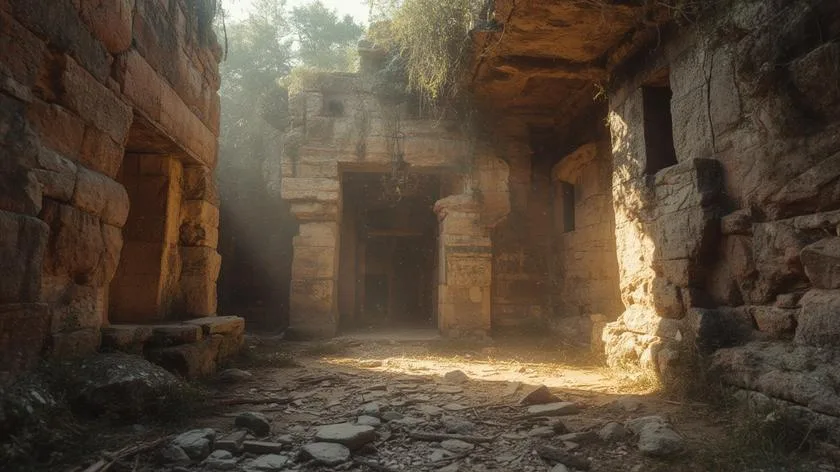
Throughout human history, the allure of the unknown has driven explorers, scholars, and storytellers to seek answers hidden beneath the sands of time. From the whispering corridors of forgotten temples to the cryptic symbols etched on stone, these narratives invite us to piece together fragments of a past that continues to captivate the imagination. The quest to understand ancient mystery stories is as much an exercise in cultural empathy as it is an archaeological challenge, urging modern readers to step into the mindset of civilizations that spoke in allegory and ritual.
Thank you for reading this post, don't forget to subscribe!In recent decades, interdisciplinary research has begun to illuminate the layers of meaning embedded within these timeless tales. By combining textual analysis, material culture, and cutting‑edge scientific techniques, scholars are uncovering the social, religious, and political threads that weave together the fabric of ancient mystery stories. This article delves into the most compelling examples, outlines the methods that bring them to light, and explores how the enigmatic narratives continue to resonate in contemporary discourse.
Table of Contents
- Historical Context
- Famous Ancient Mystery Stories
- Archaeological Methods
- Lost City Tales Analysis
- Modern Interpretations
- Comparison Table
- FAQ
- Conclusion and Final Takeaways
Historical Context
The earliest recorded ancient mystery stories emerge from the cradle of civilization—Mesopotamia, Egypt, and the Indus Valley—where oral tradition and pictographic scripts coexisted. In these societies, myth functioned as both a cosmological map and a social contract, encoding moral codes, agricultural cycles, and the legitimacy of ruling dynasties.
Key to understanding these narratives is recognizing the role of sacred precincts, such as the Egyptian “Temple of the Hidden Word” or the Greek Eleusinian Mysteries, where initiates experienced staged reenactments of mythic events. Participation was often restricted, reinforcing communal bonds while preserving esoteric knowledge from external scrutiny. As trade routes expanded, the diffusion of motifs—like the flood myth or the hero’s descent into the underworld—created a shared symbolic vocabulary that transcended cultural boundaries.
Famous Ancient Mystery Stories
Among the most studied are the Babylonian “Enuma Elish,” the Sumerian “Epic of Gilgamesh,” and the Egyptian “Book of the Dead.” Each text offers a distinct lens on humanity’s eternal questions. The “Enuma Elish” dramatizes the cosmic battle between Marduk and Tiamat, reflecting a worldview where order emerges from primordial chaos. The “Epic of Gilgamesh” confronts mortality through the protagonist’s quest for eternal life, while the “Book of the Dead” provides a guided journey through the afterlife, underscoring the importance of ritual preparation.
Less well‑known but equally intriguing are the Canaanite “Ugaritic myths,” which preserve fragments of a pantheon rivaling those of neighboring cultures. These narratives often involve themes of covenant and betrayal, hinting at the political tensions that shaped the region. Scholars continue to debate whether these stories served purely theological purposes or also functioned as diplomatic tools, encoding alliances and hostilities in allegorical form.
Archaeological Methods
Unraveling the layers of ancient mystery stories requires a toolbox that blends traditional excavation with modern technology. Ground‑penetrating radar (GPR) allows researchers to detect buried chambers without disturbing the site, while high‑resolution photogrammetry creates three‑dimensional models of inscriptions that can be analyzed remotely.
Isotopic analysis of human remains offers insights into diet, migration patterns, and health, contextualizing the lived experiences behind mythic narratives. For instance, the analysis of remains from the Hall of the Oracles at Delphi revealed a diet rich in psychoactive plants, supporting theories about altered states of consciousness during ritual performance. Moreover, radiocarbon dating calibrated with Bayesian models refines chronologies, aligning textual references with environmental data such as dendrochronological records of flood events.
Digital humanities platforms now host collaborative databases where epigraphic data can be cross‑referenced with linguistic corpora. This synergy enables pattern recognition across vast corpora, identifying recurring motifs that may indicate shared mythic structures or independent convergent evolution.
Lost City Tales Analysis
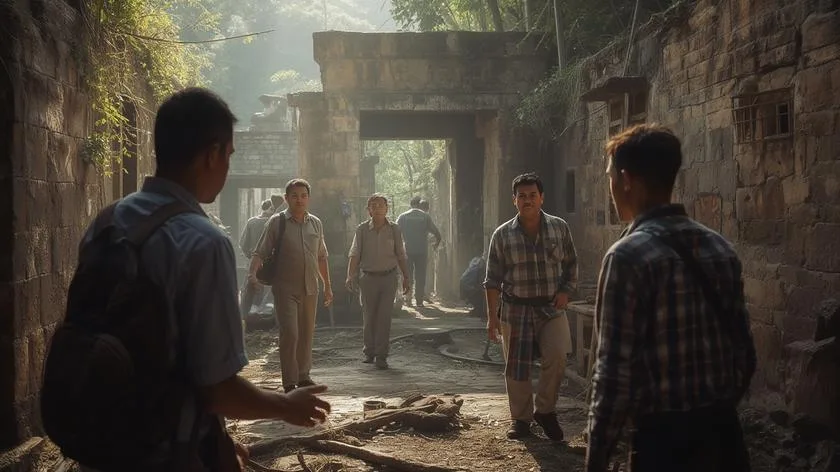
The term Lost City Tales refers to a corpus of legends centered on vanished urban centers—Atlantis, Cantona, and the mythical “City of the Sun.” While some have been dismissed as pure fantasy, recent excavations in the Peruvian Amazon have uncovered stone foundations and ceramic assemblages that correspond strikingly with descriptions found in pre‑colonial chronicles.
One compelling case is the site known locally as “La Ciudad Escondida,” where remote sensing revealed a grid‑like settlement predating known Inca expansions by several centuries. The architectural layout matches passages in the “Lost City Tales” that describe concentric plazas and water‑managed terracing. Radiocarbon dates place the occupation at roughly 1200 BCE, suggesting that the legend may preserve a memory of a real, though now buried, civilization.
Scholars argue that these legends functioned as cultural memory aids, encoding geographic knowledge that survived oral transmission long after the physical structures crumbled. By comparing mythic narratives with archaeological data, researchers can reconstruct the sociopolitical dynamics of these forgotten societies.
Modern Interpretations
Contemporary authors and filmmakers have reimagined ancient mystery stories to address present‑day anxieties. Themes of environmental collapse, identity, and the search for meaning are reframed through ancient lenses, resonating with audiences seeking depth beyond surface entertainment. Academic reinterpretations also consider post‑colonial perspectives, questioning whose voices are amplified in the preservation of these narratives.
In the field of comparative mythology, Joseph Campbell’s monomyth structure continues to spark debate. Critics argue that imposing a universal template on culturally specific stories risks erasing nuance, while proponents claim it reveals shared human concerns. Recent interdisciplinary conferences have highlighted the value of integrating psycholinguistics, climate science, and neuroanthropology to produce richer, more holistic readings of the source material.
For readers wanting to explore further, the online repository of digitized tablets offers free access to primary texts. Additionally, the interactive map of mythic sites visualizes the geographic spread of recurring motifs, enabling a deeper appreciation of the interconnected web of ancient storytelling.
Comparison Table
| Aspect | Traditional Textual Approach | Scientific Archaeology | Digital Humanities |
|---|---|---|---|
| Primary Sources | Clay tablets, papyri, oral recitations | Stratigraphic layers, material culture | Digitized corpora, metadata |
| Analytical Tools | Philology, comparative linguistics | Radiocarbon dating, GPR, isotopic analysis | Text mining, network analysis |
| Interpretive Lens | Mythic symbolism, religious studies | Socio‑economic reconstruction | Cross‑cultural pattern detection |
| Limitations | Fragmentary preservation, translation bias | Site disturbance, dating uncertainties | Data homogenization, algorithmic bias |
FAQ
What defines an ancient mystery story? A narrative combining mythic symbolism with ritual context.
Are Lost City Tales based on real places? Archaeology suggests some legends echo actual settlements.
Which technology aids modern decipherment? Ground‑penetrating radar and 3‑D modeling.
Can I read original tablets online? Yes, many are digitized in open‑access repositories.
How do scholars avoid cultural bias? By using interdisciplinary frameworks and local perspectives.
Conclusion and Final Takeaways
The investigation of ancient mystery stories is a dynamic dialogue between past and present, where each new discovery reshapes our understanding of human imagination and societal development. By integrating textual scholarship, cutting‑edge archaeological techniques, and digital analysis, researchers are building a more nuanced portrait of the narratives that have guided civilizations for millennia.
Whether you are an academic, a curious reader, or a creative professional, the layered complexity of these legends offers endless avenues for exploration. The convergence of traditional expertise with modern technology ensures that the mysteries will continue to unfold, inviting future generations to join the quest for knowledge.
For those interested in delving deeper, consider search for Ancient Mystery Stories Revealed to uncover additional resources and ongoing research projects.