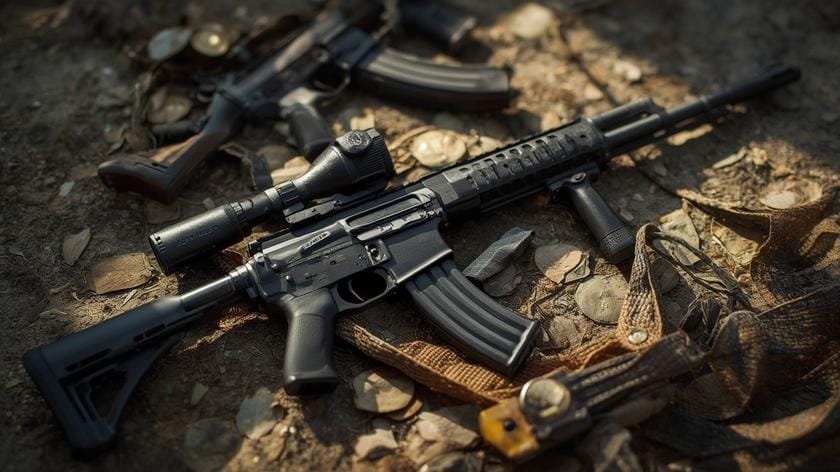
Arms Trafficking Stories Exposed
The global flow of illegal firearms is more than a clandestine market; it is a complex web that fuels conflict, crime, and instability across continents. Understanding how these networks form, the motivations that drive participants, and the real‑world consequences of each transaction is essential for anyone studying modern security challenges. arms trafficking stories reveal patterns that repeat from remote border crossings to bustling urban centers, showing how supply chains adapt to law‑enforcement pressure and geopolitical shifts.
Thank you for reading this post, don't forget to subscribe!While sensational headlines often focus on high‑profile seizures or dramatic busts, the underlying dynamics are shaped by long‑standing relationships between manufacturers, corrupt officials, and violent groups. By dissecting arms trafficking stories alongside the economic engines that sustain them, we can identify leverage points for policy intervention and better protect vulnerable populations from the spiral of violence.
## Table of Contents
– Historical Roots of Illicit Arms Trade
– How Modern Networks Operate
– Intersection with Drug Cartels
– Regional Hotspots and Case Studies
– Law Enforcement Challenges
– Preventive Strategies and International Cooperation
– Comparison Table
– Frequently Asked Questions
– Conclusion and Final Takeaways
## Historical Roots of Illicit Arms Trade
The illicit arms market dates back centuries, rooted in the earliest instances of state‑sponsored piracy and privateering. In the 19th century, European powers exported surplus weapons to colonies, creating a legacy of scattered stockpiles that later fell into the hands of insurgents. The two World Wars accelerated this trend, with mass production generating vast inventories that were often abandoned or sold off at the war’s end.
In many post‑colonial states, weak governance combined with a surplus of small‑arms created fertile ground for black‑market activity. These historical legacies continue to shape contemporary smuggling routes, where old depots serve as hidden caches and familiar pathways are repurposed for new actors. Understanding this lineage helps analysts trace the provenance of seized weapons and anticipate future supply points.
## How Modern Networks Operate
Today’s traffickers blend traditional smuggling tactics with sophisticated logistics, exploiting legal trade channels, maritime corridors, and digital communications. Key elements include:
1. **Front Companies** – Legitimate businesses register as importers of “civilian” equipment, masking the true nature of the cargo.
2. **Freight Consolidation** – Small arms are hidden among legal shipments of consumer goods, benefiting from the “look‑aside” effect where customs focus on high‑value commodities.
3. **Encrypted Messaging** – Applications like Telegram and Signal enable rapid coordination across borders while evading surveillance.
4. **Financing via Informal Money Transfer Systems** – Networks such as hawala move funds quickly without leaving a paper trail.
These methods reduce detection risk while maintaining flexibility. For instance, a single container may contain rifles, ammunition, and spare parts, each sourced from different manufacturers, making provenance analysis more complex.
## Intersection with Drug Cartels
The synergy between arms trafficking and narcotics operations is a cornerstone of modern organized crime. Drug Cartels require firearms to protect routes, intimidate rivals, and enforce territorial control. In exchange, traffickers gain access to well‑funded money laundering schemes and secure transport infrastructure.
Mexico’s Sinaloa and Jalisco New Generation Cartels exemplify this exchange, channeling millions of dollars from cocaine sales into semi‑automatic rifles and grenade launchers. In Colombia, paramilitary groups historically financed their campaigns by taxing coca cultivation, creating a feedback loop that amplifies violence. This interdependence blurs the line between drug‑related crime and armed insurgency, demanding integrated policy responses that address both markets simultaneously.
## Regional Hotspots and Case Studies
### Latin America
The Andean corridor remains a prime conduit for small‑arms movement, with weapons often originating in the United States and traversing clandestine routes through Central America before reaching guerrilla fronts in Venezuela and Peru. Recent seizures in the Guatemalan border illustrate a shift toward higher‑capacity weapons, indicating a market response to escalating cartel warfare.
### Sub‑Saharan Africa
The Sahel region’s porous borders enable the flow of AK‑47s and light machine guns from former Soviet stockpiles. Groups like Boko Haram have leveraged these arms to expand territorial control, while local militias in the Democratic Republic of Congo use similar weapons for resource‑driven conflicts over minerals.
### Southeast Asia
In Myanmar, the longstanding civil war has created a self‑sustaining arms economy. Weapons are smuggled from China through illicit border points, then redistributed to ethnic armed organizations. The recent crackdown on cross‑border trade in the Golden Triangle has forced traffickers to adopt smaller, more concealable firearms, altering the risk profile for regional security forces.
These case studies underscore that while the actors differ, the operational frameworks share common DNA—exploitation of weak governance, reliance on informal networks, and adaptability to enforcement pressure.
## Law Enforcement Challenges
Combatting illicit arms flows confronts agencies with several systemic hurdles:
– **Fragmented Jurisdiction** – Multiple agencies (customs, police, military) operate under distinct mandates, often leading to duplicated effort or gaps in intelligence sharing.
– **Limited Forensic Capacity** – Ballistic tracing technology is costly; many low‑income nations lack the resources to link seized weapons to their points of origin.
– **Corruption** – Bribery at border posts facilitates the passage of concealed arms, eroding trust in official channels.
– **Dynamic Trade Routes** – Traffickers constantly modify pathways in response to interdiction, requiring real‑time data analytics that many agencies cannot sustain.
Efforts to standardize reporting mechanisms, such as the UN Register of Conventional Arms, have helped, yet compliance remains uneven. Strengthening inter‑agency collaboration and investing in portable forensic tools are essential next steps.
An in‑depth look at capacity‑building initiatives highlights successful models from West Africa.
## Preventive Strategies and International Cooperation
Global initiatives aim to curb the supply side while addressing demand through conflict resolution. Key strategies include:
– **End‑User Verification** – Rigorous vetting of purchasers, coupled with post‑sale audits, reduces diversion risk.
– **Marking and Tracing** – International agreements mandate that all conventional weapons bear unique identifiers, facilitating recovery and attribution.
– **Sanctions and Asset Freezes** – Targeted economic measures against known traffickers and their facilitators disrupt financing streams.
– **Regional Development Programs** – Addressing underlying socioeconomic drivers—such as unemployment and marginalization—diminishes recruitment pools for armed groups.
The Arms Trade Treaty (ATT) provides a legal framework, yet many high‑risk states have yet to ratify it. Bilateral cooperation, exemplified by the U.S.–EU joint operations against illicit shipments across the Atlantic, demonstrates that shared intelligence can produce measurable interdiction results.
## Comparison Table
| Criterion | Traditional Smuggling | Modern Digital‑Enabled Smuggling |
|---|---|---|
| Primary Transport Mode | Maritime containers, overland trucks | Mixed-mode with micro‑shipments, drones, and courier services |
| Communication Tools | Radio, face‑to‑face | Encrypted messaging apps, dark‑net forums |
| Financial Flow | Cash, informal value transfer | Cryptocurrencies, layered money‑laundering schemes |
| Detection Difficulty | Moderate – reliant on physical inspections | High – digital obfuscation and rapid rerouting |
| Typical Weapon Types | Assault rifles, light machine guns | Compact carbines, improvised firearms, 3D‑printed parts |
## Frequently Asked Questions
**What defines an “illicit arms” transaction?**
Any transfer of weapons that violates national or international law.
**How do traffickers hide weapons in cargo?**
By nesting them inside legitimate goods, using false manifests, or employing concealed compartments.
**Can tracing technology identify the origin of seized firearms?**
Yes, when serial numbers and markings are intact and databases are accessible.
**Do digital currencies facilitate arms trafficking?**
They enable rapid, pseudonymous payments, complicating financial investigations.
**What role do local communities play in curbing trafficking?**
Community vigilance and reporting can interrupt smuggling networks at the grassroots level.
## Conclusion and Final Takeaways
The persistence of illegal firearms markets underscores an urgent need for coordinated, evidence‑based responses. By dissecting arms trafficking stories across historical, operational, and regional dimensions, stakeholders gain a clearer picture of where interventions will be most effective. Combating the symbiotic relationship with Drug Cartels, strengthening forensic capacities, and fostering transparent international agreements form the backbone of a sustainable solution.
Continuous research, adaptive policies, and inclusive partnerships—spanning governments, NGOs, and private sector actors—are essential to disrupt the pipelines that feed conflict and crime worldwide. For readers seeking deeper insight, a quick online search provides a wealth of additional resources: Arms Trafficking Stories Exposed.
—
*This article is intended for informational purposes only and does not constitute legal advice.*