Arianespace Missions: Unveiling the Future of Space Exploration
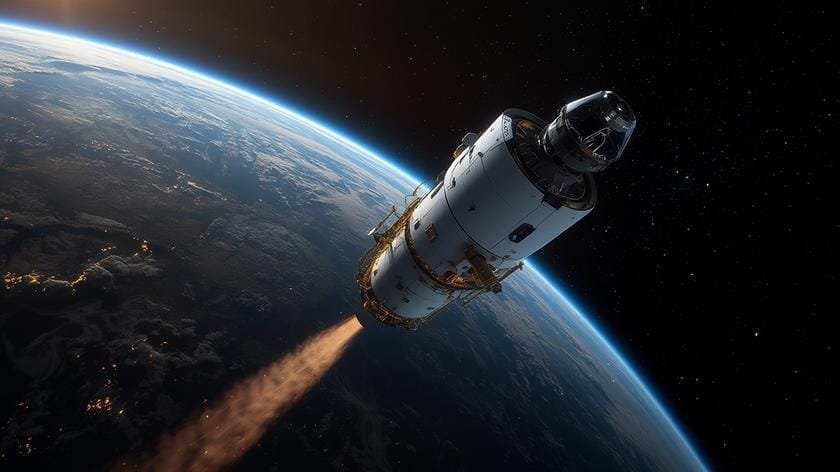
Since its first launch in 1982, Arianespace missions have become a cornerstone of the global space‑flight industry. By offering reliable access to low‑Earth orbit, geostationary orbit, and beyond, the company has enabled scientific research, telecommunications, and Earth‑observation programs that shape daily life on the planet.
Thank you for reading this post, don't forget to subscribe!Today, the landscape of orbital services is more competitive than ever, yet the suite of vehicles, launch sites, and strategic partnerships that define Arianespace missions continue to set the benchmark for safety, cost‑effectiveness, and schedule assurance. Understanding how these missions evolve provides insight into the broader trajectory of commercial space exploration.
Table of Contents
- Overview of Commercial Launch Services
- Historical Milestones
- Recent and Upcoming Projects
- Partnerships with European Space Agency
- Technological Innovations
- Future Outlook and Strategic Goals
- Comparison Table
- FAQ
- Conclusion
Overview of Commercial Launch Services
The commercial launch market today is defined by three primary payload‑delivery families: Ariane 5, Ariane 6, and Vega. Ariane 5, a heavy‑lift workhorse, has completed more than 100 missions, delivering dual payloads for telecommunication and scientific customers. Its successor, Ariane 6, is designed for lower manufacturing cost while preserving a proven reliability record. Vega, the lighter counterpart, specializes in small‑satellite deployments, offering flexibility for constellations and Earth‑observation platforms.
Each vehicle operates from the Guiana Space Centre in Kourou, French Guiana, a site selected for its proximity to the equator, which provides up to 1.5 km s⁻¹ of extra velocity. This geographical advantage translates into higher payload capacity or reduced fuel consumption, a competitive edge that enhances overall mission economics. The synergy among the three families gives customers a seamless spectrum of services without needing multiple providers.
Historical Milestones
From the inaugural launch of Ariane 1 in 1979 to the debut of Ariane 6 in 2024, the evolution of Arianespace missions mirrors Europe’s ambition to maintain an independent access to space. Notable milestones include the first commercial satellite deployment in 1982, the record‑breaking dual‑payload launch of 2002, and the successful insertion of the James Webb Space Telescope’s components in 2021.
These achievements were not isolated events; they reflected continual improvements in propulsion, avionics, and ground‑segment automation. The historical data also show a decreasing trend in launch failure rates—from 9 % in the early 1990s to less than 2 % after the year 2000—underscoring a culture of safety that persists across generations of hardware.
Recent and Upcoming Projects
In the past five years, the launch cadence has accelerated, with an average of 12 missions per year. High‑profile payloads have included CubeSat constellations for global broadband, next‑generation Earth‑observation instruments, and deep‑space probes bound for Lagrange points. The 2023 launch of the Galileo‑F86 satellite marked the final step in Europe’s first global navigation system.
Looking ahead, the upcoming “Ariane 6‑P02” mission will carry the first of a series of interplanetary probes destined for asteroid sample‑return missions. Additionally, a dedicated rideshare program scheduled for 2025 aims to transport up to 30 small satellites per flight, catering to commercial constellations and academic research alike.
Partnerships with European Space Agency
The collaborative framework between European Space Agency and Arianespace missions represents a unique public‑private partnership that pools funding, expertise, and risk. ESA’s science and exploration programmes provide the scientific payloads, while Arianespace supplies launch services under long‑term contracts that guarantee schedule certainty.
This relationship has enabled missions such as the Solar Orbiter, which required a precise insertion into a heliocentric orbit, and the Meteosat series that delivers critical weather data across continents. The synergy also extends to technology development, where ESA validates new propulsion concepts on Arianespace launch vehicles before they become operational.
Technological Innovations
Advances in additive manufacturing have reduced engine component weight by up to 15 %, directly translating into higher payload margins for Arianespace missions. The integration of cryogenic propellant management systems has improved the reliability of upper stages, allowing for more complex mission profiles such as multi‑orbit deployments.
Digital twins and AI‑driven health monitoring now enable real‑time anomaly detection during ascent, decreasing the need for post‑flight investigations. Furthermore, the adoption of reusable fairing technology—currently in a flight‑test phase—promises to cut costs for future launch cycles.
Future Outlook and Strategic Goals
As the space economy expands, the demand for flexible, responsive launch solutions will grow. Strategic priorities for the next decade include scaling up the reusable fairing program, expanding the Kourou launch complex to support higher launch rates, and developing a dedicated launch pad for small‑satellite constellations.
In addition, the roadmap envisions a joint venture with regional research institutions to explore propulsion technologies based on green propellants, aligning environmental stewardship with commercial viability. These initiatives aim to keep Arianespace missions at the forefront of a rapidly evolving industry.
Comparison Table
| Vehicle | Payload Capacity to GTO | Typical Mission Cost (USD M) | Reusability | First Flight |
|---|---|---|---|---|
| Ariane 5 | 10 t | 165 | No | 1996 |
| Ariane 6 | 8–10 t (configurable) | 130 – 150 | Partial (fairing) | 2024 |
| Vega‑C | 1.5 t | 45 | No | 2020 |
FAQ
- What is the primary launch site for these missions? Guiana Space Centre, Kourou.
- How many vehicles are currently in operation? Three families: Ariane 5, Ariane 6, Vega‑C.
- Can customers launch multiple satellites on one flight? Yes, rideshare options are available.
- Is there a plan for reusability? Fairing recovery is being tested.
- Who funds the development of new launchers? A mix of ESA and commercial partners.

Conclusion
The trajectory of Arianespace missions illustrates how a well‑orchestrated blend of engineering excellence, strategic partnerships, and market responsiveness can sustain long‑term relevance in a dynamic sector. By continuously integrating emerging technologies and expanding launch capacity, the organization positions itself to meet the escalating demands of scientific, commercial, and governmental customers worldwide.
Stakeholders interested in deeper analysis can explore related data through an online search. For ongoing updates, keep an eye on official releases and industry briefings that track the evolution of Europe’s launch capabilities.
We invite readers to review this article, provide feedback, and share insights to foster a collaborative understanding of the future of space exploration.