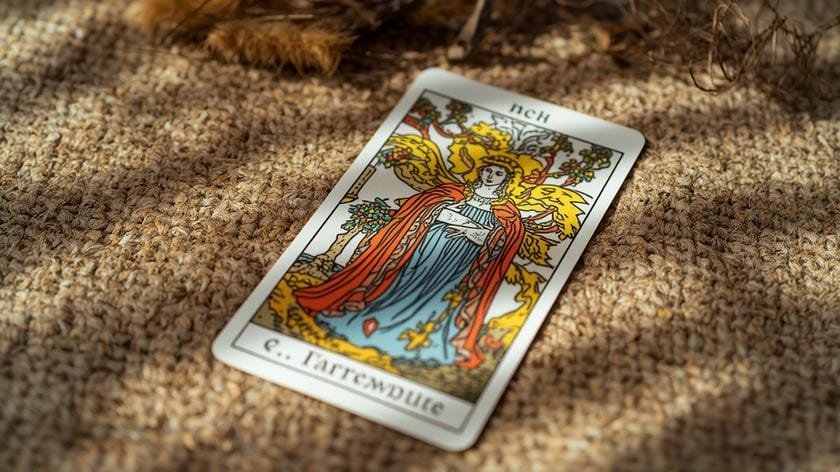
Minor Arcana Tarot Meanings Guide
When exploring tarot’s rich symbolism, many readers begin with the minor arcana tarot meanings guide to ground themselves in the everyday narratives that the cards convey. While the Major Arcana often captures the imagination with archetypal milestones, the Minor Arcana provides the nuanced, day‑to‑day context that brings a reading to life.
Thank you for reading this post, don't forget to subscribe!This guide walks you through each suit, number, and reversal, ensuring that the minor arcana tarot meanings guide becomes a reliable reference whether you are a seasoned practitioner or just starting out. By the end, you’ll recognize patterns that link the suits to the elements, see how numbers echo universal cycles, and feel confident applying the insights in real‑world spreads.
Table of Contents
- Understanding the Structure of the Minor Arcana
- Suit Overviews: Cups, Pentacles, Swords, Wands
- Key Card Interpretations by Number
- Reversed Card Interpretations
- Practical Application in Readings
- Comparison Table
- FAQ
- Conclusion and Final Takeaways
Understanding the Structure of the Minor Arcana
The Minor Arcana consists of 56 cards split into four suits, each containing ten numbered cards (Ace through Ten) and four court cards (Page, Knight, Queen, King). The suits correspond to the four elements—Water, Earth, Air, and Fire—providing a framework that mirrors the physical and emotional realms.
Each numbered card reflects a stage in a developmental cycle. For example, the Two of any suit typically signifies partnership or choice, while the Nine often signals nearing completion or a moment of introspection. Recognizing this progression helps readers see a story unfold across a spread, rather than interpreting cards in isolation.
Suit Overviews: Cups, Pentacles, Swords, Wands
Cups (Water) address emotions, relationships, and intuition. They are the heart of the Minor Arcana, revealing how feelings influence decisions.
Pentacles (Earth) focus on material concerns—finances, career, and tangible results. Their energy grounds the reading in practicality.
Swords (Air) represent intellect, conflict, and communication. They cut through illusion, exposing truths that may be uncomfortable.
Wands (Fire) symbolize ambition, creativity, and forward motion. They ignite ideas and motivate action.
Understanding each suit’s elemental affiliation allows you to quickly assess whether a reading leans toward emotional, material, mental, or motivational themes. For deeper insight, refer back to the Tarot Minor Arcana Meanings as you explore individual cards.
Key Card Interpretations by Number
The following highlights the core messages for each number across the suits. While suits add nuance, the numeric symbolism remains consistent.
- Ace: New beginnings, potential, the spark that initiates a cycle.
- Two: Partnerships, balance, decisions that require cooperation.
- Three: Collaboration, growth through community, early achievements.
- Four: Stability, foundations, sometimes stagnation that needs reassessment.
- Five: Challenge, conflict, and the learning that arises from tension.
- Six: Harmony, recovery, and the reward after perseverance.
- Seven: Reflection, assessment, and the need to pause before moving forward.
- Eight: Movement, progress, and the application of skill toward goals.
- Nine: Fulfillment, nearing completion, and the satisfaction of effort.
- Ten: Culmination, cycles ending, and the emergence of new possibilities.
When you recognize these numeric themes, you can map them onto any suit within a spread, accelerating interpretation without losing depth.
Reversed Card Interpretations
Reversals do not merely mean “negative”; they indicate blockage, internalization, or a need to re‑evaluate the upright message. For each number, the reversed meaning often mirrors the upright sense but with an inner focus.
- Reversed Ace: Delayed start, blocked potential, or the need to nurture an idea before action.
- Reversed Two: Misalignment, indecision, or an unhealthy dependence on others.
- Reversed Three: Overextension, lack of cooperation, or premature celebration.
- Reversed Four: Restlessness, feeling trapped, or an invitation to break monotony.
- Reversed Five: Escalating conflict, feeling victimized, or an opportunity to learn from disputes.
- Reversed Six: Stagnation after progress, false optimism, or a return to previous obstacles.
- Reversed Seven: Over‑analysis, hesitation, or missing the bigger picture.
- Reversed Eight: Feeling stuck, lack of direction, or the need to reassess strategies.
- Reversed Nine: Dissatisfaction, self‑criticism, or an urge to seek new fulfillment.
- Reversed Ten: Collapse of structures, burnout, or the dawning of a fresh cycle.
Applying these reversed nuances allows a reading to capture both external events and internal states, which is essential for holistic insight.
Practical Application in Readings
To integrate the minor arcana tarot meanings guide into a session, follow a three‑step process:
- Identify the dominant suit. Look at the spread and note the suit that appears most frequently. This reveals the primary domain—emotional, material, mental, or creative—where the querent’s focus lies.
- Track numeric progression. Observe whether the numbers ascend, descend, or repeat. An ascending sequence suggests growth, while a descending one may warn of regression or loss of momentum.
- Account for reversals. Mark any reversed cards and interpret them as internalized blocks or areas requiring self‑reflection. Use the reversed list above to add depth without overcomplicating the message.
When you consciously apply these steps, each reading becomes a coherent narrative rather than a collection of isolated symbols. For further refinement, you might explore how court cards influence the overall suit energy and the role of numerology in tarot spreads.

Comparison Table
| Aspect | Upright Meaning | Reversed Meaning | Typical Suit Influence |
|---|---|---|---|
| Ace | New opportunity, fresh start | Blocked potential, hesitation | Varies—Cups (emotional), Pentacles (financial), etc. |
| Five | Challenge, conflict, learning | Escalated tension, feeling victimized | All suits, with element‑specific flavor |
| Seven | Reflection, assessment, pause | Over‑analysis, missed opportunities | Often Swords (mental) or Cups (emotional) |
| Ten | Culmination, completion, new cycle | Collapse, burnout, need for reset | Pentacles (material), Wands (creative) |
FAQ
What does the Two of Cups represent?
Partnership, mutual attraction, harmonious union.
How do reversed Swords differ from reversed Cups?
Reversed Swords signal mental block; reversed Cups indicate emotional suppression.
Can court cards appear reversed?
Yes, they show blocked or immature expressions of the suit.
Is the Minor Arcana more important than the Major?
Both are essential; Minor offers day‑to‑day detail.
Do the element associations ever change?
Traditional correspondence stays consistent across decks.

Conclusion and Final Takeaways
The minor arcana tarot meanings guide equips you with a systematic method for decoding everyday energies, turning each spread into a coherent story of growth, challenge, and resolution. By recognizing suit elements, numeric cycles, and the subtle shifts introduced by reversals, you gain both breadth and depth in interpretation.
Integrate these principles into your practice, and let the Minor Arcana become the reliable compass that points querents toward actionable insight, personal development, and a clearer understanding of the forces shaping their daily lives.
For those seeking to refine their craft further, consider consulting reputable resources, joining study groups, and consistently practicing with live spreads. A well‑grounded minor arcana tarot meanings guide not only enriches individual readings but also builds lasting topical authority in the tarot community.
Explore more about tarot study methods by searching Minor Arcana Tarot Meanings Guide for additional perspectives and supplemental tools.