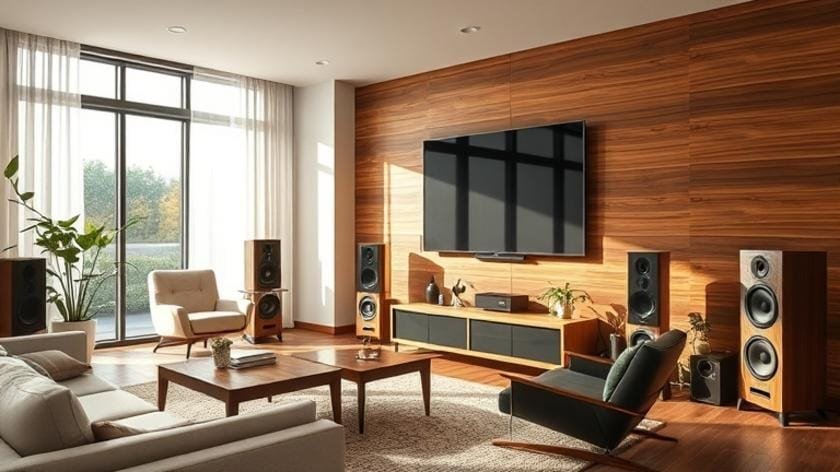
Multi Room Audio Reviews: Top Systems for Whole Home Sound
In today’s connected living spaces, the desire for seamless sound that follows you from kitchen to patio has turned multi room audio reviews into a frequent point of reference for homeowners and designers alike. Modern listeners expect high‑resolution music, crisp dialogue, and consistent volume levels across every room, whether they are entertaining guests or enjoying a quiet evening at home. Understanding the technology behind these systems, from Wi‑Fi mesh networks to proprietary streaming protocols, helps consumers gauge which solutions will truly integrate into their daily routines without cumbersome wiring or lag.
Thank you for reading this post, don't forget to subscribe!Because the market offers a wide spectrum of options—from budget‑friendly adapters to premium, fully integrated ecosystems—making an informed decision often begins with consulting expert analysis. By examining performance metrics, app interfaces, and scalability, multi room audio reviews provide a reliable roadmap for selecting equipment that delivers reliable coverage and future‑proof flexibility. This article walks through the essential criteria, evaluates leading brands, and presents a side‑by‑side comparison to simplify the selection process for anyone seeking a cohesive sound environment.
## Table of Contents
– Understanding Multi‑Room Audio
– Selection Criteria for Whole‑Home Sound
– Top Platforms Reviewed
– Installation and Configuration
– Comparison Table
– FAQ
– Conclusion and Final Takeaways
Understanding Multi‑Room Audio
The foundation of any system that promises immersive sound throughout a residence lies in its networking approach. Most contemporary solutions rely on dual‑band Wi‑Fi, ensuring that audio packets travel quickly and reliably between the central controller—often a smartphone or dedicated hub—and each speaker. Some manufacturers augment this with proprietary mesh technologies that create a self‑healing network, reducing drop‑outs in larger homes.
Latency, the delay between a command and audible playback, is a critical metric. For movies and games, sub‑150 ms latency is generally considered acceptable, while music streaming tolerates slightly higher values without a perceptible impact. Echo cancellation, adaptive bitrate streaming, and support for high‑resolution codecs such as FLAC or MQA further differentiate premium offerings from entry‑level models.
Selection Criteria for Whole‑Home Sound
When evaluating potential solutions, start by defining the scenarios most relevant to your lifestyle. Do you prioritize voice control, or is a robust multi‑room sync more important? Below are the key factors that shape the decision‑making process:
* **Scalability** – A system should accommodate a simple two‑speaker starter and expand to dozens of zones without requiring new hardware or substantial re‑configuration.
* **Audio Quality** – Look for drivers that support at least 2.0 inches and a frequency response that covers 20 Hz to 20 kHz. High‑end models often include dedicated amplifiers and DSP tuning.
* **Ecosystem Compatibility** – Integration with existing smart‑home platforms (Apple HomeKit, Google Assistant, Amazon Alexa) can streamline control and automation.
* **App Experience** – Intuitive interfaces, equalizer presets, and the ability to group rooms dynamically are essential for everyday use.
* **Connectivity Options** – While Wi‑Fi is standard, additional inputs such as HDMI ARC, optical, or Bluetooth can future‑proof the system.
By aligning each of these criteria with personal preferences, you create a checklist that dramatically narrows the field of viable candidates. For a deeper dive into how these considerations intersect with market offerings, consult the comprehensive guide on system scalability.
Top Platforms Reviewed
Below is a concise overview of five of the most prominent platforms that regularly appear in multi room audio reviews. Each has been assessed against the criteria above, as well as real‑world user feedback collected from forums and retailer sites.
* **Sonos One & Beam** – Known for a sleek design and a robust app, Sonos provides true stereo pairing, AirPlay 2 support, and a well‑curated library of music services. Its proprietary mesh network, SonosNet, is optional but enhances stability in congested Wi‑Fi environments.
* **Bose Smart Soundbar 900** – Combining Dolby Atmos with Wi‑Fi and Bluetooth, this system excels in home‑theater contexts. Bose’s Voice Control integrates with Alexa and Google Assistant, although the companion app is less feature‑rich than Sonos.
* **Amazon Echo Studio** – Offers 3D audio with Dolby Atmos and direct integration with Alexa routines. The price point is attractive, but its reliance on Amazon’s ecosystem may limit flexibility for non‑Alexa users.
* **Denon HEOS 7** – Provides multi‑room streaming across iOS, Android, and desktop platforms, with support for high‑resolution audio and HDMI ARC for TV connections. The HEOS app is functional, though not as polished as its competitors.
* **Google Nest Audio** – Emphasizes Google Assistant voice control and seamless casting from Android devices. While the soundstage is modest, the low price and easy setup make it a solid entry point.
Among these, the platforms that consistently receive favorable remarks in multi room audio reviews for reliability and sound fidelity are Sonos and Bose, though each excels in slightly different usage scenarios.
Installation and Configuration
The practical steps to launch a whole‑home sound solution are surprisingly similar across brands, but a few nuances can affect the overall experience. Begin with a high‑speed internet connection (minimum 25 Mbps) and ensure that your Wi‑Fi router is placed centrally. Most apps guide you through speaker placement, network pairing, and room naming.
When configuring a multi‑room group, create logical clusters—such as “Downstairs” for living, kitchen, and hallway speakers—to reduce latency and simplify volume controls. Calibration tools, like Sonos Trueplay or Bose’s ADAPTiQ, analyze room acoustics via a smartphone microphone, fine‑tuning the output for each environment.
If you anticipate future expansion, reserve an Ethernet port near the primary hub; wired backhaul dramatically improves stability in larger homes. Detailed step‑by‑step instructions are available in most manufacturers’ support sections; for a quick reference, you may also consult the DIY installation checklist.
Comparison Table
| Brand / Model | Connectivity | Audio Quality (Rating) | App Features | Price Range (USD) |
|---|---|---|---|---|
| Sonos One & Beam | Wi‑Fi, AirPlay 2, Ethernet | 9/10 | Room grouping, EQ, voice assistants | $199‑$799 |
| Bose Smart Soundbar 900 | Wi‑Fi, HDMI ARC, Bluetooth | 8.5/10 | Dolby Atmos, voice control, multi‑room sync | $899‑$1199 |
| Amazon Echo Studio | Wi‑Fi, Bluetooth, 3.5 mm | 8/10 | Aurora EQ, Alexa routines, multi‑room linking | $199‑$299 |
| Denon HEOS 7 | Wi‑Fi, Ethernet, Bluetooth | 8/10 | High‑res streaming, HDMI ARC, multi‑room controls | $399‑$649 |
| Google Nest Audio | Wi‑Fi, Bluetooth | 7.5/10 | Google Assistant, Chromecast built‑in | $99‑$149 |
For an overview of additional market options, you might explore a Google search that aggregates the latest articles and consumer feedback.
FAQ
**Can I mix different brands in one system?**
Generally not recommended; most require a unified ecosystem for seamless sync.
**Do I need separate Wi‑Fi for audio?**
A dedicated 5 GHz network improves stability but isn’t mandatory.
**Is wired connection better than wireless?**
Wired offers lower latency and interference‑free playback, especially for home‑theater setups.
**How many rooms can a single system support?**
Most premium platforms handle 10‑20 zones; scaling beyond may need additional hubs.
**Do these systems support high‑resolution audio?**
Yes, many support FLAC, ALAC, and even MQA with appropriate hardware.

Conclusion and Final Takeaways
Choosing the right audio ecosystem is less about chasing the latest headline and more about aligning technical capabilities with everyday habits. By reviewing the performance data, app ergonomics, and expandability outlined in this guide, you can pinpoint the solution that best matches your home’s layout and listening preferences. While each brand brings distinct strengths, the overarching goal remains consistent: delivering high‑fidelity, synchronized sound throughout every corner of the house. For readers who have followed the step‑by‑step planning process, the next logical move is to select a platform, map out speaker placement, and begin enjoying a truly immersive audio experience.