Stability Ball Workout Routines for Firm Abs and Core Strength
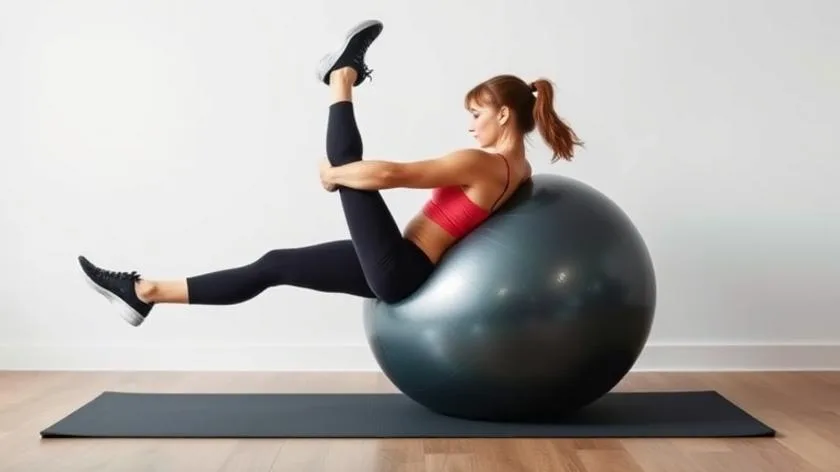
Stability‑ball training has become a staple in functional fitness because it forces the body to engage multiple muscle groups simultaneously. By leveraging an unstable surface, you naturally recruit deep stabilizers, improve balance, and enhance proprioception—benefits that translate to everyday movements and athletic performance. When paired with a well‑structured program, the stability ball workout routines can accelerate abdominal definition and strengthen the entire core chain without the need for heavy weights or complex equipment.
Thank you for reading this post, don't forget to subscribe!The versatility of the ball makes it ideal for both beginners and seasoned athletes seeking to refine their core exercises. Whether your goal is a firmer midsection, better posture, or reduced injury risk, integrating targeted drills into a consistent schedule delivers measurable results. The following guide outlines evidence‑based principles, progressive plans, and practical tips so you can build a sustainable practice that aligns with long‑term health objectives.
## Table of Contents
– Understanding the Stability Ball
– Designing Effective stability ball workout routines
– Sample Weekly Routine
– Progression Strategies
– Routine Comparison Table
– Frequently Asked Questions
– Conclusion and Final Takeaways
## Understanding the Stability Ball {#understanding-stability-ball}
The stability ball, commonly known as a Swiss or exercise ball, is typically made from durable PVC and inflates to a size that matches the user’s height. Its 75 %–85 % of a person’s height is the sweet spot for most adults, enabling a full range of motion while maintaining sufficient surface tension. The ball’s inherent instability triggers reflexive micro‑adjustments from the spinal erectors, diaphragm, and transverse abdominis—all crucial for a resilient core.
From a biomechanical standpoint, the ball creates a three‑dimensional challenge: anterior‑posterior, medial‑lateral, and vertical planes are all engaged. This multidirectional stress is why the ball excels at mimicking real‑life scenarios, such as reaching for an object on a high shelf or stabilizing the body during a sudden directional change. For practitioners focused on functional strength, these qualities make the ball an indispensable tool in any training arsenal.
## Designing Effective stability ball workout routines {#designing-effective-workouts}
Creating a program that delivers consistent gains requires balance between volume, intensity, and movement variety. Below are key design pillars:
1. **Movement Hierarchy** – Start each session with foundational drills (e.g., ball bridges, seated balance) that activate deep stabilizers before progressing to dynamic actions like ball roll‑outs or plyometric passes.
2. **Load Management** – Because the ball’s instability already provides a significant stimulus, supplemental external resistance should be modest (light dumbbells, resistance bands) to avoid over‑taxing the lumbar spine.
3. **Tempo Control** – Slow eccentric phases (3‑4 seconds) heighten muscle recruitment, especially for the transverse abdominis. For power‑oriented sessions, incorporate explosive concentric motions such as ball slams or jump‑throughs.
4. **Frequency** – Aim for three to four dedicated sessions per week, spacing them 48 hours apart to allow adequate recovery.
Integrating the ball with classic core exercises—like planks, Russian twists, and leg raises—creates a hybrid approach that maximizes muscular endurance and joint stability.
## Sample Weekly Routine {#sample-weekly-routine}
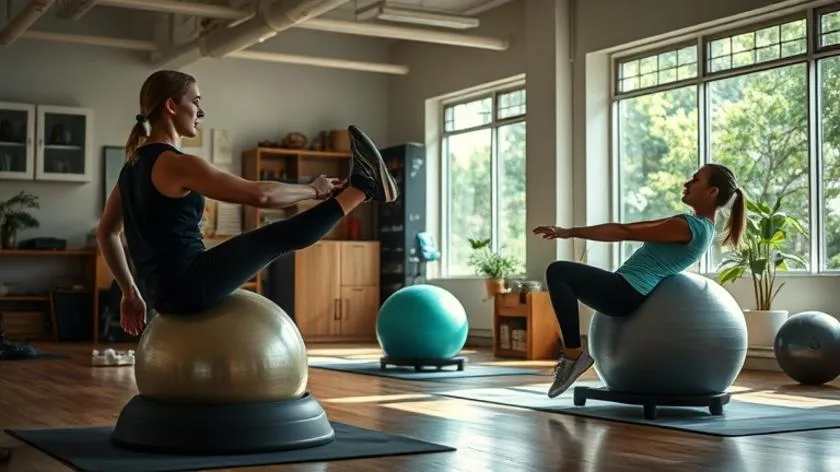
Below is a balanced four‑day template that alternates between stabilization, strength, and power emphases. Each workout lasts roughly 45 minutes, including a 5‑minute warm‑up and cool‑down.
| Day | Focus | Exercise | Sets × Reps | Rest |
|—–|——-|———-|————-|——|
| **Monday** | Stabilization | Ball seated march | 3 × 30 s | 45 s |
| | | Ball bridge with leg extension | 3 × 12 each side | 60 s |
| | | Supine torso twist on ball | 3 × 15 each side | 45 s |
| **Wednesday** | Strength | Ball hamstring curl | 4 × 10 | 60 s |
| | | Ball chest press (light dumbbells) | 4 × 12 | 60 s |
| | | Ball plank roll‑out | 3 × 8 | 45 s |
| **Friday** | Power | Ball squat jumps | 4 × 10 | 90 s |
| | | Ball overhead slams | 3 × 12 | 60 s |
| | | Ball mountain‑climber | 3 × 45 s | 45 s |
| **Saturday** | Active Recovery | Ball cat‑cow stretch | 2 × 10 | 30 s |
| | | Ball seated forward fold | 2 × 30 s | 30 s |
*Tip:* Use the internal link progression guide later in this article to tweak volumes as you advance.
## Progression Strategies {#progression-strategies}
To keep adapting, apply the principle of progressive overload in three distinct dimensions:
1. **Complexity** – Transition from stable two‑leg positions to single‑leg or unsupported variations (e.g., single‑leg ball bridge).
2. **Load** – Add light dumbbells, weighted vests, or resistance bands once you can comfortably execute 15‑20 reps with perfect form.
3. **Speed** – For power blocks, shorten rest intervals by 10‑15 seconds each week, encouraging the nervous system to fire more rapidly.
Monitoring your performance is crucial. Record the number of repetitions, perceived exertion (RPE), and any discomfort in a training log. After four weeks, reassess and adjust the variables accordingly. The incremental nature of these changes ensures continual stimulus without overwhelming the lumbar region—a common concern among ball enthusiasts.
Read more about safety considerations before increasing intensity.
## Routine Comparison Table {#routine-comparison}
The table below contrasts three popular stability ball workout routines often found in online programs. It highlights the primary focus, typical duration, difficulty level, and key benefits, aiding you in selecting the system that aligns with your objectives.
| Routine | Primary Focus | Typical Session Length | Difficulty | Key Benefits |
|---|---|---|---|---|
| Foundational Core Builder | Stabilization & endurance | 30 min | Beginner | Improved posture, activation of deep core muscles |
| Strength & Hypertrophy Circuit | Muscle strength & size | 45 min | Intermediate | Increased abdominal thickness, balanced upper‑lower body strength |
| Power Plyo Series | Explosive athleticism | 40 min | Advanced | Enhanced power output, rapid neuromuscular firing, core rigidity under dynamic stress |
Choosing the right routine hinges on your current fitness level and long‑term aims. Beginners should start with the “Foundational Core Builder” before graduating to more demanding circuits.
## Frequently Asked Questions {#faq}

1. **Can I use a stability ball on carpet?**
Yes, but place a thin yoga mat underneath to prevent slipping.
2. **How often should I replace the ball?**
Inspect for leakage or surface wear every 6 months; replace if compromised.
3. **Is a stability ball suitable for lower‑back rehabilitation?**
When prescribed by a therapist, gentle bridges and seated balances can aid recovery.
4. **Do I need a special pump?**
Most balls include a hand pump; a standard air pump works as well.
5. **Can children safely use the ball?**
Supervised use is fine for kids over 8 years, focusing on balance drills.
## Conclusion and Final Takeaways {#conclusion}
Integrating thoughtfully constructed stability ball workout routines into a regular fitness regimen offers a pragmatic pathway to firmer abs, stronger spinal support, and improved overall functional capacity. By respecting the principles of movement hierarchy, progressive overload, and balanced frequency, you can harness the ball’s unique instability to challenge the deep musculature that traditional static exercises often overlook.
Remember to start with foundational moves, monitor your form, and gradually increase complexity, load, or velocity as your confidence grows. Consistency, coupled with the right progression, will translate the temporary “burn” of a workout into lasting structural change.
For additional perspectives, explore this Google search: Stability Ball Workout Routines for Firm Abs and Core Strength.
If you found this guide helpful, feel free to revisit the internal resources linked throughout the piece for deeper dives into specific topics. Happy training—may your core become a solid foundation for every movement you pursue.