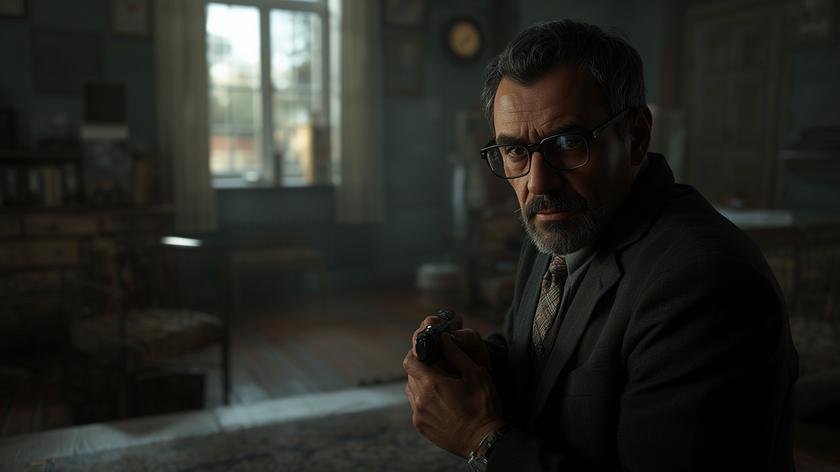
Famous Criminal Investigation Stories That Shocked the World
The realm of true‑crime has long fascinated both scholars and casual readers, offering a window into the darker corners of human behavior and the painstaking work required to bring hidden truths to light. Throughout history, criminal investigation stories famous tales have captivated the public imagination, shaping media narratives and influencing law‑enforcement practices worldwide. From the early days of rudimentary fingerprinting to today’s DNA‑driven forensics, each landmark case reflects an evolution in investigative technique and societal response.
Thank you for reading this post, don't forget to subscribe!When a high‑profile case captures headlines, it often ignites a broader Murder Mystery that extends beyond the courtroom, prompting debates over justice, media ethics, and public policy. The stories explored below not only shocked the world at the time of their revelation, but they also continue to serve as reference points for modern investigators seeking to solve today’s most perplexing crimes.
## Table of Contents
– The Black Dahlia Murder
– The Zodiac Killer
– The O.J. Simpson Murder Trial
– The JonBenét Ramsey Case
– The Ted Bundy Saga
– Comparison Table
– FAQ
– Conclusion and Final Takeaways
## The Black Dahlia Murder {#black-dahlia-murder}
In January 1947, the mutilated body of 22‑year‑old Elizabeth Short was discovered in a vacant lot in Los Angeles. The case earned its moniker because of the victim’s rumored aspiration to become a movie star, earning her the nickname “Black Dahlia.” The gruesome nature of the crime, combined with sensational press coverage, turned the investigation into a national obsession. Detectives were hampered by a lack of forensic technology; blood spatter analysis and modern DNA testing were decades away, so the case relied heavily on eyewitness testimony and crude fingerprinting. Despite hundreds of leads, the perpetrator was never identified, and the mystery endures as a textbook example of how media can both aid and obstruct a criminal inquiry. The enduring intrigue surrounding this case is a cornerstone of criminal investigation stories famous tales that continue to inform contemporary cold‑case strategies.
## The Zodiac Killer {#zodiac-killer}
The Zodiac Killer terrorized the San Francisco Bay Area between 1968 and 1974, sending cryptic letters and ciphers to newspapers in an effort to taunt law enforcement. Each communication included details that only the murderer could know, creating a chilling dialogue between the killer and the public. Investigators employed emerging techniques such as computerized pattern‑matching and linguistic analysis to decode the messages. Although several suspects have been proposed over the decades, none have been definitively linked to the crimes, leaving the case open. The Zodiac’s manipulation of media channels transformed the investigation into a cultural phenomenon, making it another pivotal criminal investigation stories famous tales. Scholars frequently reference the case when discussing the psychological profiling of unidentified offenders.
## The O.J. Simpson Murder Trial {#oj-simpson-trial}
The 1994 murders of Nicole Brown Simpson and Ronald Goldman thrust former NFL star O.J. Simpson into the national spotlight not only as a celebrity defendant but also as the subject of one of the most scrutinized criminal investigations in U.S. history. The case featured groundbreaking forensic evidence, including DNA profiling that had only recently entered mainstream courtroom use. The “Bronco chase” broadcast live to millions of viewers amplified the trial’s theatricality, while debates over racial bias, police misconduct, and media influence surged across the country. Although Simpson was acquitted of the criminal charges, the subsequent civil trial resulted in a guilty verdict, highlighting the complex interplay between criminal and civil standards of proof. Its legacy is enshrined in criminal investigation stories famous tales that underscore the importance of evidence integrity and juror perception.
## The JonBenét Ramsey Case {#jonbenet-ramsey}
Six‑year‑old beauty‑pageant contestant JonBenét Ramsey was found dead in the basement of her family home in Boulder, Colorado, in December 1996. The case instantly became a media circus, with intense speculation about family involvement, ransom notes, and potential intruders. Investigators faced conflicting forensic reports, contested autopsy findings, and a high‑profile defense strategy orchestrated by the Ramsey’s legal team. Early missteps—such as compromising the crime scene and questionable evidence handling—hampered the prosecution’s ability to secure a conviction. Over the years, advances in DNA technology have exonerated several suspects, yet the perpetrator remains unidentified. This unresolved tragedy exemplifies another piece of criminal investigation stories famous tales that continues to influence protocols for preserving digital and physical evidence in homicide investigations.
## The Ted Bundy Saga {#ted-bundy}
Serial killer Ted Bundy confessed to murdering at least 30 women across several states during the 1970s, though the true number may be higher. Bundy’s charm and intelligence allowed him to evade capture for years, exploiting gaps in interstate communication among law‑enforcement agencies. Breakthroughs in forensic psychology, victimology, and bite‑mark analysis eventually linked disparate disappearances, leading to Bundy’s arrest in 1978. His subsequent courtroom antics and televised trial captivated the nation, while his execution in 1989 sparked discussions about the death penalty and media sensationalism. Bundy’s case is a defining example of criminal investigation stories famous tales that prompted reforms in fugitive tracking and interstate data sharing. Readers seeking deeper insight into the investigative challenges can explore more through forensic breakthroughs and investigative methods discussed later.

## Comparison Table {#comparison-table}
| Case | Year(s) | Location | Key Investigative Technique | Outcome |
|---|---|---|---|---|
| Black Dahlia | 1947 | Los Angeles, CA | Fingerprints & witness statements | Unsolved |
| Zodiac Killer | 1968‑1974 | San Francisco Bay Area, CA | Cipher analysis & geographic profiling | Unsolved |
| O.J. Simpson | 1994‑1995 | Los Angeles, CA | DNA profiling | Acquitted criminally, civil liability |
| JonBenét Ramsey | 1996 | Boulder, CO | DNA refinement & scene preservation | Unsolved |
| Ted Bundy | 1974‑1978 | Multiple states | Victimology & bite‑mark analysis | Executed 1989 |
## FAQ {#faq}
**What makes a criminal investigation story famous?**
Unique forensic breakthroughs and media coverage.
**Are all famous cases solved?**
No, many remain unsolved.
**Can modern DNA help old cases?**
Yes, it often revives cold investigations.
**Why do murder mysteries captivate audiences?**
They blend intrigue with psychological insight.
**Do these cases influence police training?**
Absolutely, they shape protocols worldwide.
For additional reading, see the search results.

## Conclusion and Final Takeaways {#conclusion}
The examined cases illustrate how the convergence of technology, psychology, and public interest can transform a routine inquiry into a worldwide phenomenon. Each criminal investigation stories famous tales serves as a lesson in both the power and limitation of investigative tools, reminding professionals that meticulous evidence handling and transparent communication remain paramount. While some mysteries may never be solved, the legacy of these high‑profile investigations continues to push the boundaries of forensic science, inspire legislative reforms, and fuel the enduring allure of true‑crime storytelling.
—
If you found this overview insightful, consider revisiting the article periodically for updated developments and new scholarly interpretations.