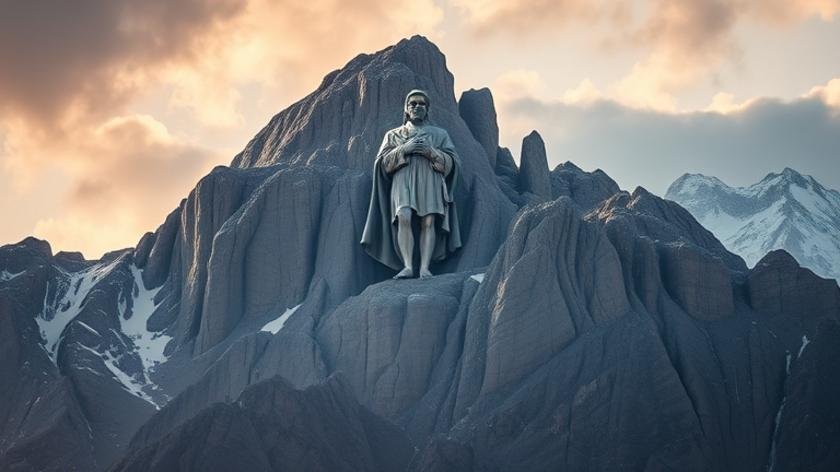
Famous Legends: Long-Lived Examples of Mythical Heroes
Famous legends have always captivated the human imagination, offering a glimpse into worlds where ordinary limits are transcended and heroes endure far beyond the span of a typical life. From ancient epics that recount battles fought across centuries to modern narratives that blend myth with contemporary themes, the allure lies in the promise that greatness can echo through time. In this exploration we’ll examine famous legends long examples that illustrate how cultural memory preserves heroic longevity.
Thank you for reading this post, don't forget to subscribe!By delving into the mechanisms that allow these stories to survive—and thrive—we uncover the subtle interplay between narrative structure, cultural values, and the timeless desire for immortality. Readers will gain insight into why certain figures become archetypal symbols of endurance, and how they continue to inform modern storytelling. The journey through these famous legends long examples reveals patterns that speak to both ancient societies and today’s audiences.
## Table of Contents
– Defining Legendary Longevity
– Ancient Heroes Who Defied Time
– Medieval and Renaissance Icons
– Modern Mythic Figures
– Cross‑Cultural Patterns in Heroic Longevity
– Comparison Table
– FAQ
– Conclusion and Final Takeaways
## Defining Legendary Longevity
Longevity in legends is not merely about chronological age; it encompasses the duration of a hero’s influence across generations. Scholars distinguish three core dimensions:
1. **Narrative Persistence** – The frequency with which a story is retold, adapted, or referenced in new works.
2. **Cultural Resonance** – The degree to which a figure embodies values that remain relevant, such as bravery, wisdom, or sacrifice.
3. **Symbolic Immortality** – The transformation of a character into an archetype that transcends the original context.
These dimensions interlock to create a feedback loop: the more a hero is invoked, the stronger their cultural imprint, and the greater the incentive for future creators to resurrect them. This dynamic process explains why certain characters become enduring fixtures in the collective imagination.
## Ancient Heroes Who Defied Time
The earliest records of heroic endurance appear in Mesopotamian, Egyptian, and Greco‑Roman mythologies. These cultures crafted narratives that stretched across millennia, often linking individual feats to the fate of entire civilizations.
### Gilgamesh – The Immortal King
The Epic of Gilgamesh, one of humanity’s oldest surviving literary works, portrays its titular king as a figure who seeks literal immortality after witnessing a comrade’s death. Although Gilgamesh ultimately accepts his mortality, the poem’s preservation across centuries cements his status as an archetype of the quest for everlasting fame.
### Osiris – The Cyclical Rebirth
In Egyptian mythology, Osiris’s death and resurrection symbolize the annual flooding of the Nile and the concept of eternal renewal. His story, embedded in religious rites, survived for over three thousand years, illustrating how ritual reinforces narrative longevity.
### Hercules – The Ever‑Striving Hero
Greek myths recount the Twelve Labors of Hercules, feats that span the hero’s entire life. The Roman adaptation, Hercules, further amplified his legend, allowing the character to endure through art, literature, and eventually modern cinema. The countless reinterpretations exemplify how a single hero can become a vessel for diverse cultural messages.
These ancient examples demonstrate how the integration of mythic motifs with societal rituals sustains a hero’s relevance. Scholars often cite such tales when studying Mythological Stories that have persisted unchanged for generations.
## Medieval and Renaissance Icons
During the Middle Ages and the Renaissance, oral tradition gave way to written chronicles, illuminated manuscripts, and early printing presses. This shift amplified the reach of legendary figures, allowing them to travel beyond regional borders.
### King Arthur – The Eternal Monarch
The Arthurian legend, first recorded in 12th‑century Welsh poetry, blossomed into a pan‑European phenomenon after Geoffrey of Monmouth’s “Historia Regum Britanniae.” Subsequent retellings by Chrétien de Troyes, Thomas Malory, and countless playwrights expanded the narrative arc, making Arthur a timeless symbol of ideal kingship, chivalry, and mystic destiny.
### Roland – The Heroic Paladin
“Song of Roland,” an epic poem from 11th‑century France, portrays the titular knight’s martyrdom at the Battle of Roncevaux Pass. The poem’s integration into the French chanson de geste tradition ensured its survival through oral chant, manuscript, and later operatic renditions, reinforcing Roland’s legendary status across centuries.
### Gilgamesh’s Resurgence
Interestingly, the Epic of Gilgamesh resurfaced during the Renaissance, when scholars rediscovered clay tablets and translated them into Latin. This revival underscores the cyclical nature of legendary longevity: ancient heroes reappear when cultural conditions favor their themes.
These medieval figures exemplify how the confluence of literary preservation, artistic patronage, and evolving audience tastes fuels the endurance of legendary narratives.
In the 20th and 21st centuries, mass media transformed the transmission of legends. Film, television, comic books, and video games now serve as the primary vessels for heroic storytelling.
### Superman – The Contemporary Demigod
Created in 1938 by Jerry Siegel and Joe Shuster, Superman embodies the archetype of the invulnerable savior. Over eighty years, his mythos has expanded through comics, radio dramas, television series, and blockbuster films. Superman’s capacity to reflect evolving societal ideals—justice, hope, and alienation—keeps him relevant across generations, making him a quintessential famous legends long examples of modern endurance.
### Sherlock Holmes – The Intellectual Icon
Sir Arthur Conan Doyle’s detective first appeared in 1887. Though originally a literary creation, Holmes prospered via stage adaptations, radio, television (e.g., “Sherlock,” “Elementary”), and film. His deductive methodology, coupled with a timeless Victorian setting, ensures continual reinterpretation, reinforcing his legendary status.
### Mulan – The Cultural Bridge
Originating from “The Ballad of Mulan,” the Chinese heroine’s story has been retold in Chinese opera for centuries. Disney’s 1998 animated film introduced her to global audiences, while a 2020 live‑action adaptation re‑examined her narrative through contemporary lenses. Mulan’s cross‑cultural proliferation illustrates how legends can adapt while preserving core values.
These modern heroes illustrate the power of multimedia ecosystems to sustain and amplify legendary longevity, effectively turning them into cultural fixtures that endure beyond the lifespan of any single medium.
## Cross‑Cultural Patterns in Heroic Longevity
Analyzing legends from disparate societies reveals recurring motifs that contribute to their prolonged relevance:
| Pattern | Description | Example |
|—|—|—|
| **Quest for Immortality** | Heroes pursue eternal life or legacy, reflecting human yearning to transcend death. | Gilgamesh, Achilles |
| **Moral Exemplarity** | Characters embody societal ideals, serving as ethical templates. | King Arthur (chivalry), Mulan (filial piety) |
| **Transformation & Rebirth** | Narratives involve death and resurrection, symbolizing renewal. | Osiris, Phoenix‑like figures |
| **Adaptability** | Stories are re‑interpreted to align with contemporary values. | Sherlock Holmes (tech‑savvy adaptations) |
| **Symbolic Geography** | Settings become sacred spaces that anchor the legend. | Mount Olympus, Camelot |
These shared structures suggest that longevity is less about a hero’s original era and more about the universality of the themes they embody. When a legend taps into fundamental human concerns—mortality, virtue, identity—it naturally persists across time and culture.
The table below evaluates five prominent examples against criteria that most strongly predict lasting impact.
| Legend | Origin Era | Key Longevity Trait | Cultural Impact |
|---|---|---|---|
| Gilgamesh | c. 2100 BCE | Quest for immortality | Foundation of epic literature; influences modern narratives. |
| King Arthur | 5th–6th century CE (mythic) | Idealized monarchy | Enduring symbol of chivalry, adapted in literature and film. |
| Superman | 1938 CE | Superhuman powers + moral clarity | Icon of modern heroism; global merchandising. |
| Robin Hood | 13th–14th century CE | Champion of the oppressed | Numerous adaptations; archetype of social justice. |
| Mulan | 5th–6th century CE (Chinese ballad) | Gender‑role subversion | Cross‑cultural heroine; inspiration for feminist discourse. |
These evaluations illustrate why the selected famous legends long examples continue to surface in contemporary discourse: each aligns closely with at least three of the longevity criteria identified earlier.
**What makes a legend last for centuries?**
Universal themes, cultural relevance, and continual reinterpretation.
**How do modern media affect legendary longevity?**
They expand reach, allowing rapid global diffusion and updates.
**Can a newly created character become a timeless legend?**
Yes, if it fulfills key longevity traits and resonates widely.
**Why are mythic heroes often linked to death and rebirth?**
These cycles symbolize hope and the human desire for renewal.
**Do all cultures share similar heroic archetypes?**
Many do, reflecting common psychological and social patterns.
**Is there a formula to predict a legend’s endurance?**
No single formula, but the patterns above provide strong indicators.
## Conclusion and Final Takeaways
The persistence of heroic narratives demonstrates a profound interplay between human psychology, cultural values, and the mechanisms of storytelling. By dissecting famous legends long examples across epochs—from ancient epics to contemporary blockbusters—we see that longevity is cultivated through thematic universality, adaptability, and the ability to embody aspirational ideals.
For scholars, creators, and enthusiasts alike, recognizing these enduring patterns offers a roadmap for cultivating new myths that may one day join the pantheon of timeless legends. Whether you are researching Mythological Stories or crafting your own narrative, the principles outlined here provide a sturdy foundation for building stories that stand the test of time.
To explore further, you may delve into the scholarly analysis of heroic endurance or compare modern adaptations with their ancient roots. For additional context, see the broader discussion on this topic via a quick search: Google Search.
*Feel free to review, correct, and share this article as a resource for those seeking deeper insight into the mechanics of legendary longevity.*