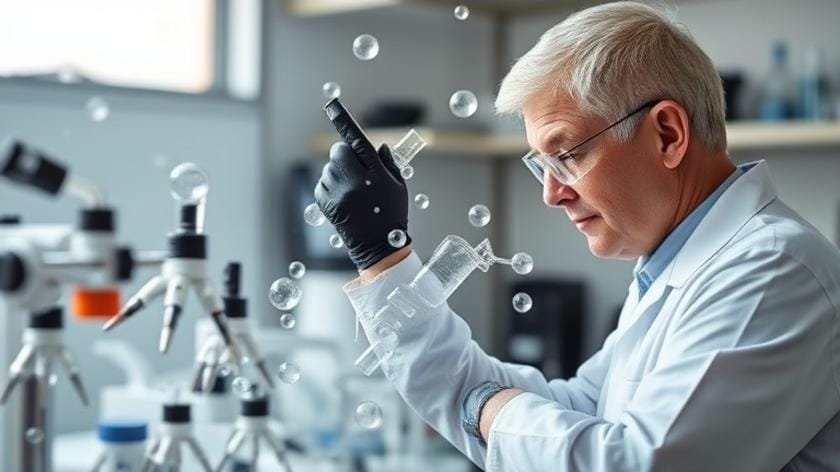
Scientific Discoveries Explained: Real-Life Use Cases
Scientific breakthroughs rarely stay confined to laboratory journals; they ripple outward, reshaping economies, health systems, and daily routines. When researchers decode the mechanisms of a virus, refine the properties of a new material, or map the quantum behavior of particles, the resulting knowledge often finds concrete expression in products, policies, and practices that touch everyone. Understanding how scientific discoveries explained use cases translate from theory to tangible benefit provides insight not only into the value of research funding but also into the pathways that guide innovation from bench to market.
Thank you for reading this post, don't forget to subscribe!In this article we trace a spectrum of real‑world implementations, from life‑saving medicines and renewable‑energy technologies to data‑driven environmental monitoring tools. By dissecting each example, we illustrate the connective tissue between rigorous experimentation and the solutions that improve quality of life. Readers will see concrete evidence of how scientific discoveries explained use cases serve as engines of progress, reinforcing the importance of continued support for scientific inquiry.
## Table of Contents
– The Role of Fundamental Research in Everyday Life
– Medical Breakthroughs and Their Practical Outcomes
– Energy Innovations Transforming the Grid
– Digital Technologies Born from Scientific Inquiry
– Environmental Monitoring and Climate Solutions
– Comparison of Impact Across Disciplines
– Frequently Asked Questions
– Conclusion and Final Takeaways
## The Role of Fundamental Research in Everyday Life
Fundamental research—often described as “blue‑sky” science—lays the groundwork for later applied breakthroughs. The discovery of the double helix structure of DNA in 1953, for instance, was a purely academic pursuit. Decades later, that insight powered the development of polymerase chain reaction (PCR) technology, which now underpins rapid COVID‑19 testing and forensic investigations. Similarly, the invention of the transistor in the 1940s, driven by curiosity about semiconductor physics, paved the way for modern computing, smartphones, and the Internet of Things.
These examples highlight a crucial pattern: the most transformative Science Applications often originate from questions that seemed abstract at the time. By funding exploratory research, societies invest in a reservoir of knowledge that later becomes the raw material for practical solutions. The process is iterative—field observations raise new hypotheses, which are tested in controlled environments, leading to refined theories that can be engineered into products.
When examining scientific discoveries explained use cases, it is essential to recognize that the timeline from discovery to deployment can span years, even generations. Patience, sustained funding, and interdisciplinary collaboration are the keystones that convert theoretical insight into everyday technology.
## Medical Breakthroughs and Their Practical Outcomes
Medicine is perhaps the most visible arena where research translates directly into human well‑being. The journey of mRNA technology offers a vivid illustration. Initially investigated as a tool for studying protein synthesis, mRNA was later repurposed as a vaccine platform. Within a year of the SARS‑CoV‑2 genome being published, Pfizer‑BioNTech and Moderna leveraged this platform to produce safe, highly effective vaccines, curbing the pandemic and demonstrating the speed at which a well‑understood mechanism can be mobilized for public health.
Another landmark was the development of CRISPR‑Cas9 gene‑editing. Discovered as part of bacterial immunity, CRISPR has become a versatile instrument for precise genetic modifications. Its applications now extend from correcting single‑gene disorders such as sickle‑cell disease to engineering disease‑resistant crops, showcasing a breadth of outcomes that blur the line between medical and agricultural sectors.
These medical cases underscore the potency of scientific discoveries explained use cases as templates for solving complex health challenges. They also illustrate the importance of regulatory pathways and ethical frameworks that ensure innovations reach patients responsibly and equitably.
## Energy Innovations Transforming the Grid
The quest for clean, reliable energy has driven a cascade of scientific investigations, from material science to plasma physics. One of the most impactful outcomes is the commercial viability of lithium‑ion batteries. Early studies on intercalation compounds in the 1970s identified lithium’s high electrochemical potential. Decades of iterative optimization—improving electrode materials, electrolytes, and manufacturing processes—culminated in batteries that power electric vehicles, smartphones, and large‑scale storage installations.
Parallel advances in solar photovoltaics trace a similar path. The initial discovery of the photovoltaic effect by Edmond Becquerel in 1839 sparked curiosity without immediate utility. Subsequent research into semiconductor junctions, thin‑film technologies, and perovskite materials has amplified conversion efficiencies and slashed production costs, making solar power a cornerstone of modern renewable portfolios.
These examples illustrate how Science Applications in the energy sector directly influence policy, market dynamics, and carbon‑emission trajectories. By integrating scientific insight into grid management—through smart inverters, demand‑response algorithms, and predictive maintenance—utilities gain unprecedented flexibility and resilience.
## Digital Technologies Born from Scientific Inquiry
Digital transformation owes a debt to a lineage of discoveries rooted in mathematics, physics, and cognitive science. The concept of a universal algorithmic machine arose from Alan Turing’s theoretical work in the 1930s. Though abstract, Turing’s model guided the architecture of modern computers, enabling everything from data processing to artificial intelligence.
Machine learning, especially deep neural networks, draws heavily on neuroscience research that uncovered hierarchical processing in the human brain. By mimicking these structures, engineers created models capable of image recognition, natural language understanding, and autonomous decision‑making. An early proof‑of‑concept—AlexNet’s 2012 ImageNet victory—sparked a wave of applications ranging from medical imaging diagnostics to real‑time translation services.
These digital milestones demonstrate that scientific discoveries explained use cases often become the backbone of entire industries. Companies that recognize the commercial potential of academic output can accelerate product cycles, while open‑source frameworks foster wider adoption and continuous improvement.
## Environmental Monitoring and Climate Solutions
Accurate, real‑time environmental data is critical for informed climate policy and disaster response. Satellite remote sensing, originally motivated by Cold War surveillance, now underpins global climate monitoring. Sensors capable of detecting atmospheric gases, surface temperature, and ocean chlorophyll deliver datasets that scientists use to model climate dynamics and forecast extreme weather.
On the ground, the development of low‑cost air‑quality sensors—leveraging advances in nanomaterials and MEMS (Micro‑Electro‑Mechanical Systems)—has democratized data collection. Community‑driven networks now complement governmental monitoring stations, furnishing hyper‑local insights that guide public health advisories and urban planning.
These initiatives illustrate how Science Applications transition from high‑tech research labs to everyday decision‑making tools. By integrating data streams into policy dashboards, municipalities can enact proactive measures, such as dynamic traffic restrictions during peak pollution episodes.

## Comparison of Impact Across Disciplines
Below is a concise evaluation table that contrasts the relative influence of selected scientific breakthroughs on various societal dimensions. The scoring (1‑5) reflects expert consensus on each criterion: economic contribution, health improvement, environmental benefit, and technological diffusion.
| Breakthrough | Economic Contribution | Health Improvement | Environmental Benefit | Technological Diffusion |
|---|---|---|---|---|
| CRISPR Gene Editing | 4 | 5 | 3 | 4 |
| Lithium‑Ion Batteries | 5 | 2 | 4 | 5 |
| mRNA Vaccine Platform | 4 | 5 | 2 | 3 |
| Satellite Remote Sensing | 3 | 2 | 5 | 4 |
| Transistor Technology | 5 | 1 | 1 | 5 |
This side‑by‑side view helps policymakers and investors prioritize funding streams based on desired outcomes, emphasizing that each discovery contributes uniquely to the overarching tapestry of progress.
## Frequently Asked Questions
**What defines a “use case” in scientific research?**
A specific, real‑world application derived from a research finding.
**How long does it typically take for a discovery to become a product?**
Ranges from a few years to multiple decades, depending on complexity.
**Are all scientific breakthroughs commercially viable?**
No; some remain primarily academic or require future technological advances.
**Can the public influence which discoveries receive funding?**
Yes, through advocacy, voting, and participation in citizen‑science projects.
**Do ethical considerations affect the deployment of new technologies?**
Absolutely; regulations and societal values shape implementation.
## Conclusion and Final Takeaways
The journey from hypothesis to household staple is neither linear nor guaranteed, yet the patterns explored above reveal a consistent truth: scientific discoveries explained use cases serve as the catalyst for societal advancement. By nurturing fundamental inquiry, supporting translational pipelines, and fostering interdisciplinary collaboration, stakeholders can ensure that tomorrow’s breakthroughs become today’s solutions.
Understanding the mechanisms behind each translation also equips leaders with the foresight to allocate resources wisely, anticipate ethical dilemmas, and communicate the tangible benefits of research to a broader audience. As we confront global challenges—from pandemics to climate change—the synergy between discovery and application will be the decisive factor in shaping a resilient, prosperous future.
For a deeper dive into the nexus of research and real‑world impact, explore additional resources through the following links: further reading on research translation and examples of interdisciplinary innovation.
To see how this piece fits within the broader discourse, you may also review related searches: Google search.